I found myself thinking about how to maintain a Merbau deck while watching yet another homeowner scrub the life out of theirs with the wrong detergent.
So let’s cut through the jargon and take a look at what actually works, with a few stories thrown in for good measure, along with some plain old advice that might just save your deck and your weekend.
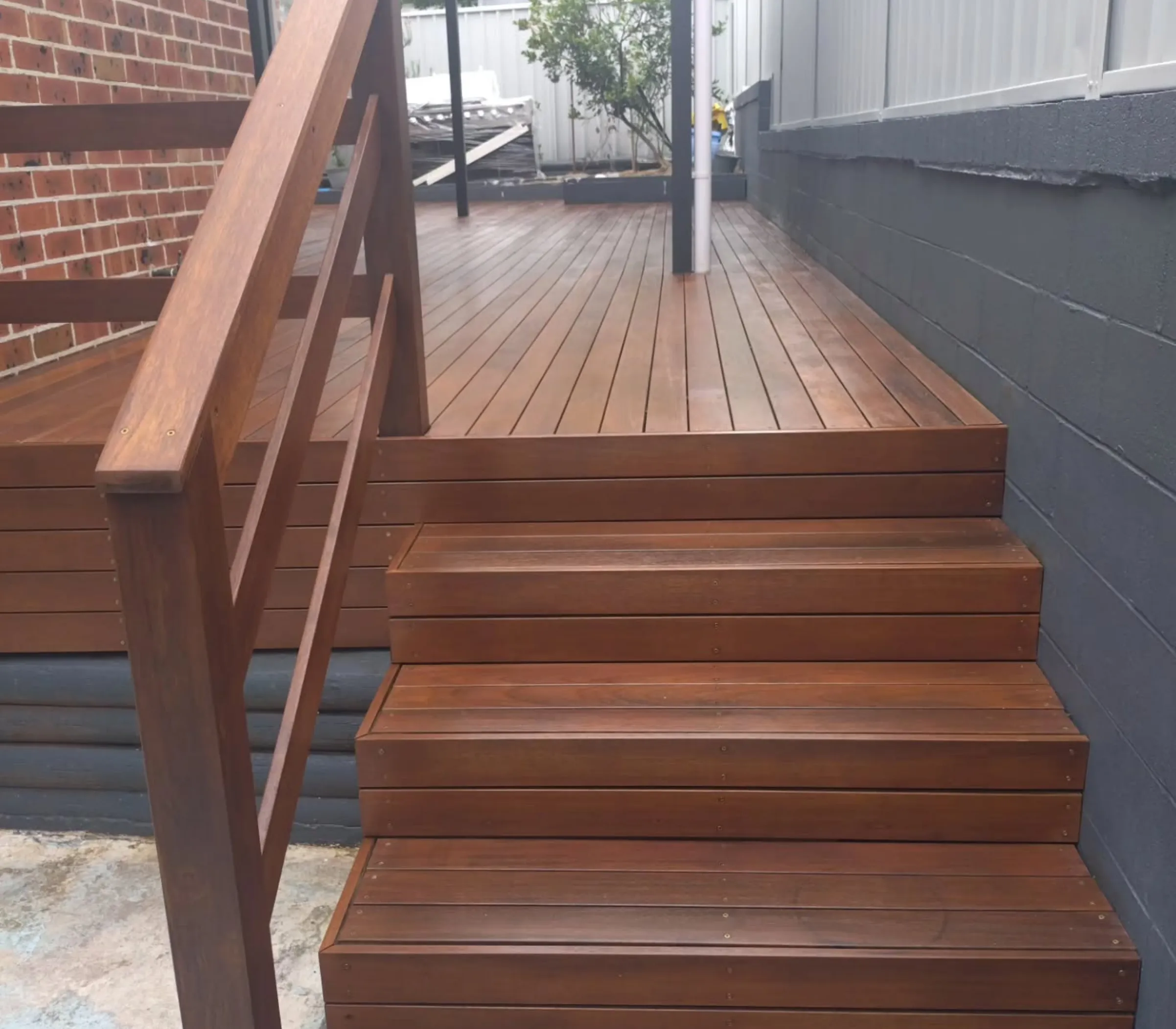
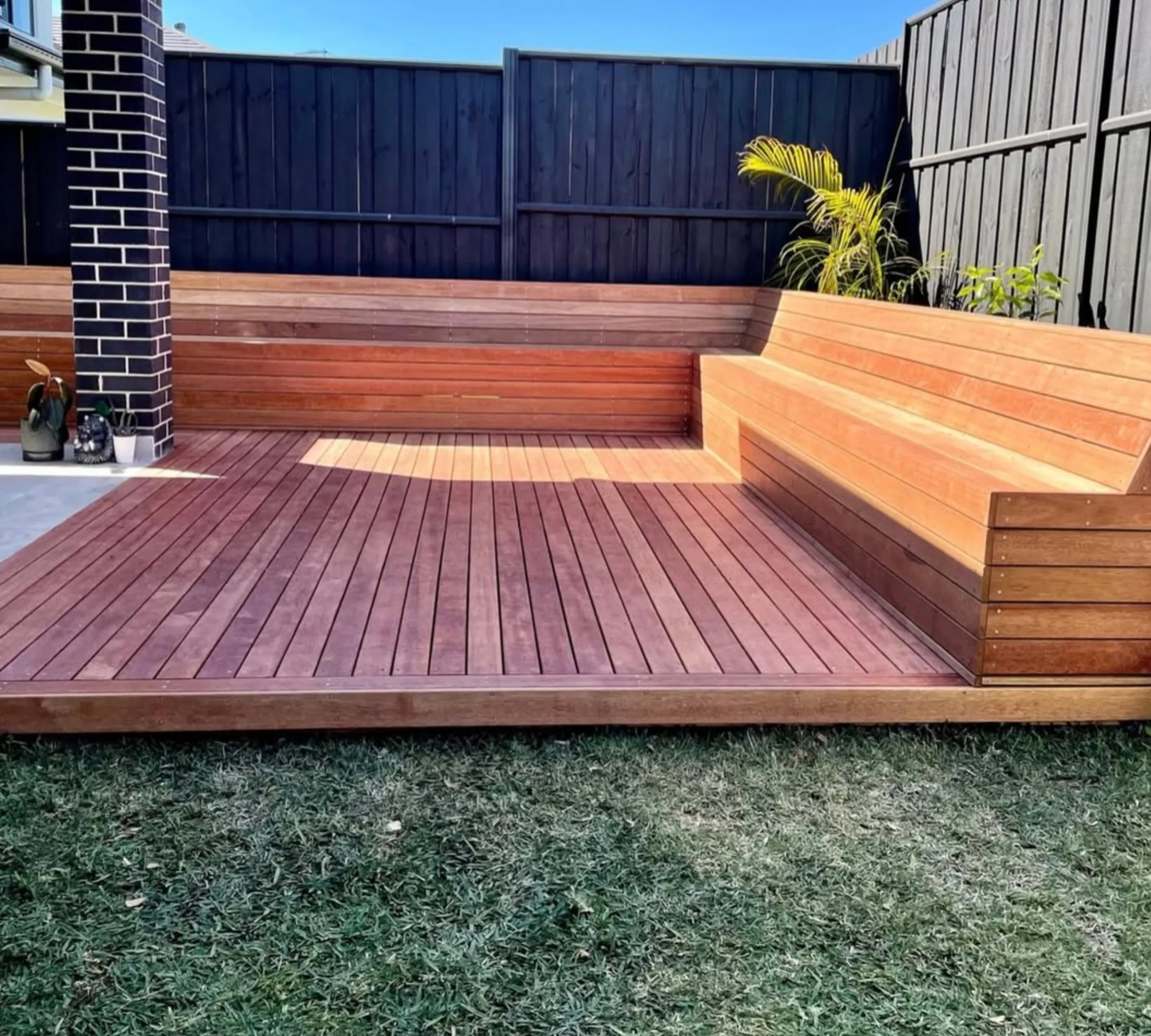
Merbau is pretty tough, dense and naturally oily – all qualities that make it perfect for decking that’s going to get hammered by the unpredictable Australian climate. But let’s be clear, being tough doesn’t mean it’s invincible. UV rays, salty sea air, winter moisture and tannin bleed will chew through any deck if you put it off long enough.
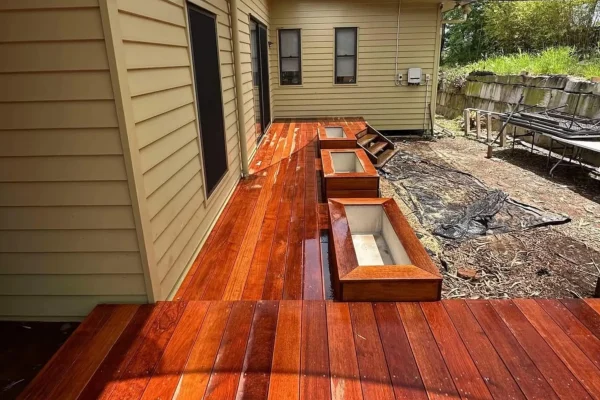
The good news is that a well-maintained Merbau deck can still look like new for years. You just need to know what to do and be willing to put in the routine and the right protective oil.
Cleaning First - Why It's The Most Important Thing
Before you even think about oiling, staining or renewing your deck, you need a clean surface. Dirt, grime, surface dirt, food stains, and mould can trap beneath the finish, preventing oils from penetrating the grain. And that’s when you start to get blotches, peeling and patchy weathering.
I’ve seen people swear their deck needed replacing – turns out it just needed a decent clean and the right deck cleaner.
Choosing The Right Deck Cleaner (And What To Avoid)
Not all deck cleaners are made equal, and if you choose the wrong one for Merbau, it can be a disaster. Look for a cleaner that:
- It is safe for hardwood
- Has a pH-balanced formula
- It is designed for Merbau or tropical hardwoods
And whatever you do, avoid:
- Bleach
- Acid-based bathroom cleaners
- Anything with strong acids or essential oils that break down the fibres
- Harsh degreasers
You want to lift the dirt, not strip the wood.
How To Clean Your Timber Deck
Here’s the step-by-step guide we use on our jobs
- Get the deck clear of clutter.
Take those chairs, pots and anything else that traps moisture off the deck. To keep them from scratching, use furniture pads when you put them back. - Give the deck a good sweep.
Get rid of those leaves, grit and built-up grime. - Give it a good hose down.
A quick rinse will help your cleaner spread evenly. - Apply the cleaner.
Don’t overdo it with the chemical; more isn’t always better. - Use a decking brush to scrub.
Work with the grain. Don’t go at it like a mad person, just gently and even. - Rinse with a hose.
Again, the humble hose will do the job most of the time. - Let it dry out for a few days.
Depending on how wet Melbourne is, that might be 24 hours or 48 hours.
Pressure Washing: Can You Do It Safely?
A high-pressure cleaner or high-pressure water cleaner can fur the timber if you get too close.
Stick to:
- Low pressure (around 1200 PSI)
- Fan nozzle
- 30–40 cm distance
- Slow, controlled passes
We’ve fixed too many decks that looked like someone attacked them with a cheese grater.
At Window Cleaning Melbourne Crew, we see this sort of thing weekly — tough Merbau timber, hardworking homeowners, and Melbourne weather teaming up to make life difficult.
Oiling Your Timber Deck: How Often Should You Do It?
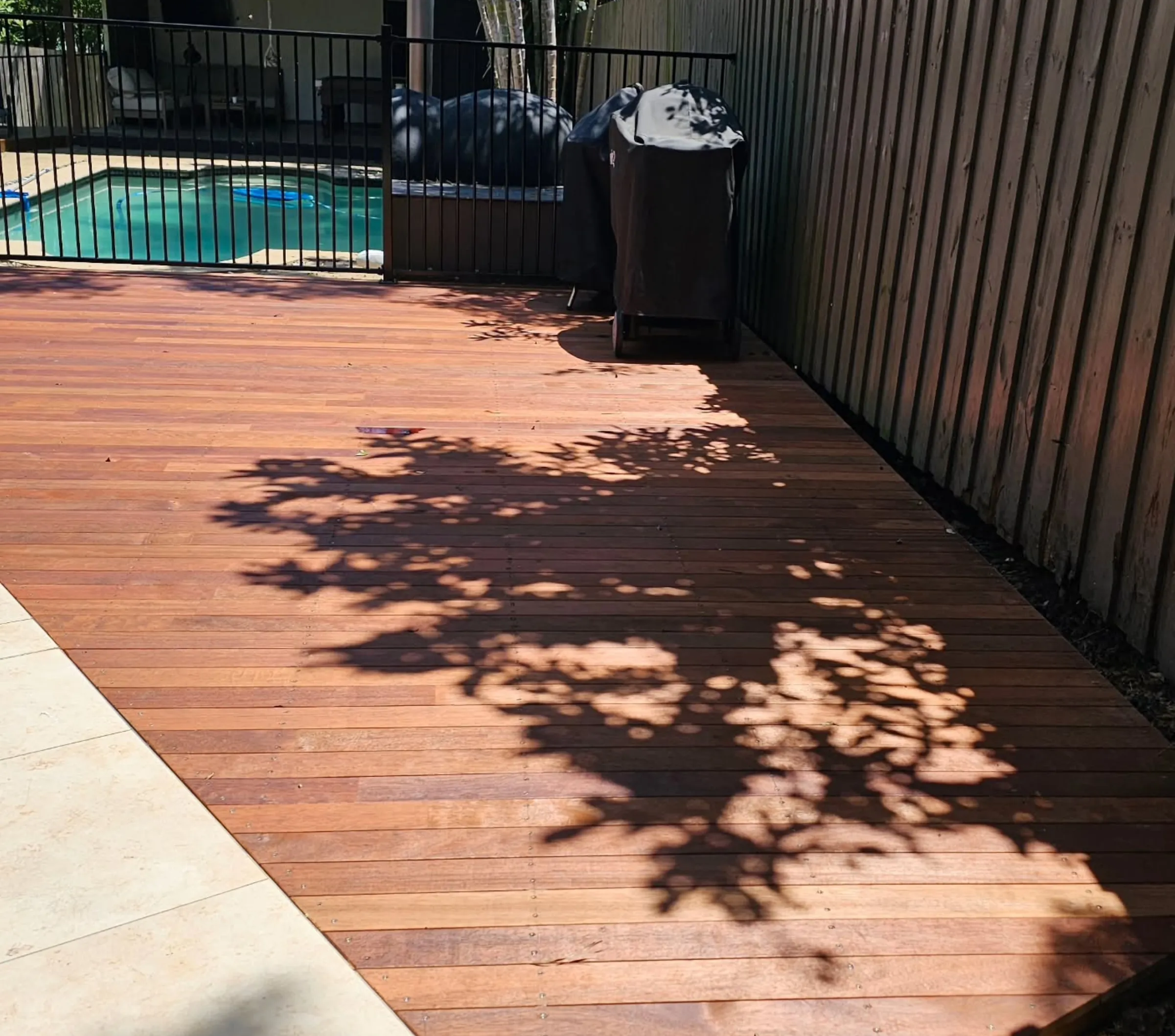
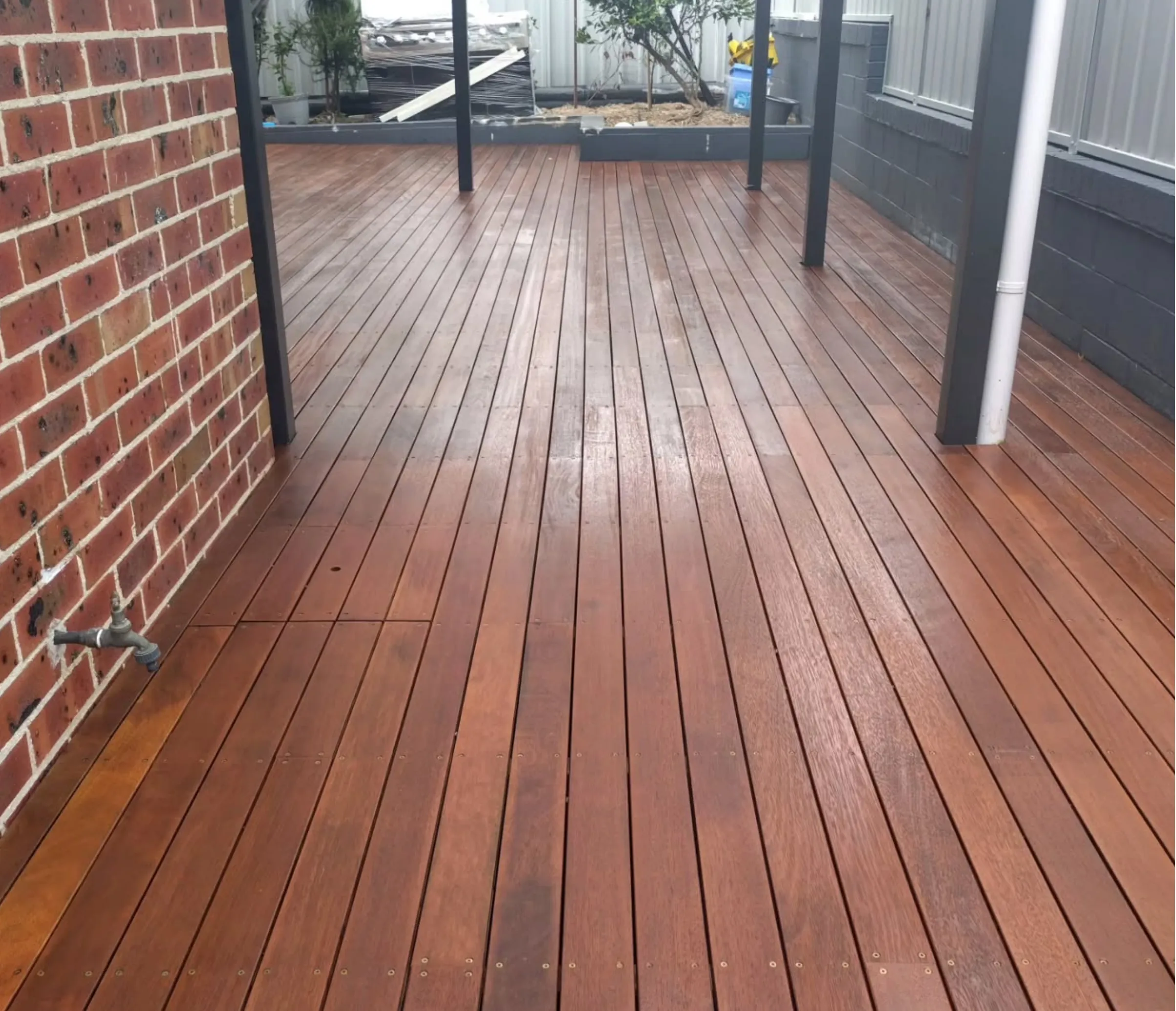
A freshly cleaned Merbau deck should be oiled every 6–12 months, depending on:
- UV exposure
- How much traffic does it get
- Whether it cops coastal salt spray
- If you host barbecues every weekend
New decks may need more frequent oiling for the first year because Merbau leaches tannins and drinks oil like you wouldn’t believe.
Stats worth knowing:
According to multiple timber suppliers and Australian environmental durability studies, UV exposure can cause up to 40% colour loss in hardwood within the first year if left untreated.
Types of Deck Oil: What Works Best?
You’ve got two main categories: water-based oil and non-water-based oil.
Water-based oil
- Dries faster
- Low smell
- Easier cleanup
- Great for low-maintenance households
Oil-based traditional finishes
- Richer colour
- Deeper penetration
- Longer-lasting in harsh sun
Either option works if you stay consistent. Changing product types halfway through often leads to patchiness. Pick one and stick with it.
Step-by-Step: How To Oil Your Deck Without the Usual Mistakes
- Clean and dry deck boards completely.
- Stir the decking oil — no shaking unless you want bubbles.
- Use a lambswool applicator for even coverage.
- Cut in edges with a brush.
- Apply thin coats.
- Wipe excess after 10–15 minutes.
- Allow proper drying time between coats.
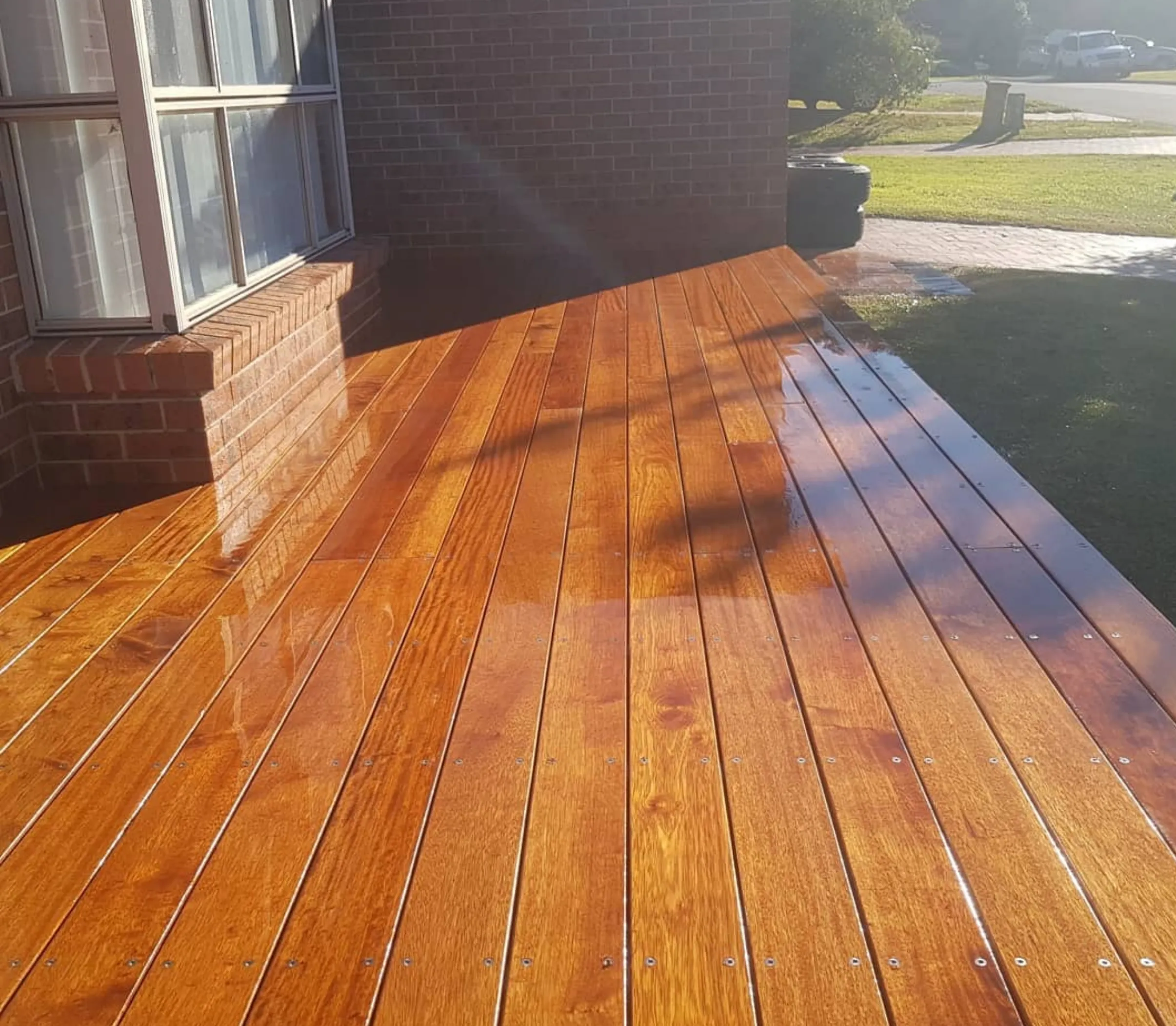
Most oils require two coats; check the application instructions on your product.
Decking Care Schedule for Timber (Easy Table)
Here’s a rough guide based on what we typically see in Melbourne homes:
| Task | Frequency | Notes |
| Light clean | Monthly | Hose + gentle scrub |
| Deep clean | Every 3–6 months | Prep for oiling |
| Apply decking oil | 6–12 months | More often in high UV |
| Check for rot and corrosion | Twice yearly | Corners, steps, joins |
| Inspect for bluestain moulds | Each wet season | Treat early |
| Check dimensional stability | Yearly | Warping from heat/moisture |
Why Timber Decks Struggle in Melbourne’s Climate
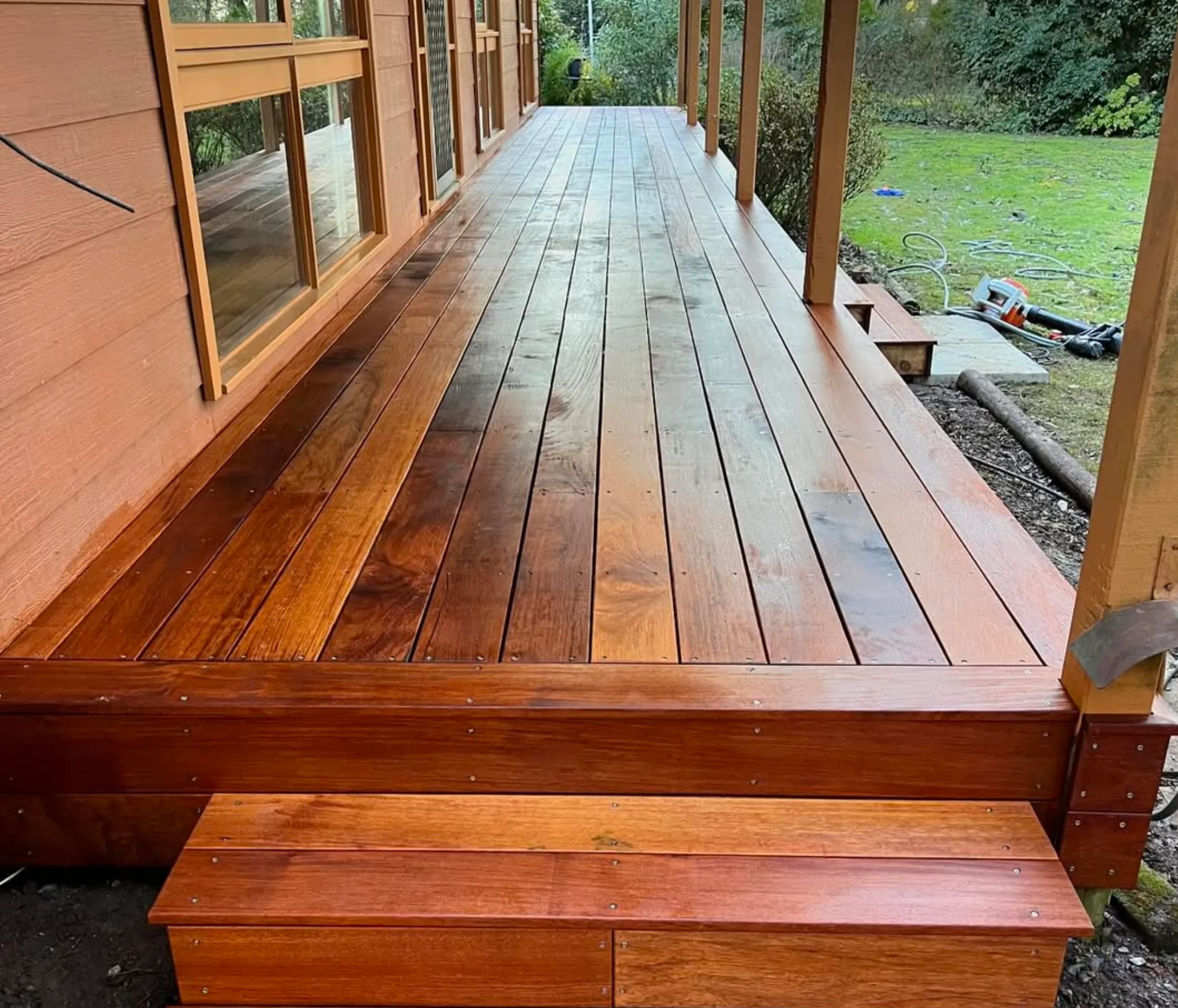
Melbourne’s crazy climate is brutal on outdoor timber:
- Summer’s strong UV
- Winter’s dampness and mould
- Salt spray in coastal suburbs
- Hot/cold cycles causing shrink–swell movement
This combo accelerates UV weathering, warping and moisture damage. The better your protective oil, the slower the decline.
Deck Protection: Minimise Wear and Tear
A few simple habits keep your deck looking new:
- Use furniture pads under outdoor chairs and BBQs.
- Mop up spills quickly — especially food stains.
- Don’t drag pots and metal furniture.
- Keep plants raised to allow airflow.
- Don’t trap moisture with plastic mats.
Most damage isn’t dramatic; it’s minor scratches and moisture pockets that build up over time.
FAQ
Why does my Merbau deck go grey?
That’s UV weathering. Timber loses colour when UV rays break down the surface fibres.
How do I stop tannin bleed?
You can’t stop it — but repeated washing helps it stabilise faster.
What’s the best decking oil for Merbau?
Any good oil (water-based or non-water-based) with UV inhibitors and hardwood compatibility.
Can I clean a Merbau deck with household cleaning products?
No. Use a purpose-made deck cleaner to avoid damaging fibres.
How do I know my deck needs oiling again?
Splash test: if water stops beading and soaks in, it’s thirsty.