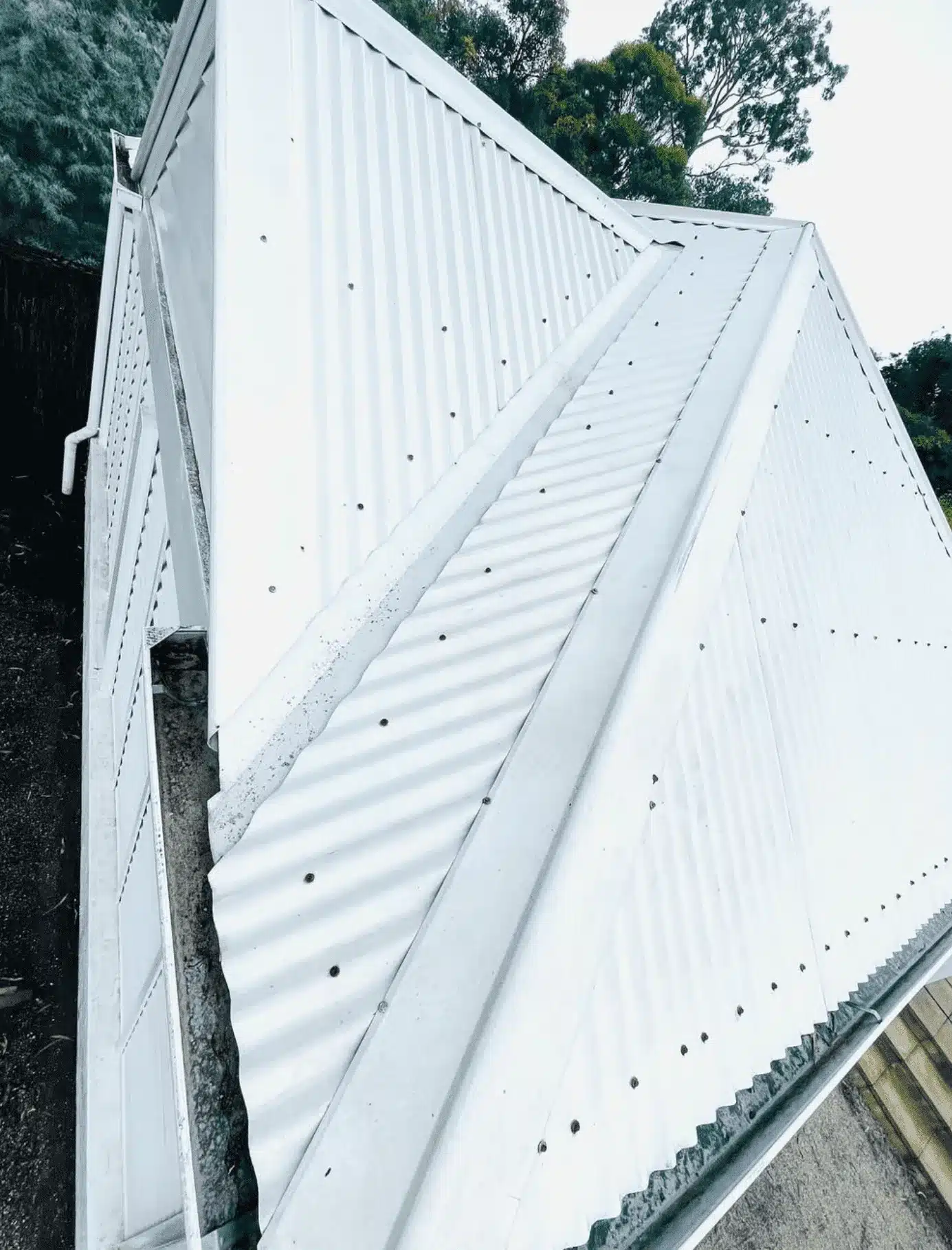
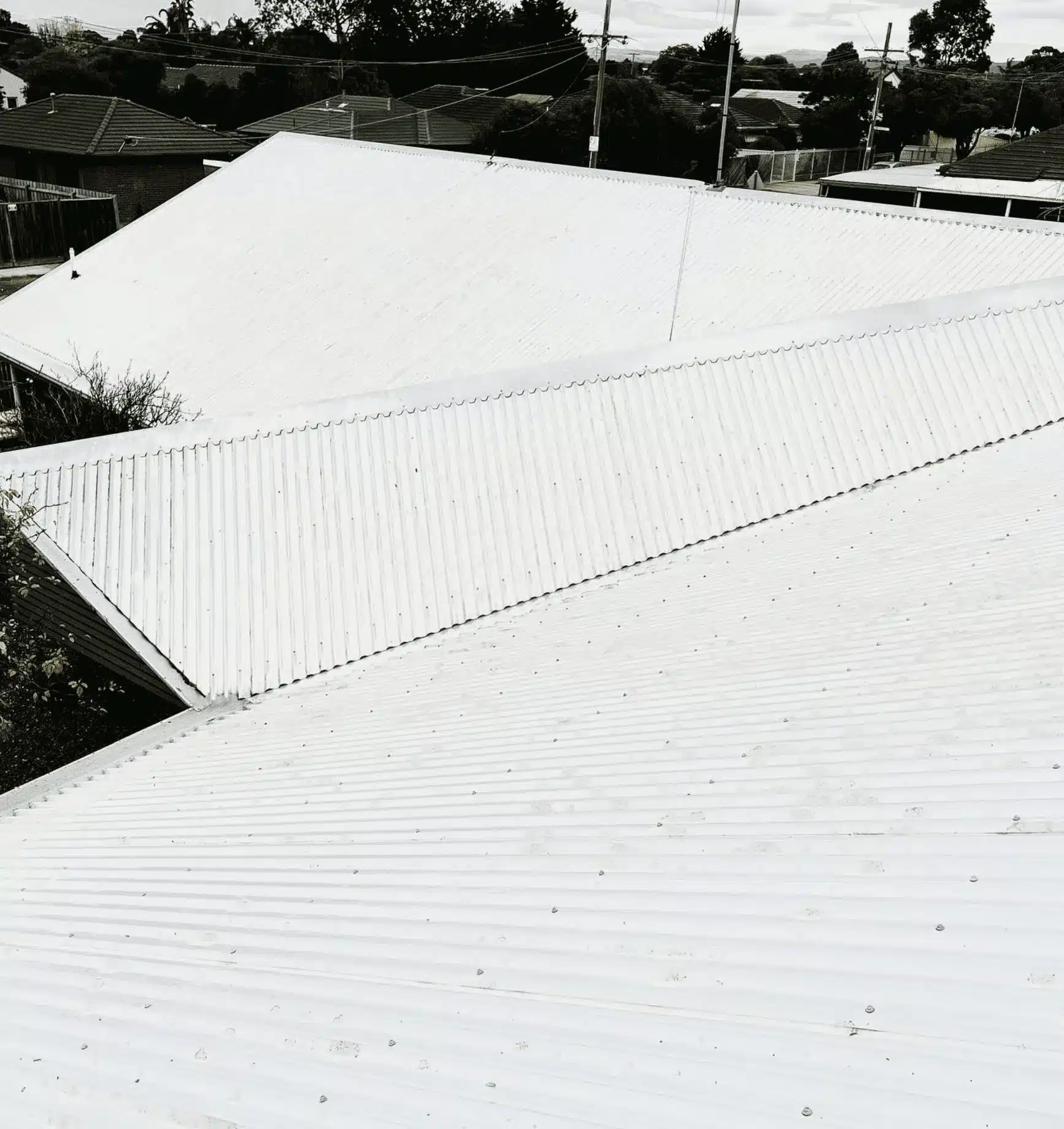
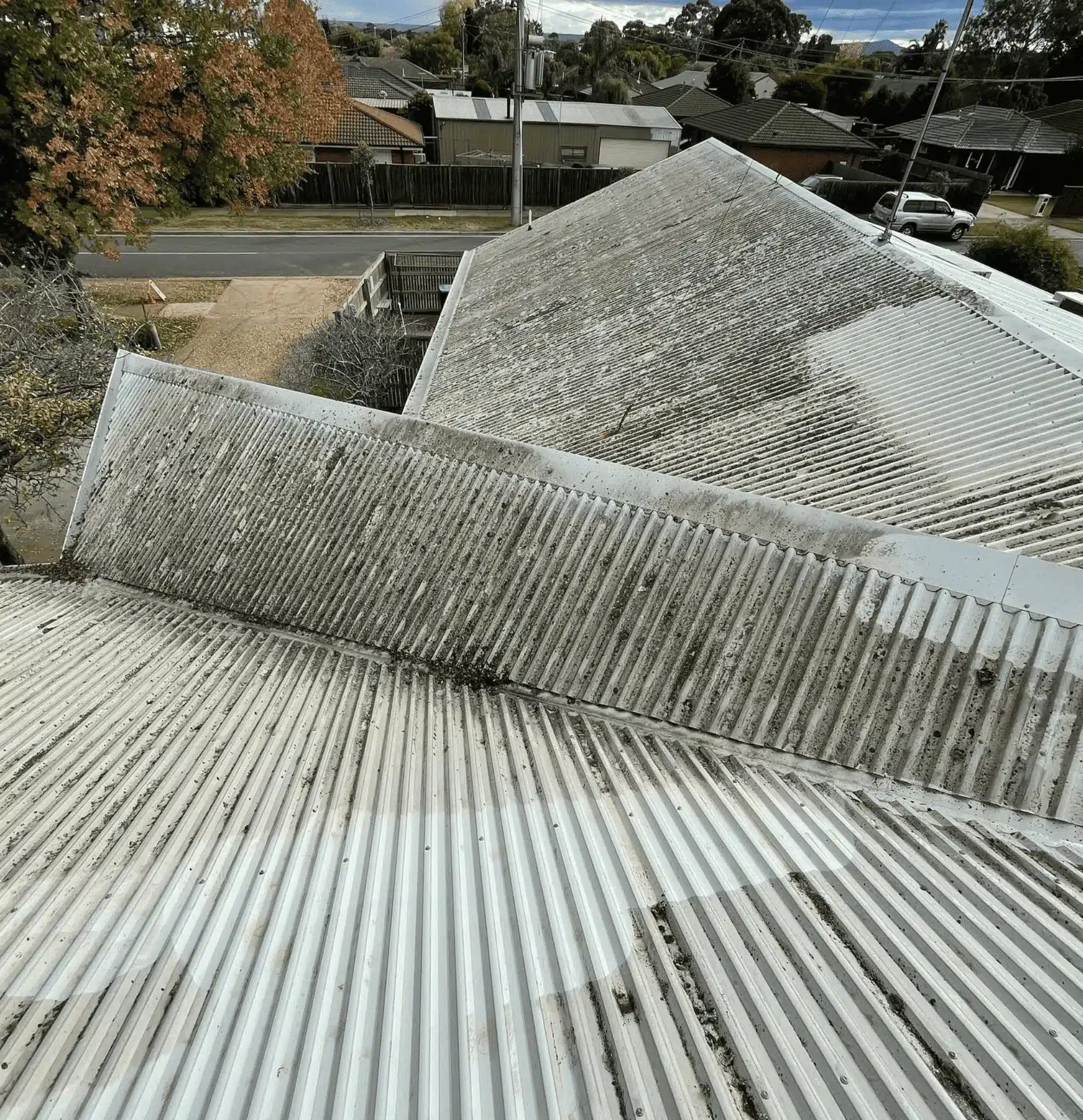
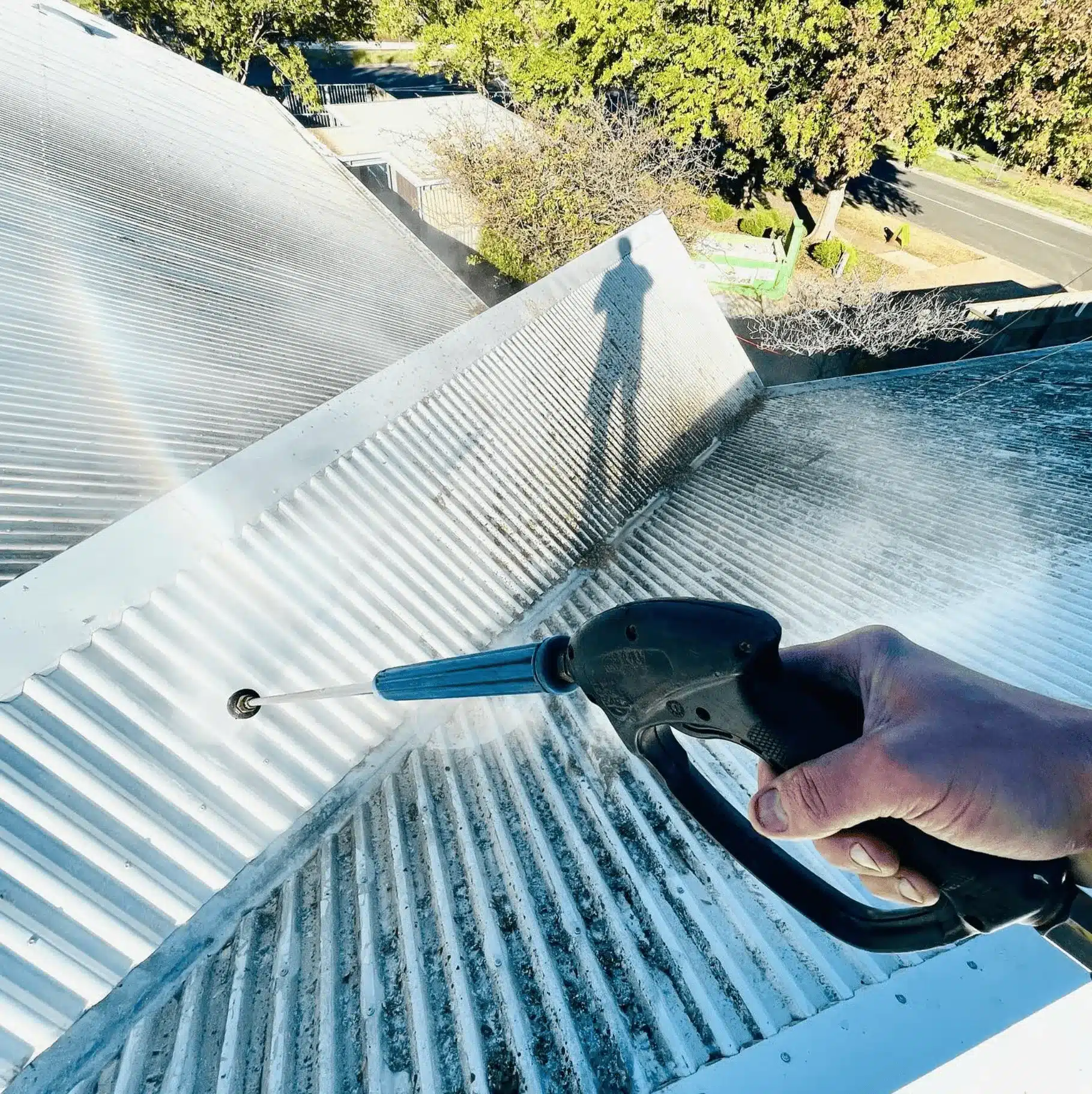
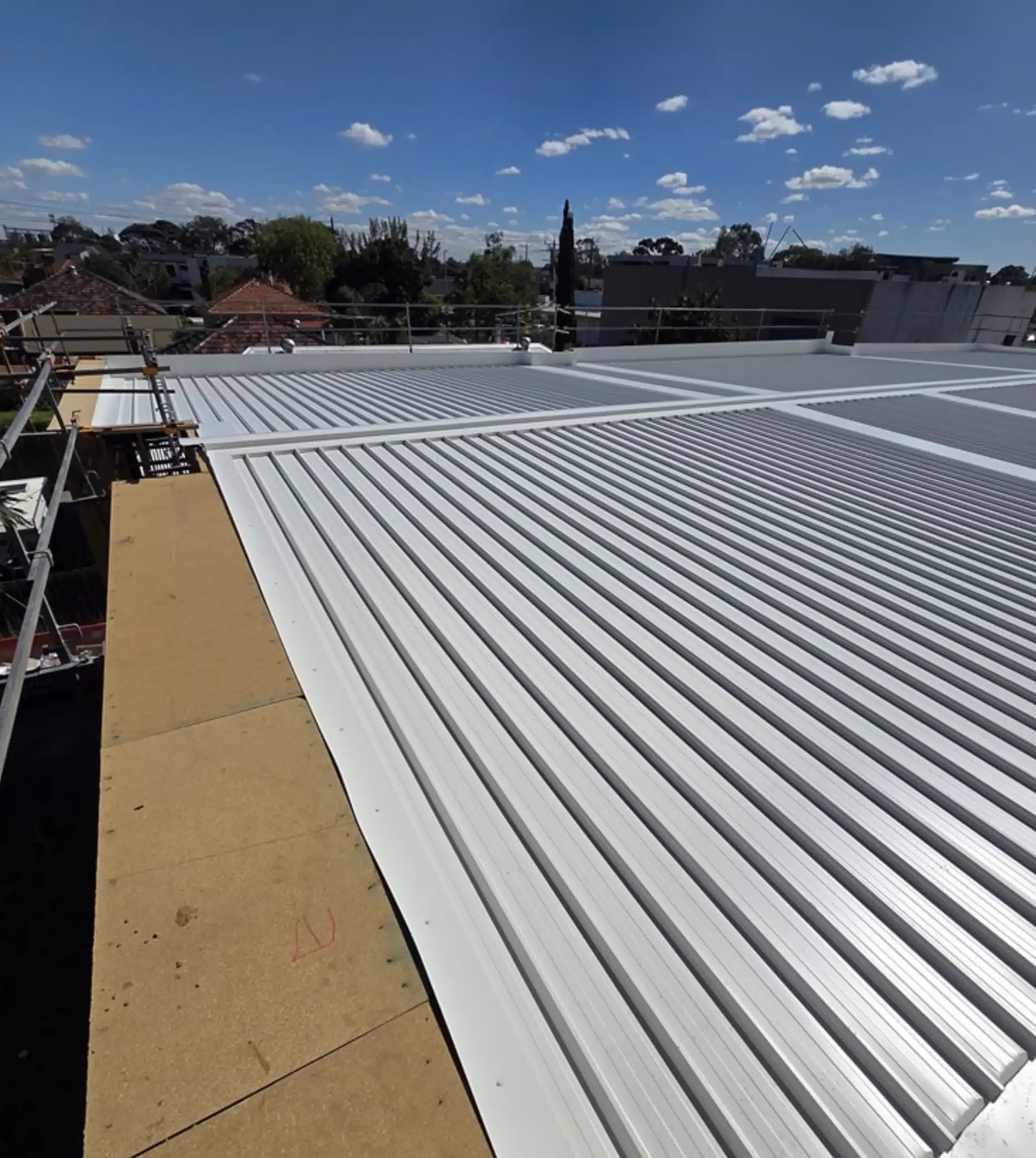
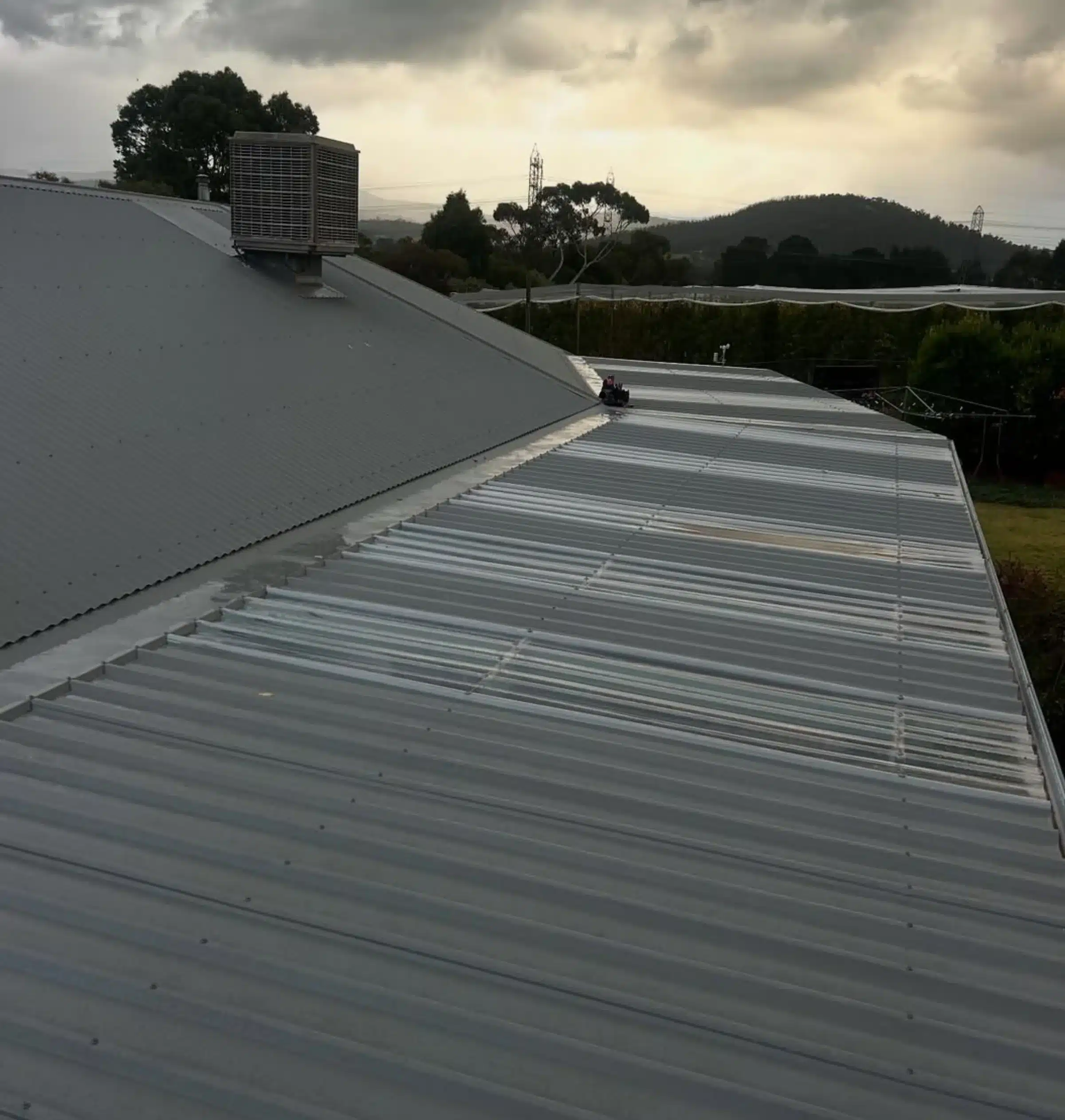
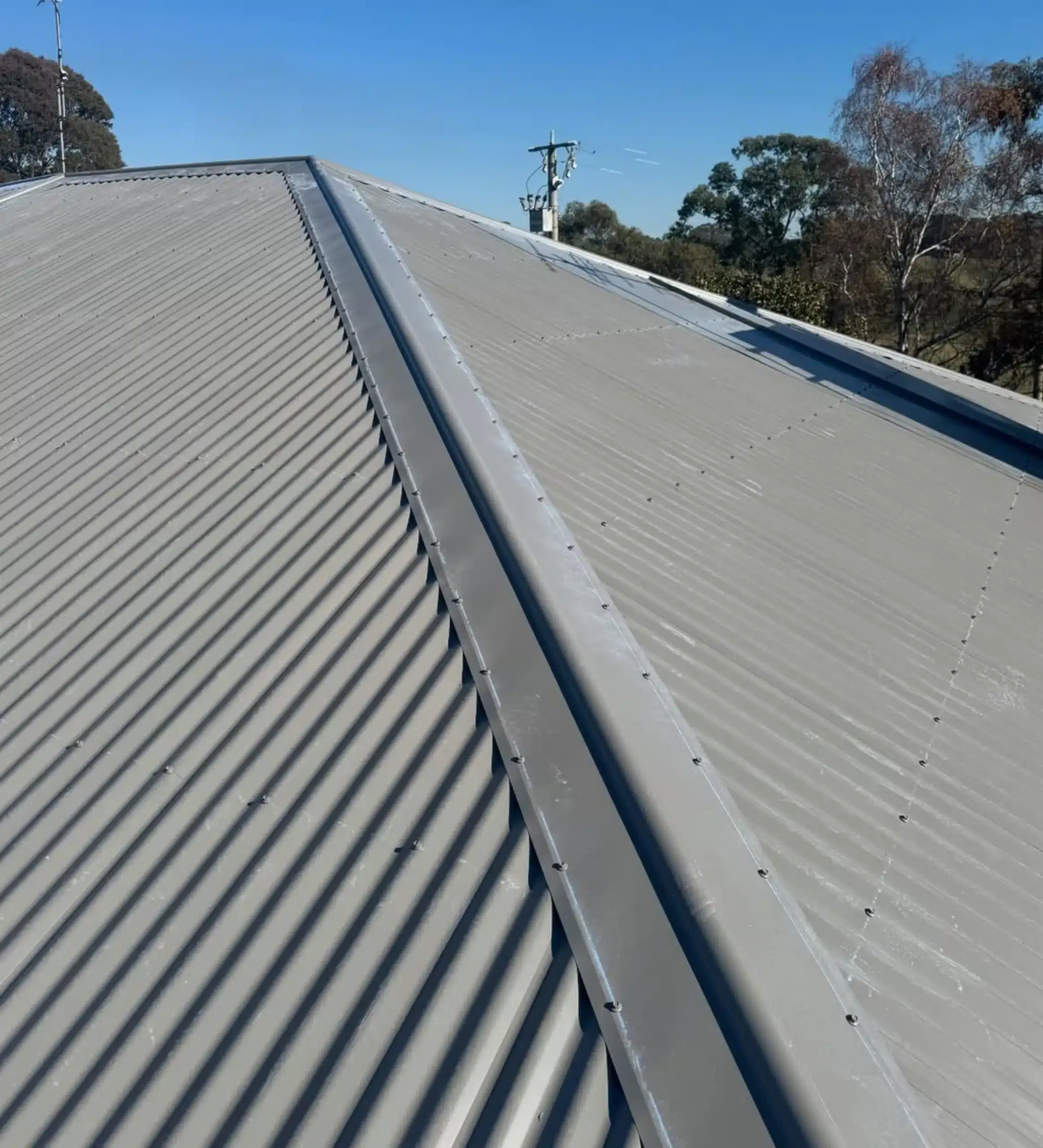
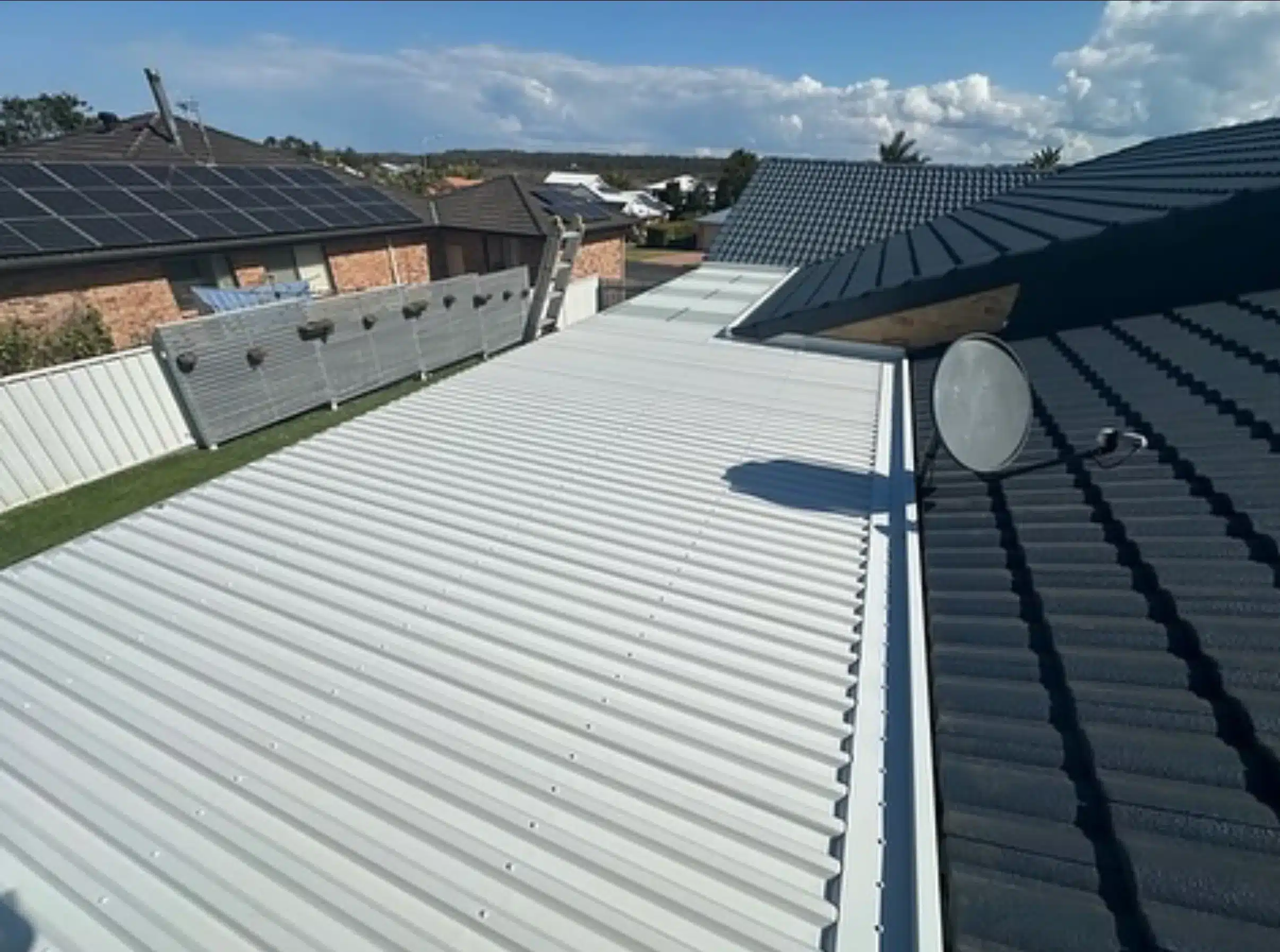
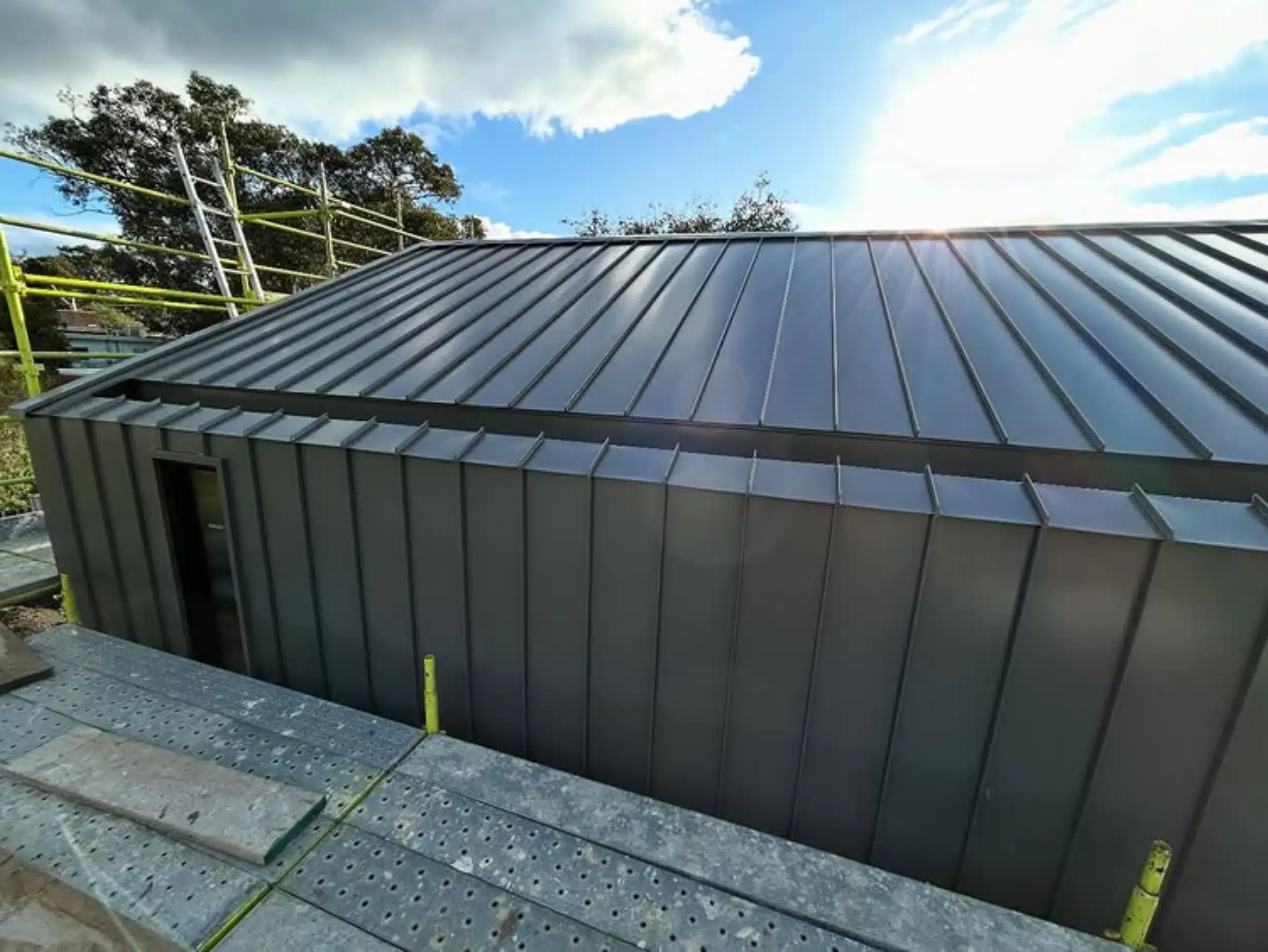
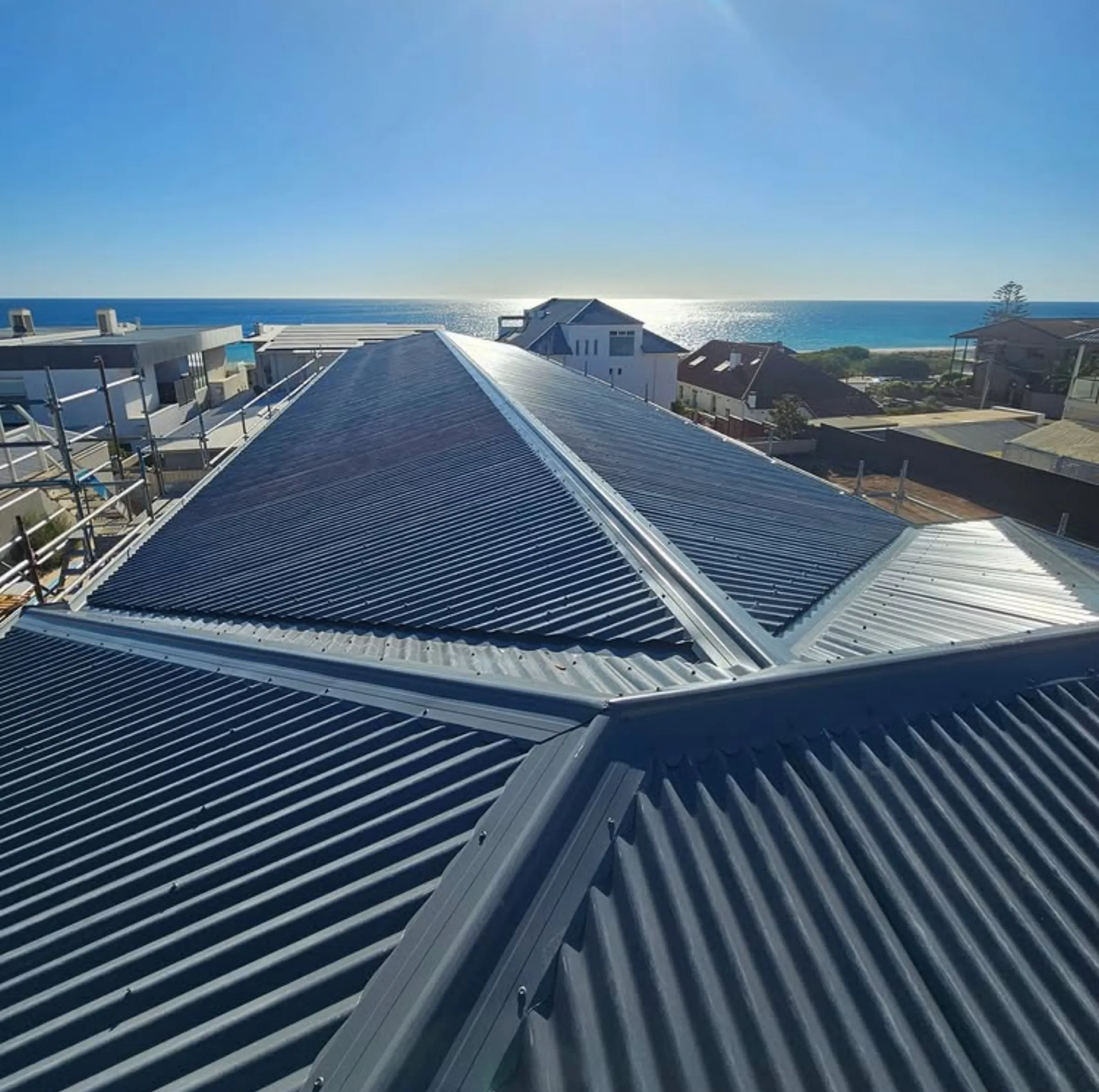
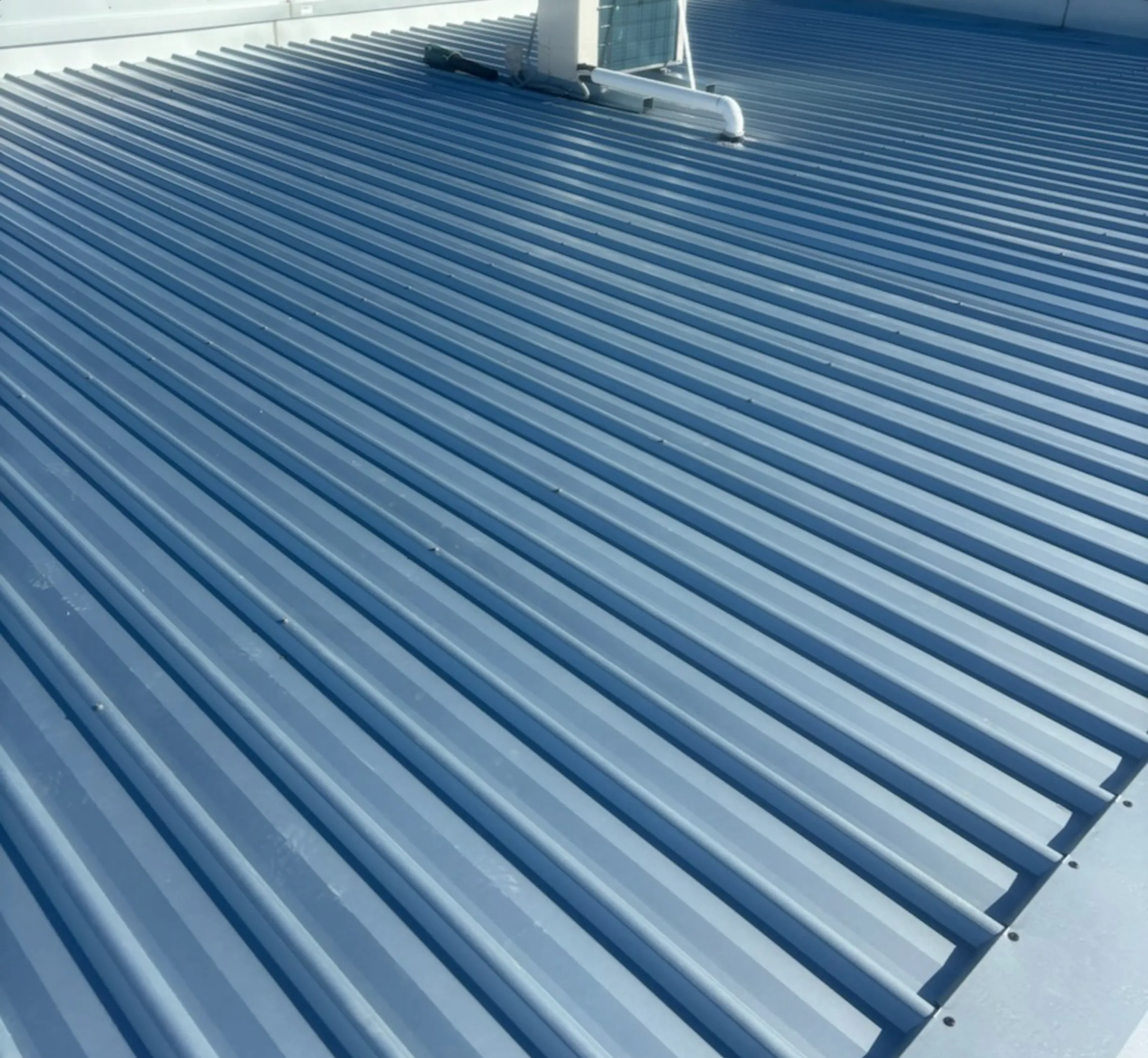
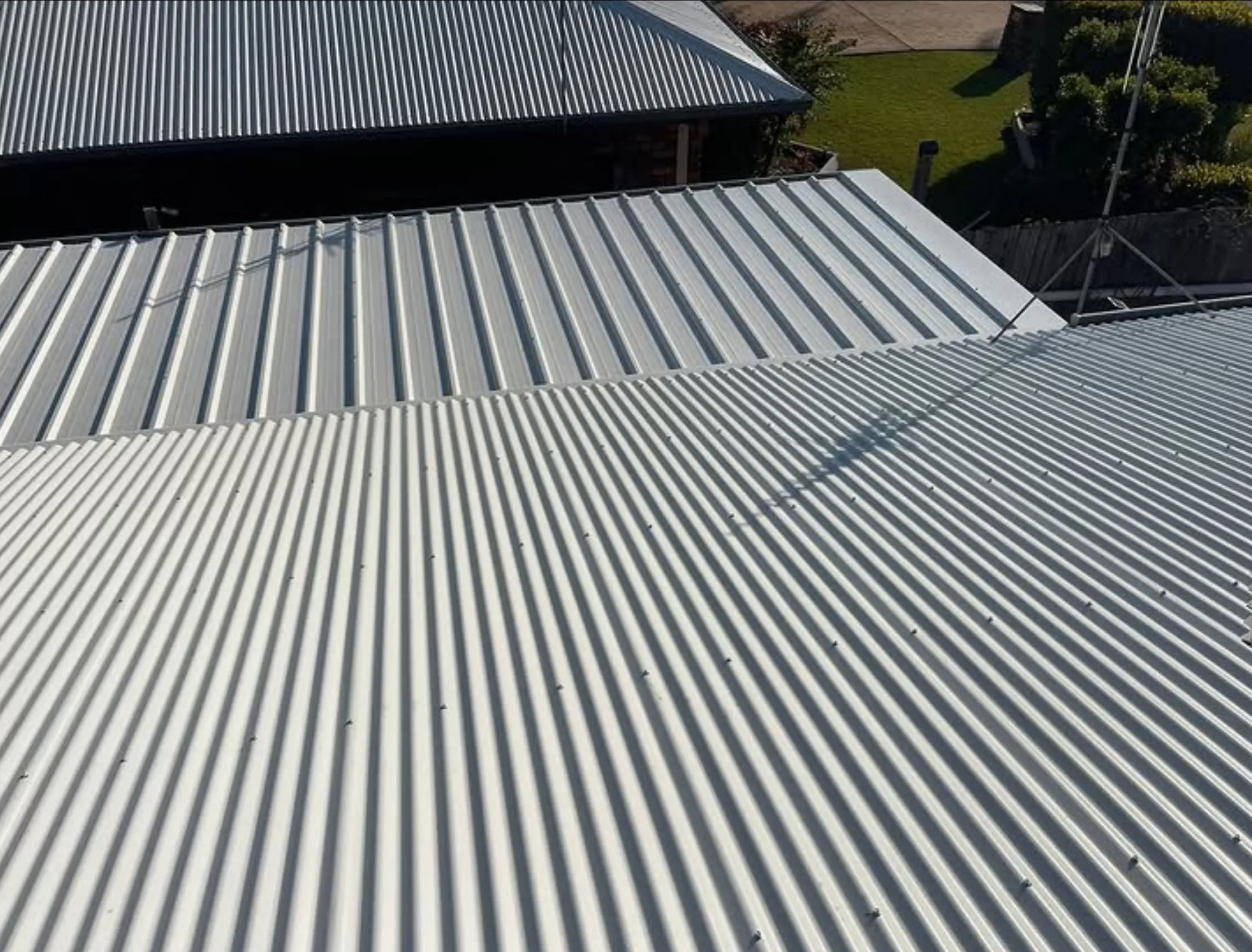
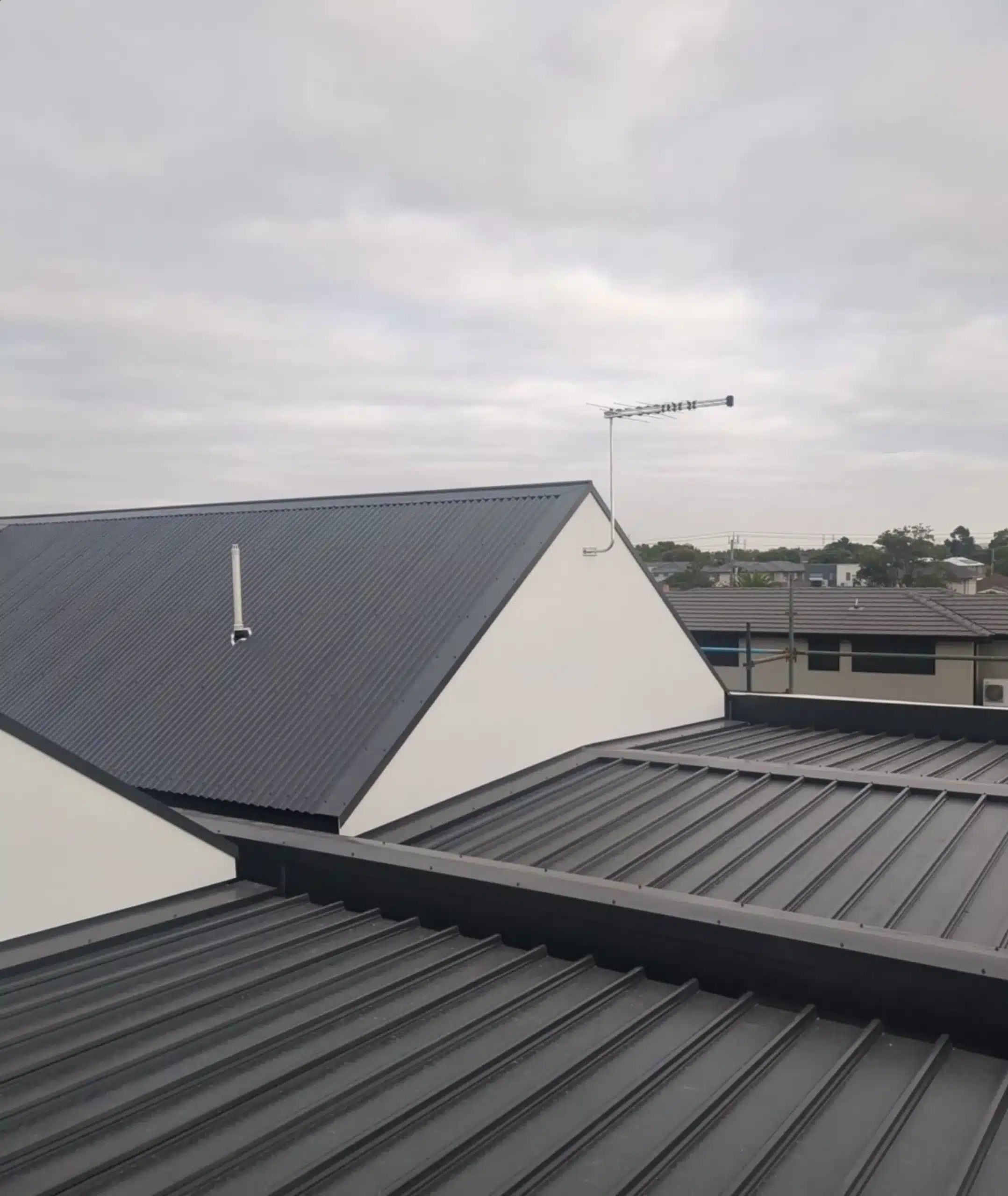
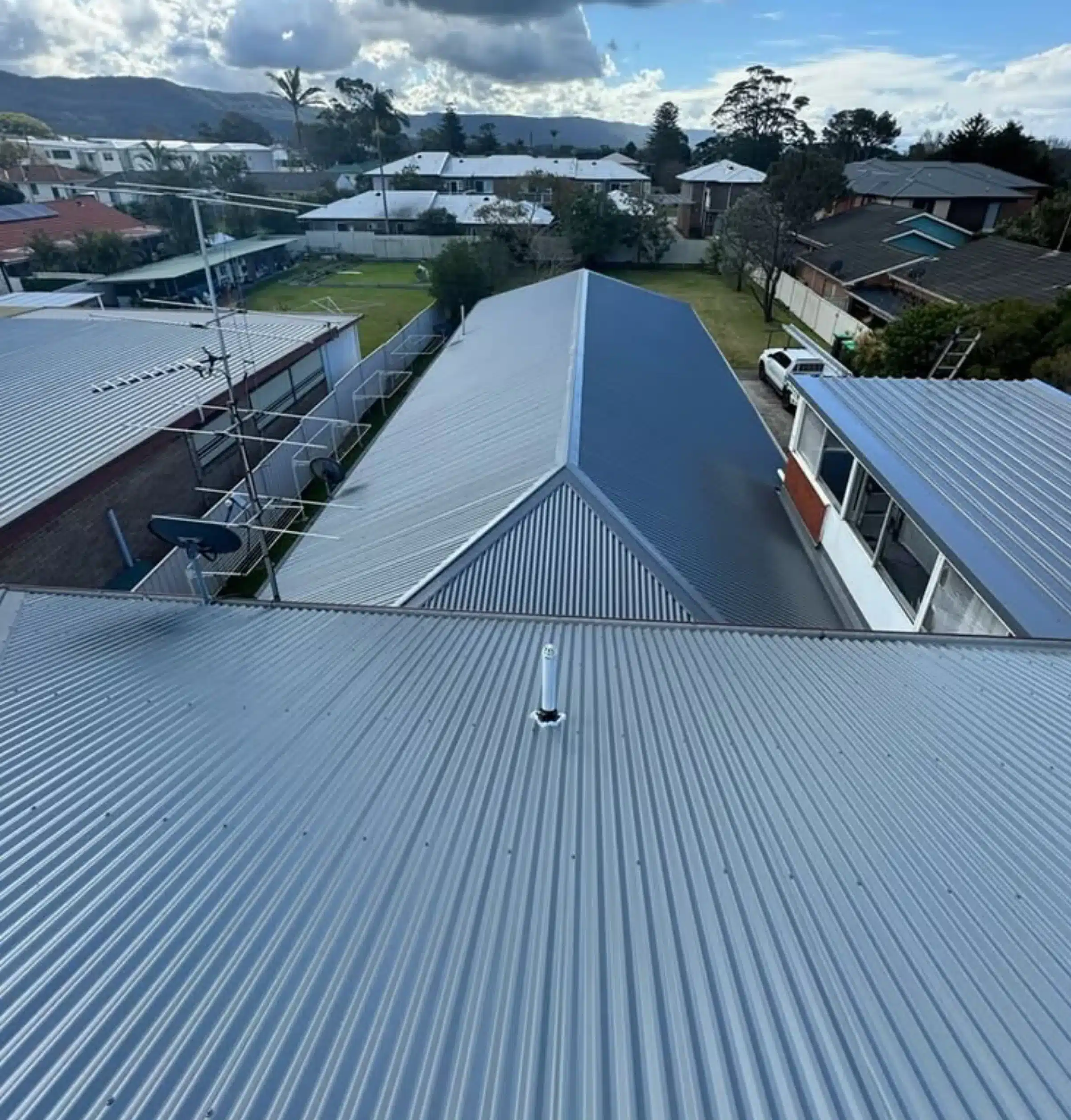
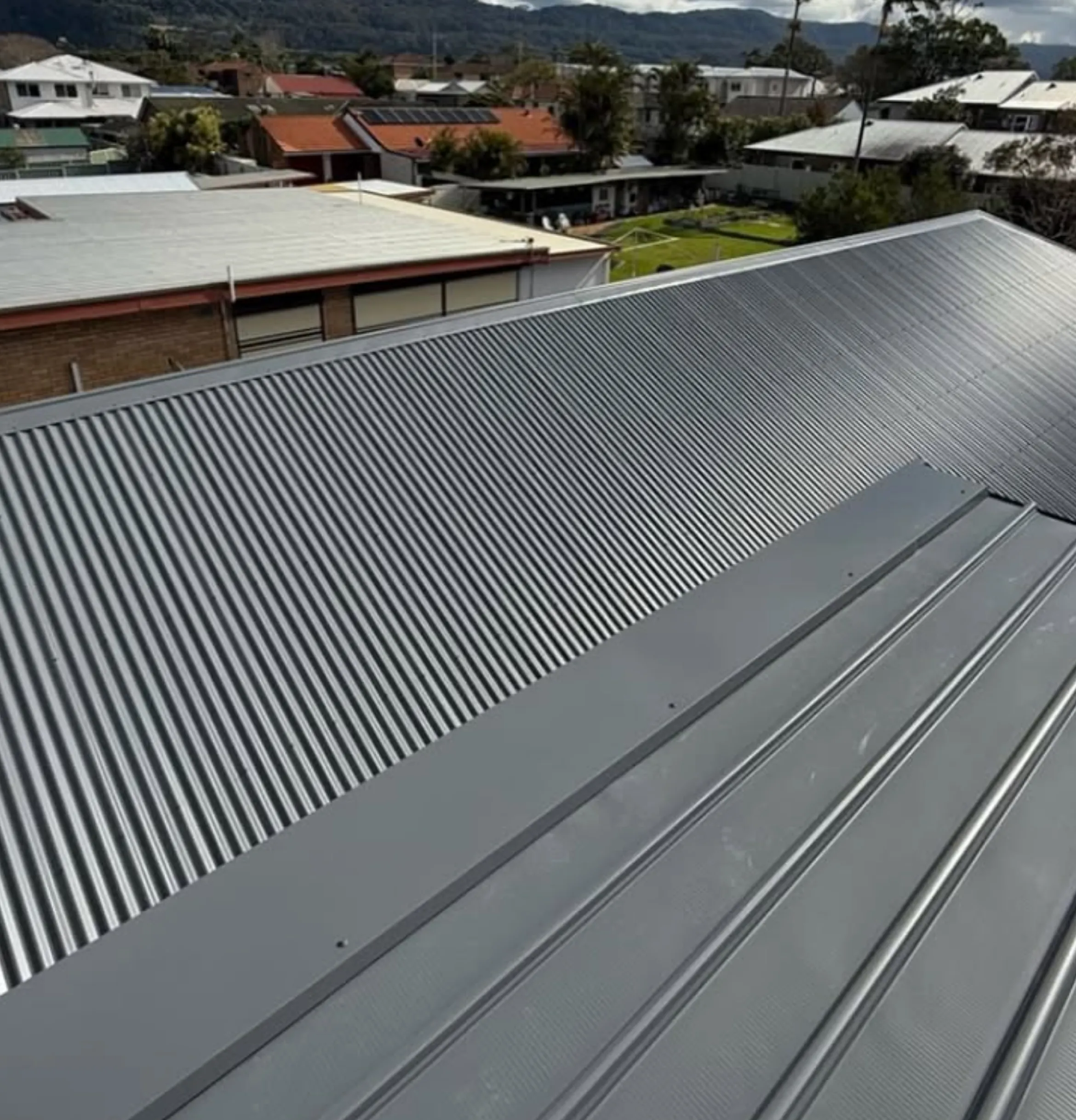
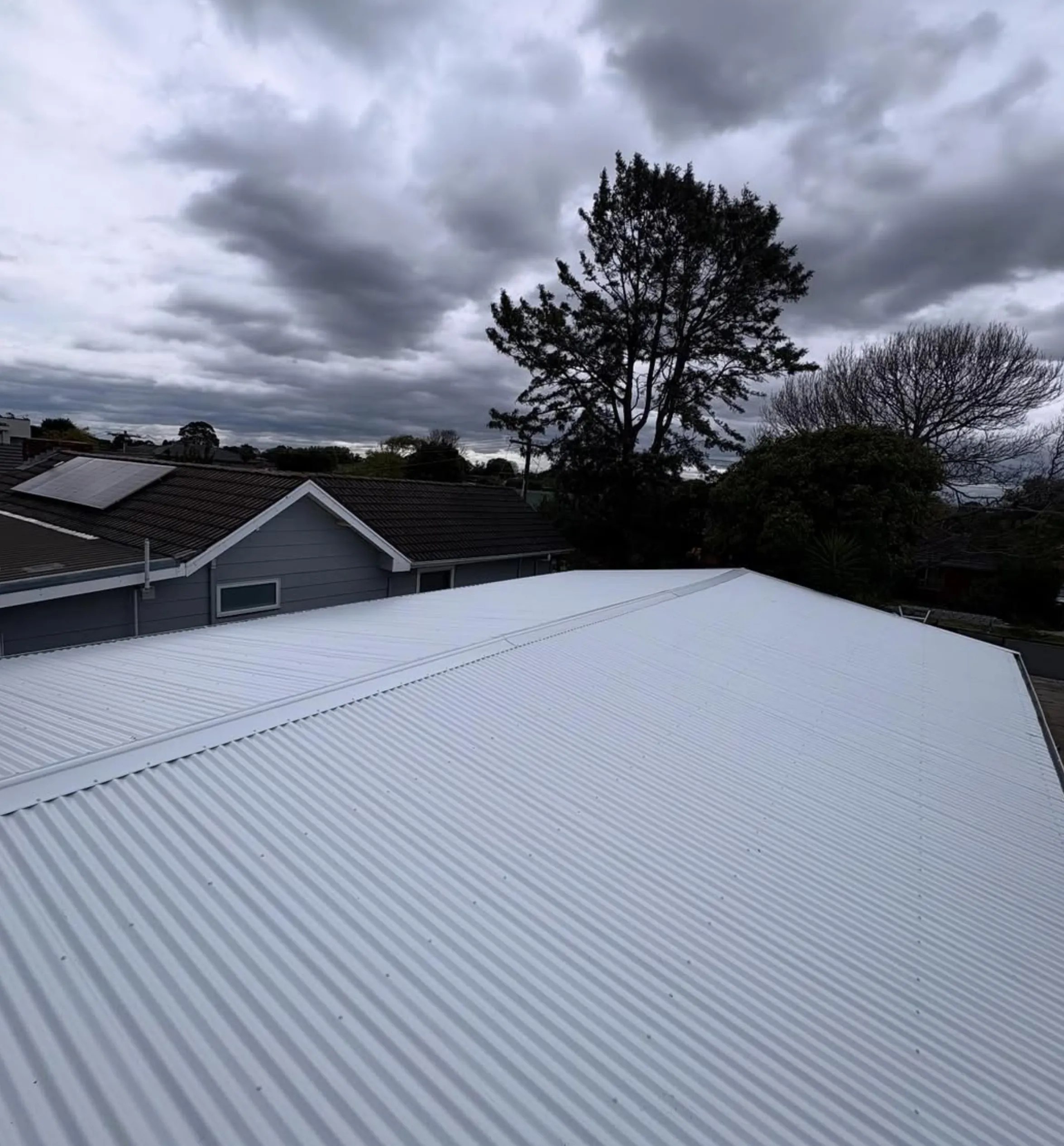
Colorbond roof cleaning removes dirt, organic growth, bird droppings and other surface contamination while protecting the roof’s pre-painted finish. At Window Cleaning Melbourne Crew, we assess the roof surface, contamination and access before selecting an appropriate cleaning approach. Light dirt calls for a different response from established algae or lichen; rust spots, flashing deterioration and damaged sheets point to condition or repair issues rather than cleaning problems.
- Very nice and professional cleaning team. We order fully cleaning including gutter , townhouse exterior , all windows outside &inside.WaterCrew provides great service and affordable price .read moreread lessping lee10/11/2026Thankyou. Fantastic work, professional and very happy with how clean our windows and surrounds were.read moreread lessStephanie Johnston10/02/2026Excellent & professional in all ways.read moreread lessWendy Haines9/24/2026
- Eren did a sensational job & his communication was fantastic - would definitely use again & recommend 👍read moreread lessTony Murdoch8/26/2026Eren was professional, efficient and completed the roof cleaning to a very high standard. The service was prompt, the workmanship was excellent, and the overall result was fantastic. Highly recommend Eren for anyone looking for reliable and quality roof cleaning services.read moreread lessJanan8/24/2026Excellent. Efficient, thorough, and swift!read moreread lessLu Lu7/15/2026
- Very happy with the service. They were clean, professional and left everything tidyPlus the job was done beautifullyMany thanks!read moreread lessAdelle7/04/2026Highly recommend Eren and his WaterCrew. Have used for gutter cleaning and will in future use for terracotta roof tile cleaning & window cleaning. They do a very thorough and professional job at competitive rates. Also, they are polite, friendly and well spoken.read moreread less
 Alan Thomas6/30/2026Very professional job done in BrightonVery thorough and was on time !!!!read moreread lessRENATO CENEDESE6/12/2026


What Are Colorbond Roofs?
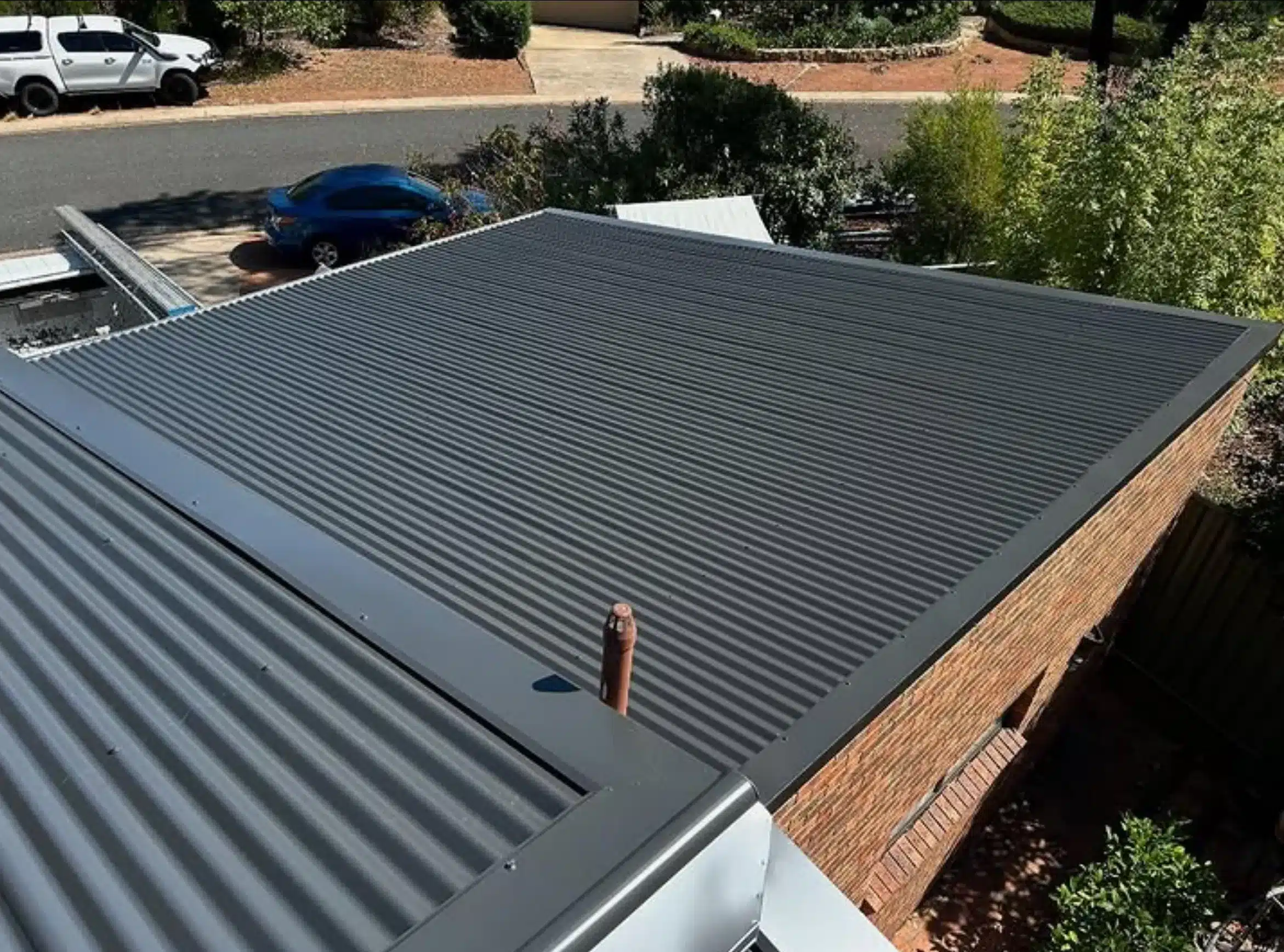
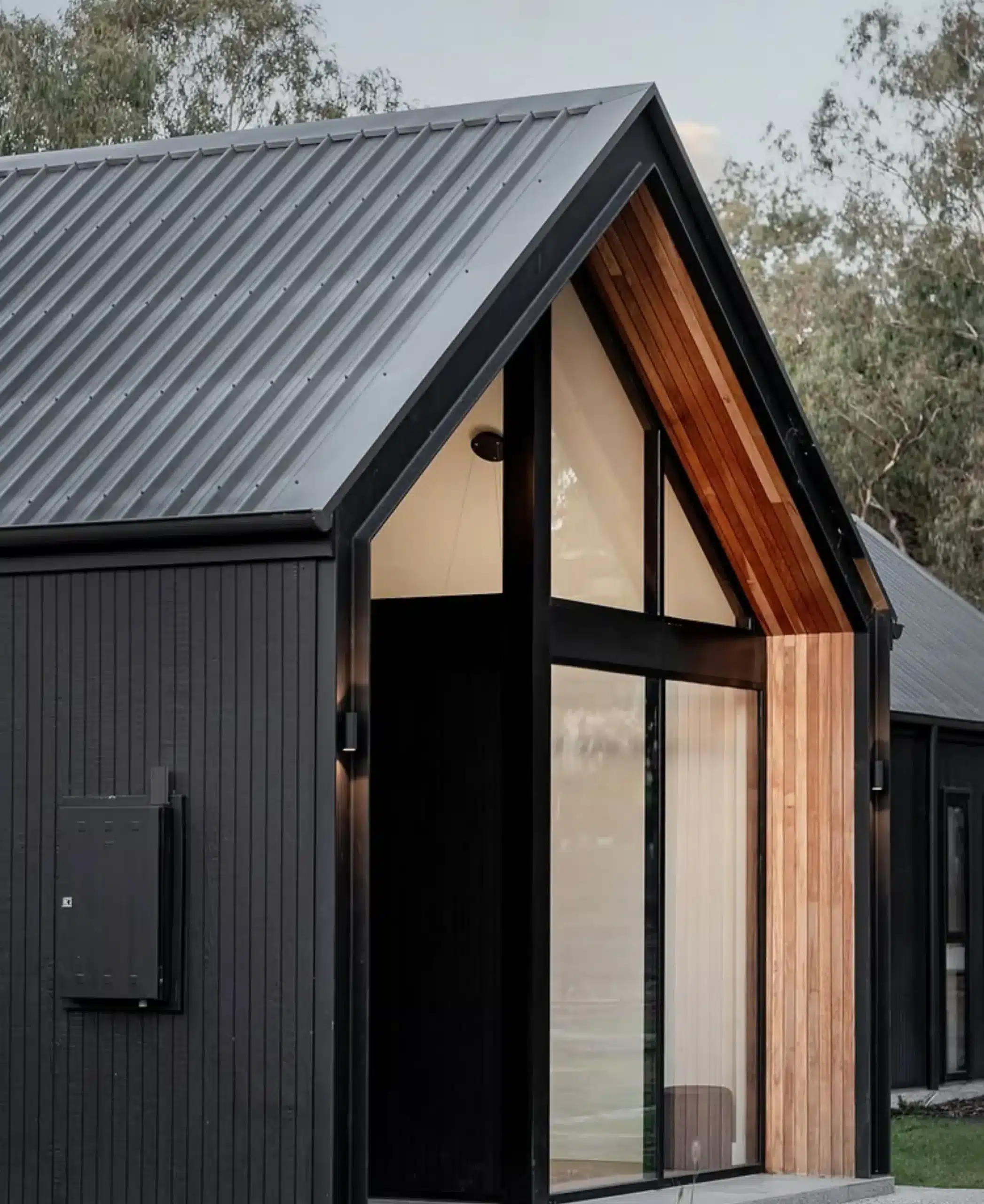
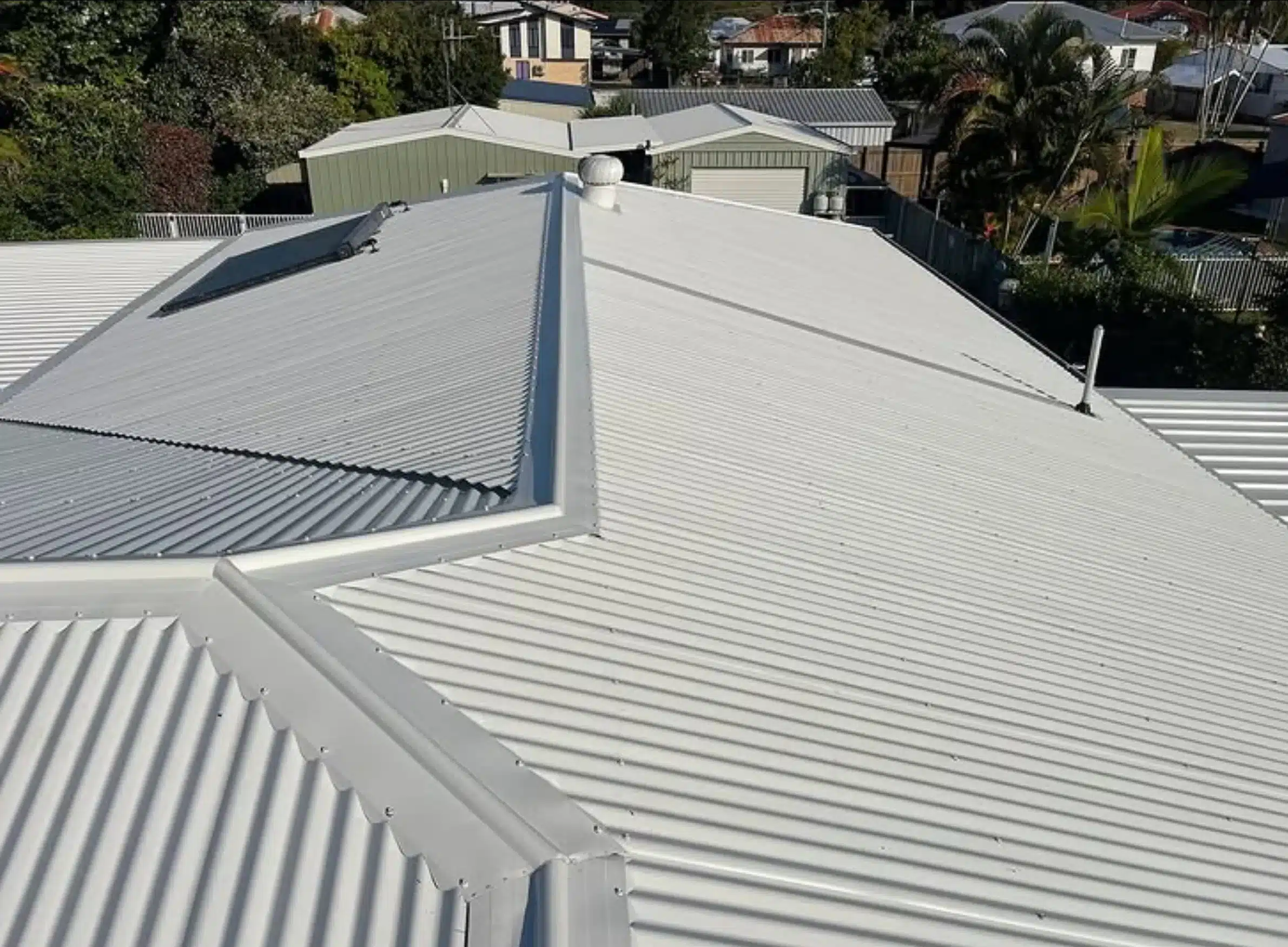
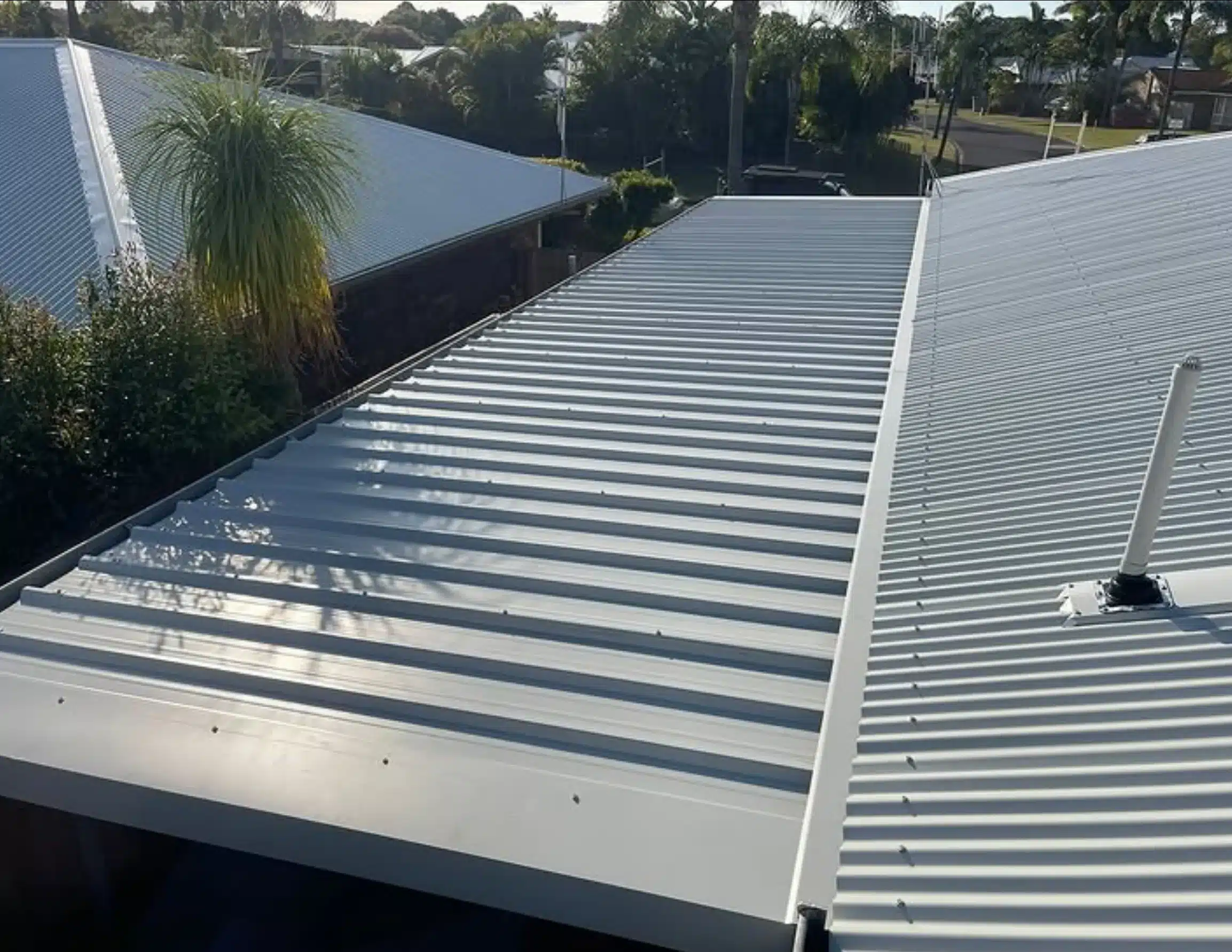
Colorbond roofs are made from pre-painted, coated steel. Because the visible roof surface is factory-finished, cleaning needs to account for the coating rather than treating it like bare metal.
Manufacturer maintenance guidance recommends gentle cleaning. Where water alone does not remove dirt, it recommends mild, pure soap or non-abrasive detergent, applied gently with a sponge, soft cloth or soft-bristle nylon brush, followed by a fresh-water rinse. Abrasive scourers and steel wool should be avoided.
Rain-washed and unwashed areas can have different maintenance needs even on the same property. Surfaces regularly exposed to rainfall are naturally rinsed; sheltered areas can retain dirt and other deposits for longer, including salts from marine exposure. Manufacturer guidance makes the same distinction and recommends more frequent attention to unwashed surfaces in coastal environments where marine salt spray is prevalent.
Common Colorbond Roof Issues
A roof inspection needs to determine what is actually on the surface before deciding whether cleaning is appropriate and how aggressive the method should be.
Common cleaning issues include:
- Airborne dust and general grime;
- Leaf litter and organic debris;
- Bird droppings;
- Algae, mould and other organic growth;
- Lichen attached to the roof surface;
- Salt stains or deposited salts;
- Contamination in areas receiving limited natural rain washing.
These are different from roof or coating defects. Rust spots, fading, scratches, coating deterioration, damaged sheets and flashing deterioration are not simply dirt.
Small rust-like marks can also come from steel particles left after cutting or drilling, which may corrode and produce localised staining. A rust-coloured mark, therefore, should not automatically be treated as ordinary surface dirt.
Cleaning removes material sitting on the coating; it does not replace coating that has faded, scratched or deteriorated. It may reveal defects more clearly, but it cannot restore damaged roofing. Making that distinction before selecting a cleaning method helps set realistic expectations.
Benefits of Regular Cleaning
Cleaning can improve the appearance of residential and commercial roofs and make the surface easier to assess visually.
A fixed schedule is not necessary for every Colorbond roof. Manufacturer guidance states that naturally rain-washed surfaces generally do not require routine freshwater washing. Areas that do not receive regular rain washing should be hosed down with clean fresh water at least every six months, with more frequent attention where marine salt spray or high levels of industrial fallout are present.
That six-month interval applies to unwashed areas, not professional cleaning of the entire roof twice a year.
Corrosion, damaged sheets, flashing deterioration or possible leaks may require assessment by a roof plumber or another suitably qualified professional rather than cleaning.
Choosing the Right Method
We choose the cleaning approach based on the roof, rather than applying a single pressure-cleaning system to every property.
| Roof condition | Cleaning consideration | What changes our approach |
|---|---|---|
| Light dirt or dust | Gentle washing may be sufficient | Amount and location of build-up |
| Bird droppings and organic residue | Deposits need controlled removal | Adhesion and affected area |
| Algae or mould | Soft washing may be considered | Type and extent of growth |
| Established lichen | Requires particular care | Adhesion and coating condition |
| Faded or deteriorated coating | Cleaning cannot restore the finish | Existing surface condition |
| Corrosion or damaged sheets | Cleaning is not the primary solution | Repair may be required first |
High-pressure cleaning is not the default simply because the roof is metal. Heavy contamination does not automatically justify higher pressure, either. The amount of build-up and the condition of the coating are separate considerations: a heavily contaminated roof with a weathered or damaged finish may call for a more cautious approach, not greater mechanical force.
Soft wash roof cleaning can be suitable for some forms of organic contamination, provided the method and cleaning product are appropriate for the coated surface and surrounding materials.
The practical principle is to use the least aggressive effective approach for the contamination and roof condition. Depending on what we find, that may mean gentle washing, soft washing or carefully controlled pressure cleaning.
What Happens During a Roof Clean?
A Colorbond roof clean starts with assessment, not pressure washing. We consider the contamination, visible roof condition, pitch and access, as well as obstacles such as skylights, vents and solar panels.
The process generally follows four stages:
- Assess the roof and contamination. Separate removable build-up from deterioration or defects.
- Select the cleaning approach. Match the method to the contamination and condition of the coated surface.
- Clean in controlled sections. Remove contamination without unnecessary abrasion or aggressive pressure.
- Rinse and review. Remove residue and check for remaining contamination and visible defects.
Solar panels can restrict access and create harder-to-reach sections. Roof cleaning and solar panel cleaning are separate tasks, so panel cleaning should not be assumed to be included.
Safety
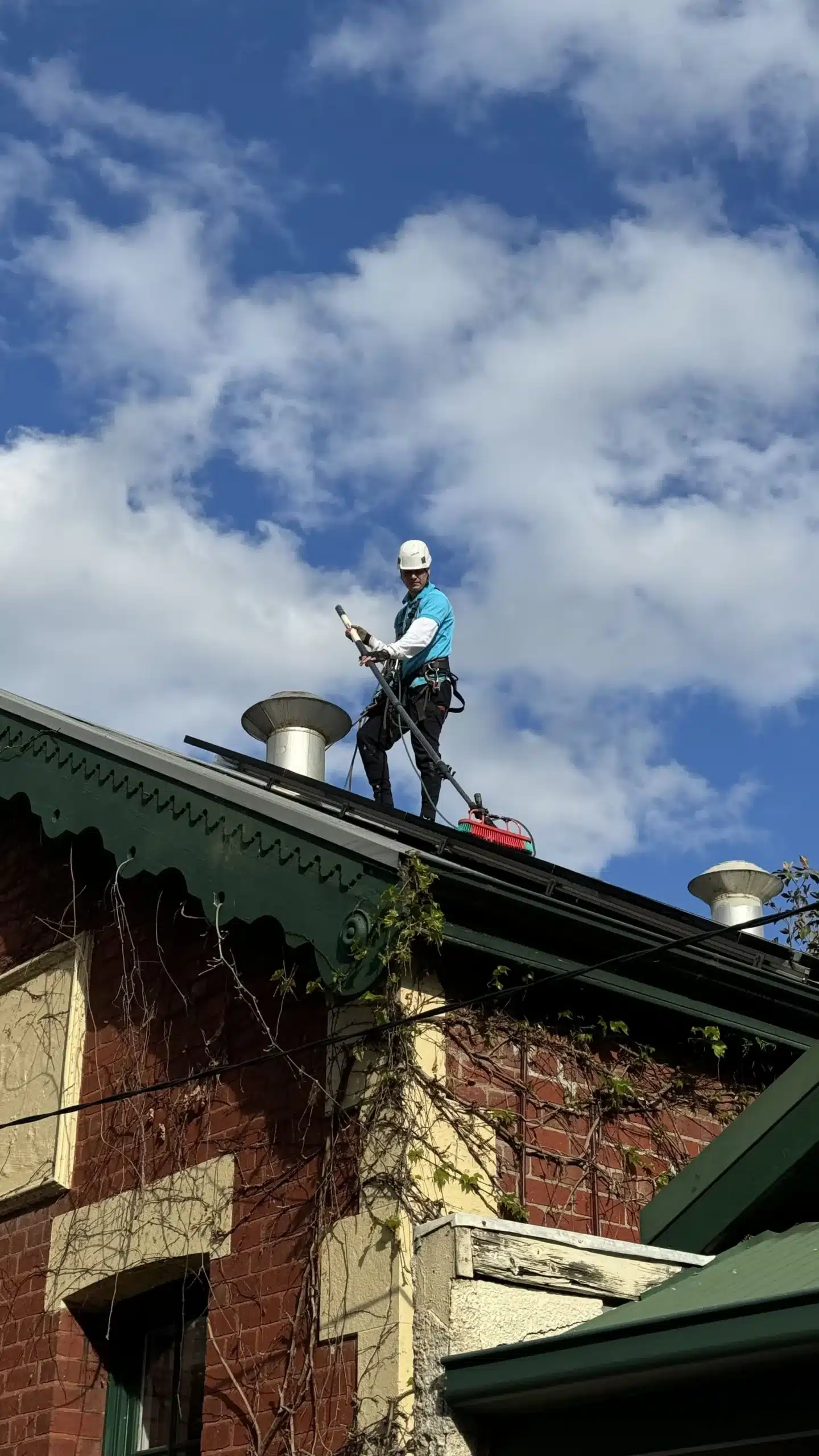
Water, height, and sloping metal surfaces make roof cleaning hazardous, particularly around skylights, solar panels and roof penetrations.
In Victoria, construction work with a fall risk of more than 2 metres is classified as high-risk construction work. WorkSafe Victoria guidance also specifies that catch platforms should be no more than 1 metre below the roof edge at pitches up to 26°, reducing to 300 mm above 26° or where roofing is slippery. Above 35°, the roof is considered unsafe to stand on, even with guardrailing or a catch platform, and requires an additional system to prevent sliding and falls.
These thresholds show why roof height, pitch and surface conditions can change the required access and fall-control approach. Wet metal increases the risk further, which is why we do not recommend DIY high-pressure roof cleaning.
Roof Cleaning Checklist
Before arranging Colorbond roof cleaning, check the following from a safe position:
- Is the problem general dirt, organic growth or a particular stain?
- Are there rust spots or signs of coating deterioration?
- Is the roof steep, multi-level or difficult to access?
- Are solar panels, skylights, vents or other penetrations present?
- Are trees depositing leaves or organic material onto the roof?
- Are gutters or roof valleys holding debris?
- Are sections sheltered from regular rainfall?
- Is anything below the roof vulnerable to runoff?
These factors help determine whether cleaning is suitable and what will influence the scope and difficulty of the work.
Work That Holds Up Over Time
How quickly contamination returns depends partly on why it is accumulating. Overhanging vegetation, recurring leaf deposits and sheltered sections can contribute to organic build-up. Where marine salt spray is present, unwashed surfaces can require more frequent maintenance than surfaces naturally rinsed by rain.
There is no universal cleaning interval for every Colorbond roof. Exposure, vegetation, roof design, local conditions and contamination all change the answer.
If your Colorbond roof has visible grime, staining or organic growth, contact us at Window Cleaning Melbourne Crew for an assessment of the surface, contamination and access conditions. The cleaning approach and quote should reflect the actual roof and the difficulty of the work.

Your satisfaction is our top priority. We tailor our services to meet your specific needs

We are committed to environmental responsibility. Our cleaning products are eco-friendly.

Pricing
We offer competitive pricing without compromising on the quality of our services.

Expertise
As a locally owned and operated company, we understand the unique needs of our community.
FAQ
Can you pressure clean a Colorbond roof?
Pressure cleaning may be suitable in some circumstances, but more pressure is not automatically better. The coating condition and level of contamination should determine whether controlled pressure cleaning, gentler washing, or another approach is appropriate.
Is soft washing suitable for Colorbond roofs?
Soft washing can suit some organic contamination, but it is not appropriate for every roof. Surface condition and cleaning-product compatibility need to be considered first.
Will cleaning make faded Colorbond look new again?
No. Cleaning can remove surface contamination, but it cannot replace pigment, repair scratches or restore a deteriorated coating.
What affects the cost of Colorbond roof cleaning?
Roof size, pitch, height, access, contamination, solar panels and other obstacles, and the required cleaning method can all affect the quote.
Can you clean a Colorbond roof with solar panels installed on it?
Potentially, but solar panels can change access and create areas that require additional consideration. Their position needs to be assessed before cleaning, and solar panel cleaning should not be assumed to be included.
SEO Title: Colorbond Roof Cleaning Melbourne
Meta Description: Professional Colorbond roof cleaning in Melbourne for dirt, algae, lichen and organic growth using surface-appropriate cleaning methods.