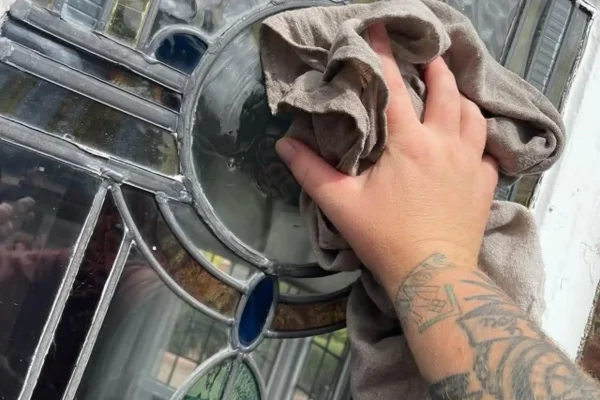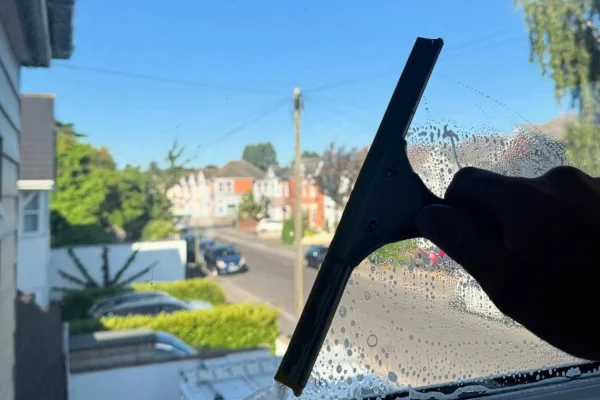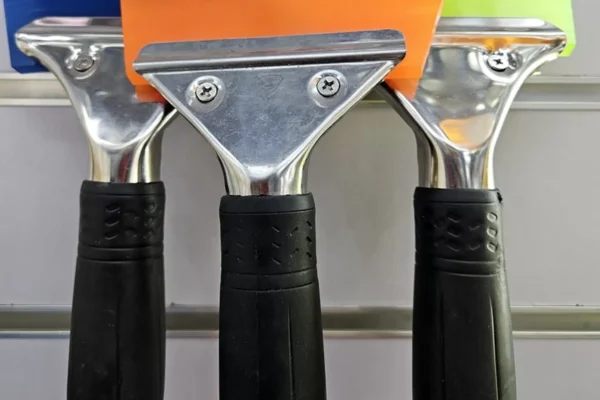
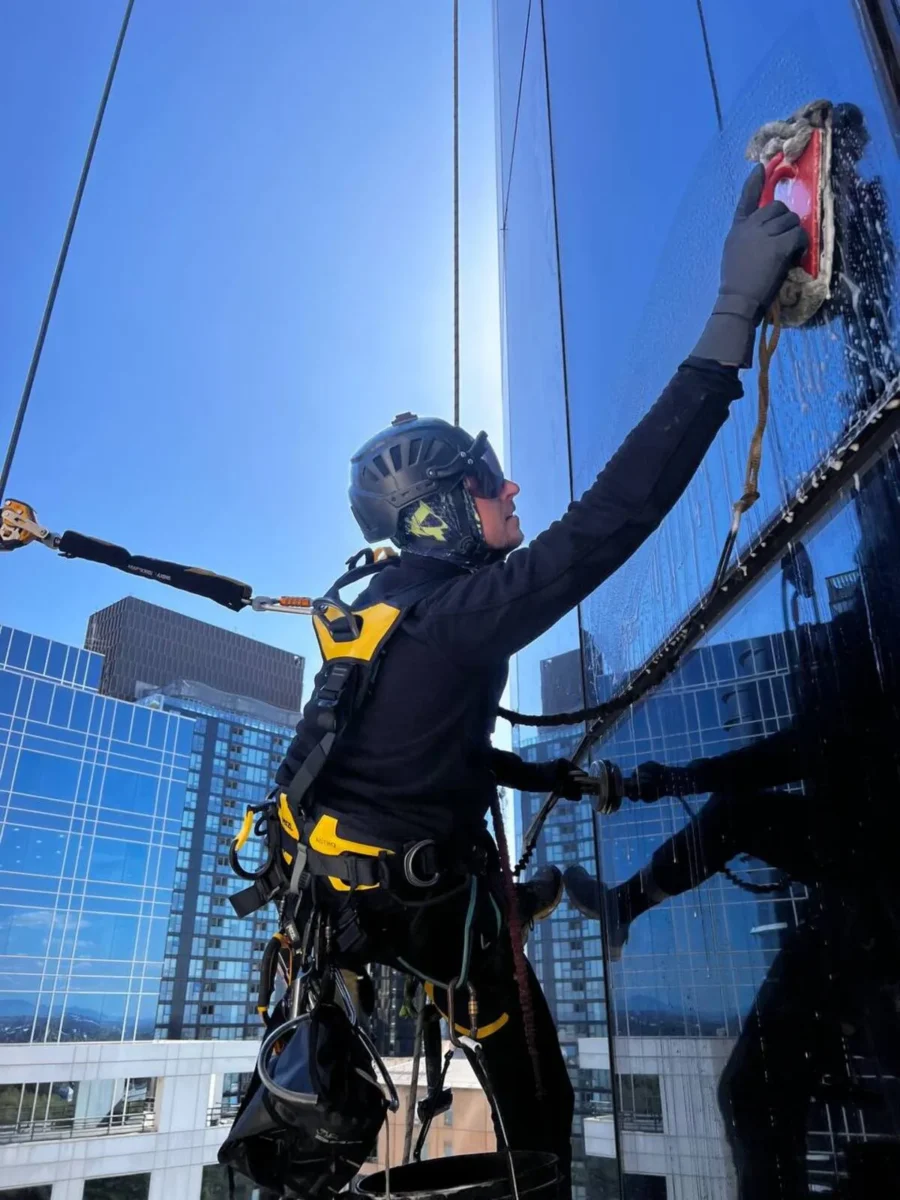
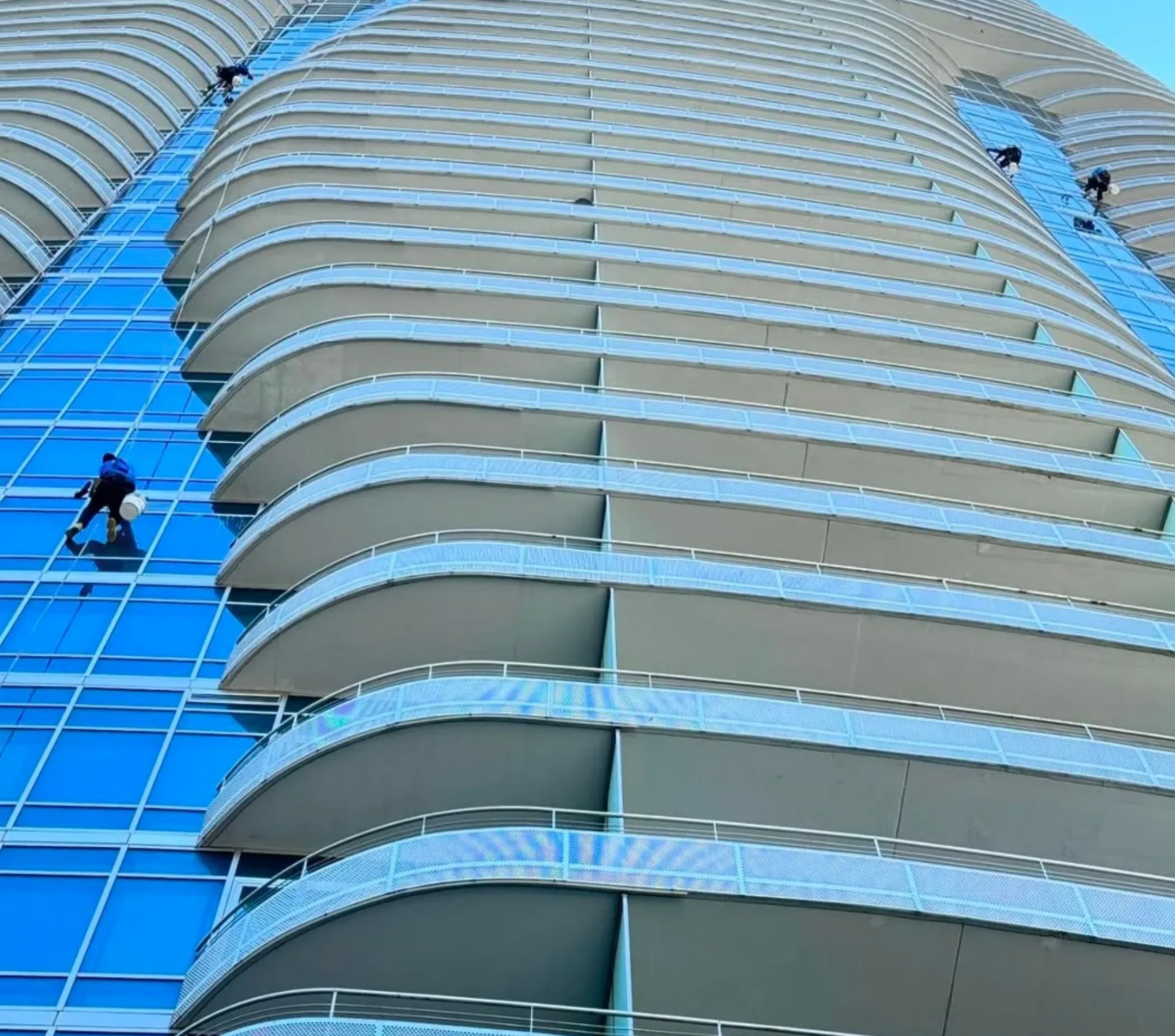
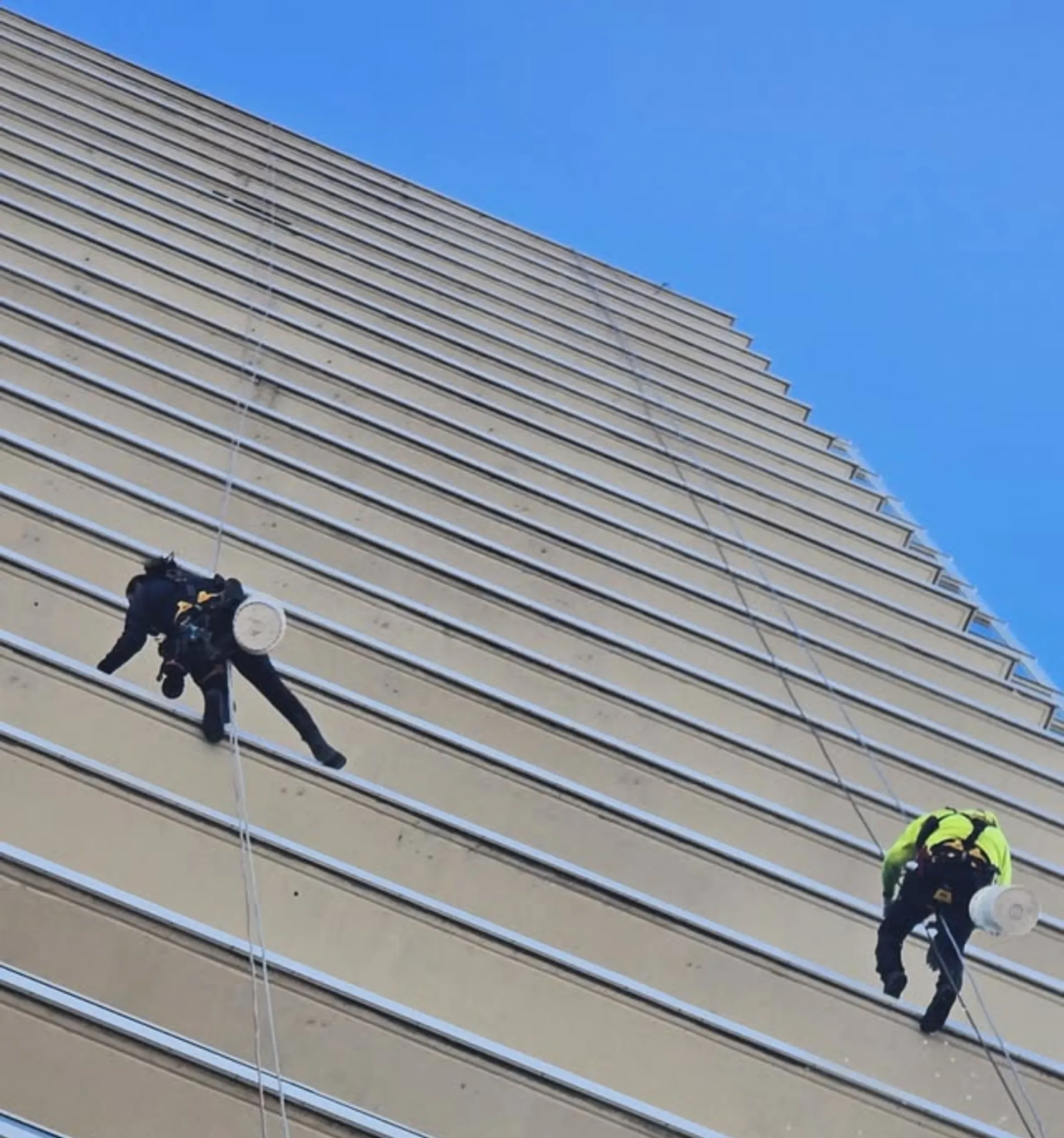
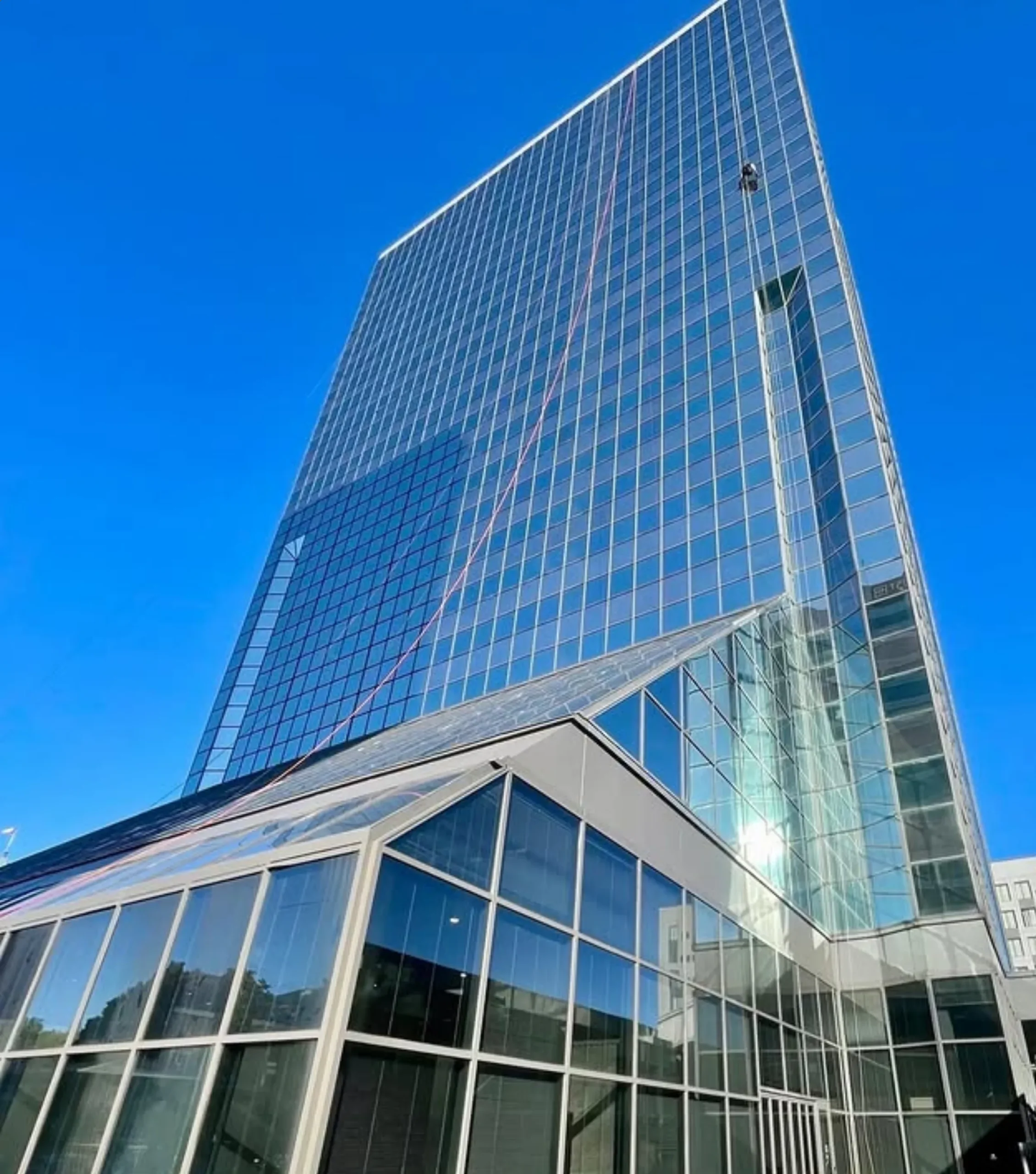
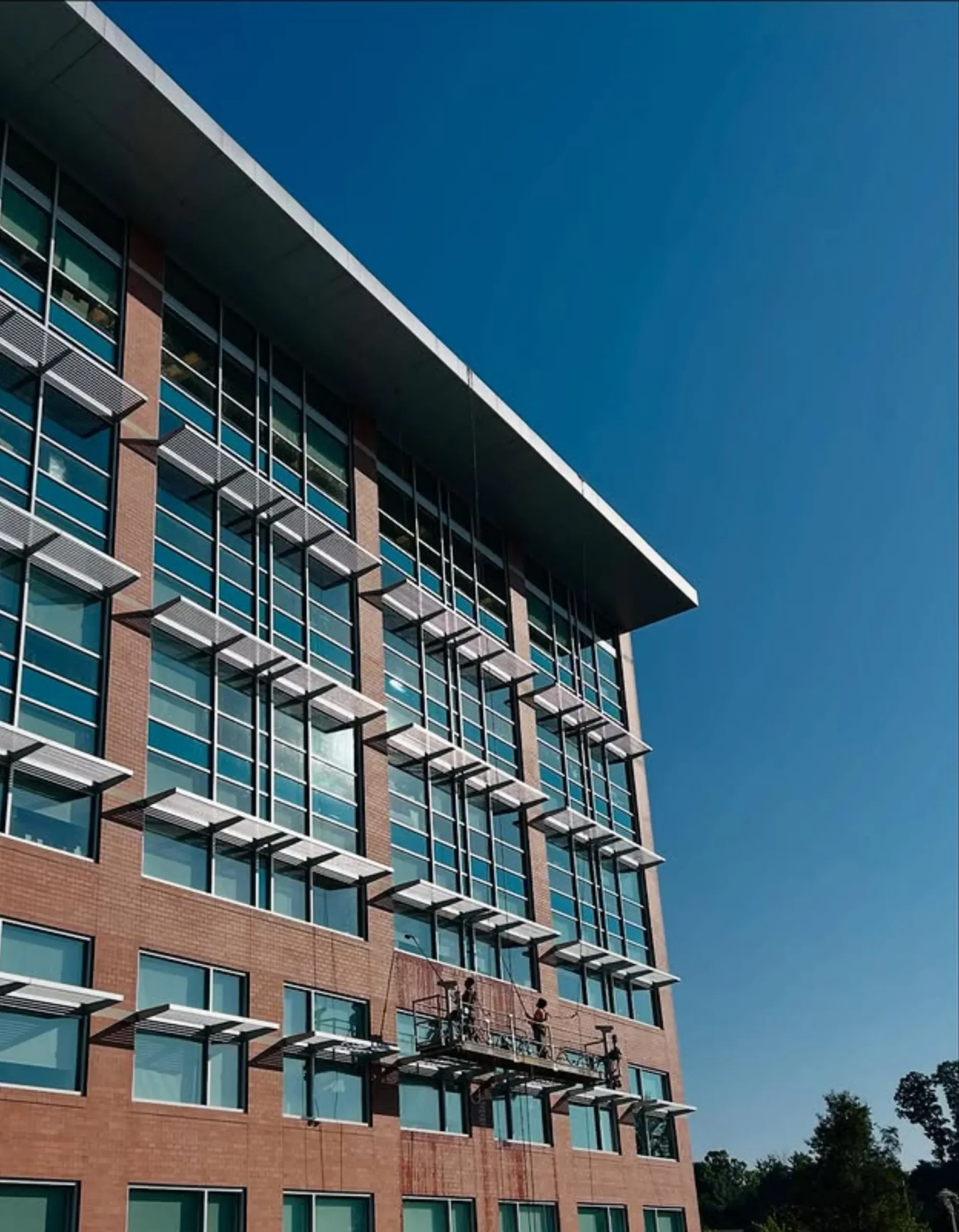
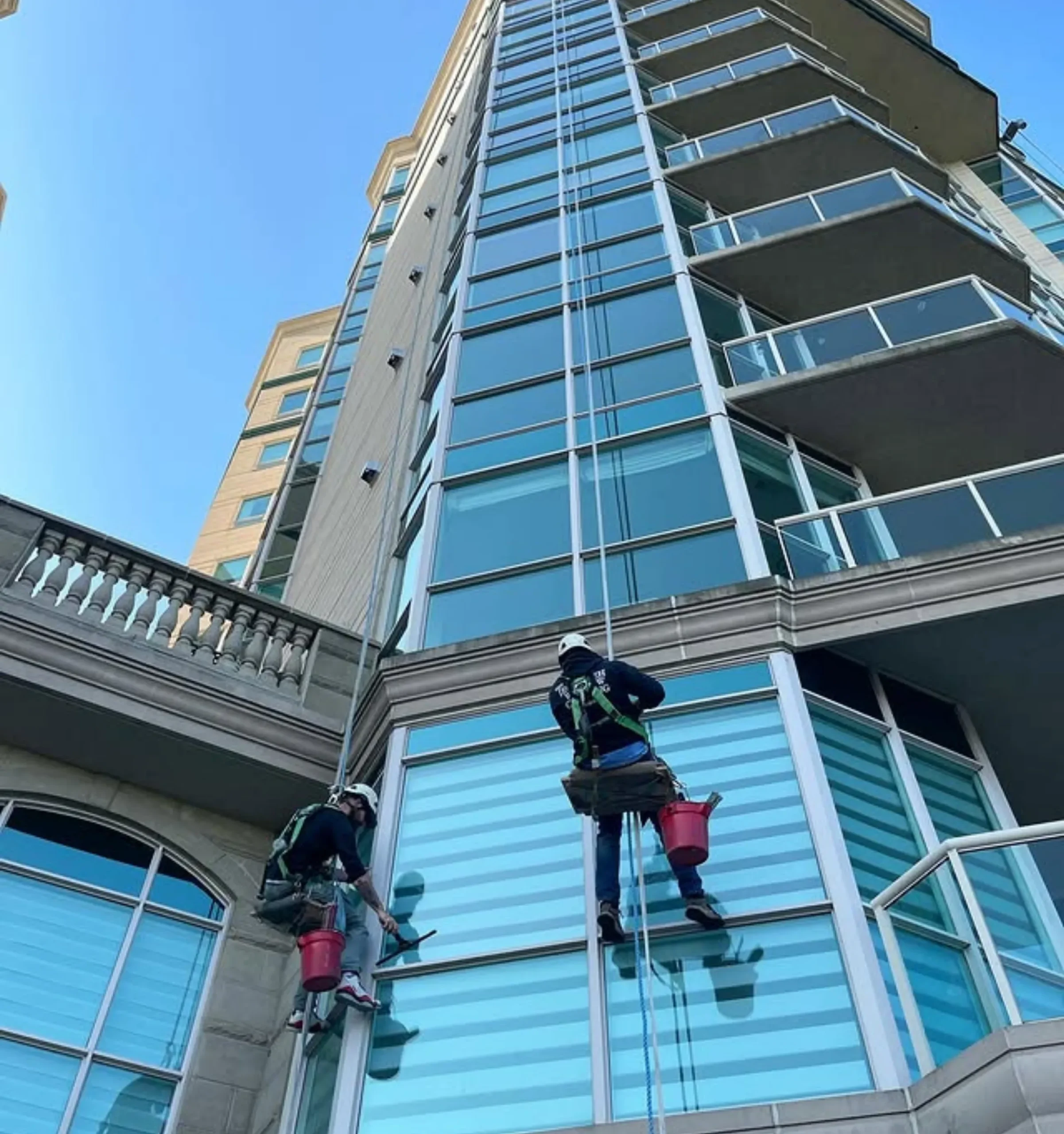
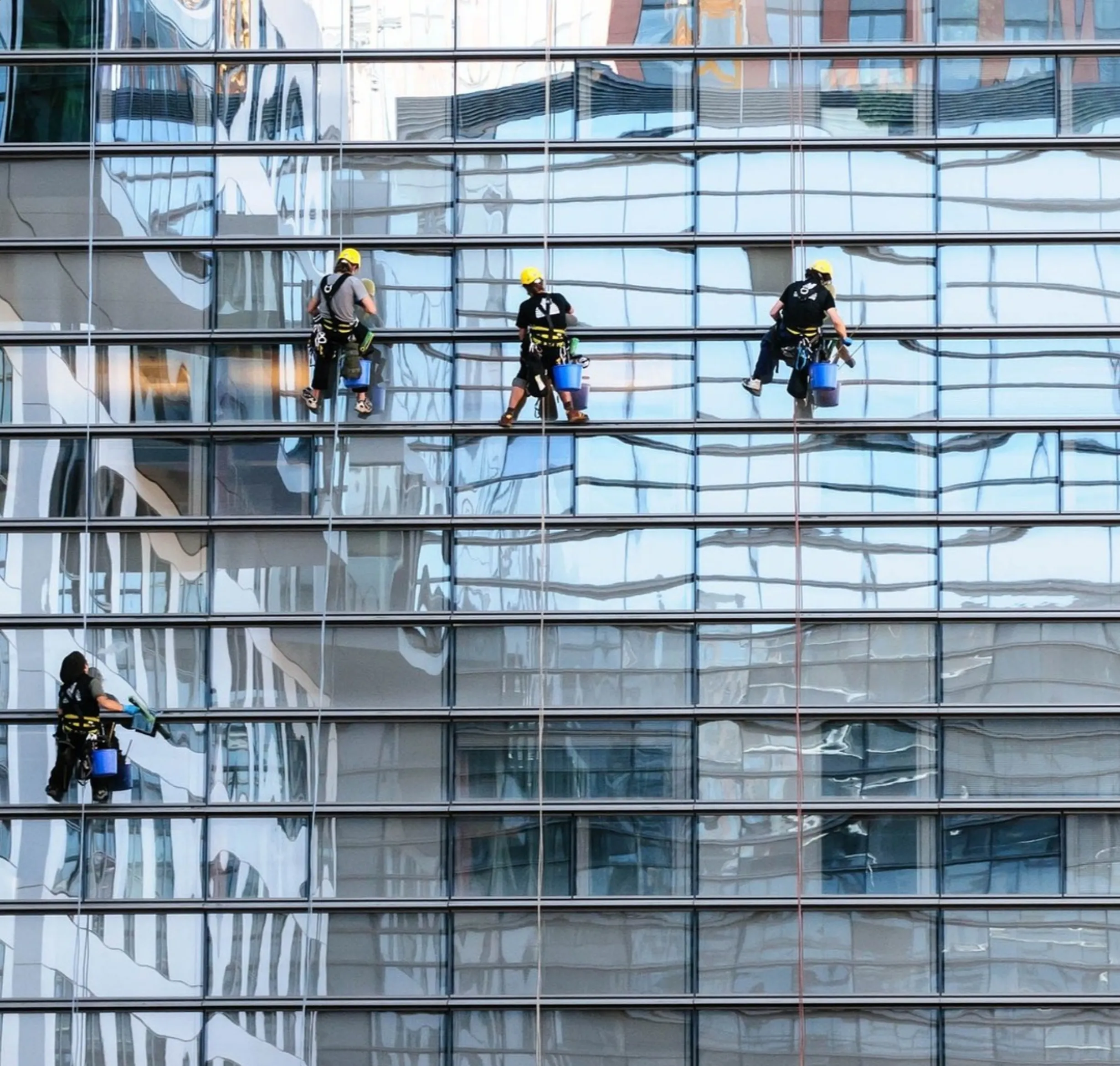
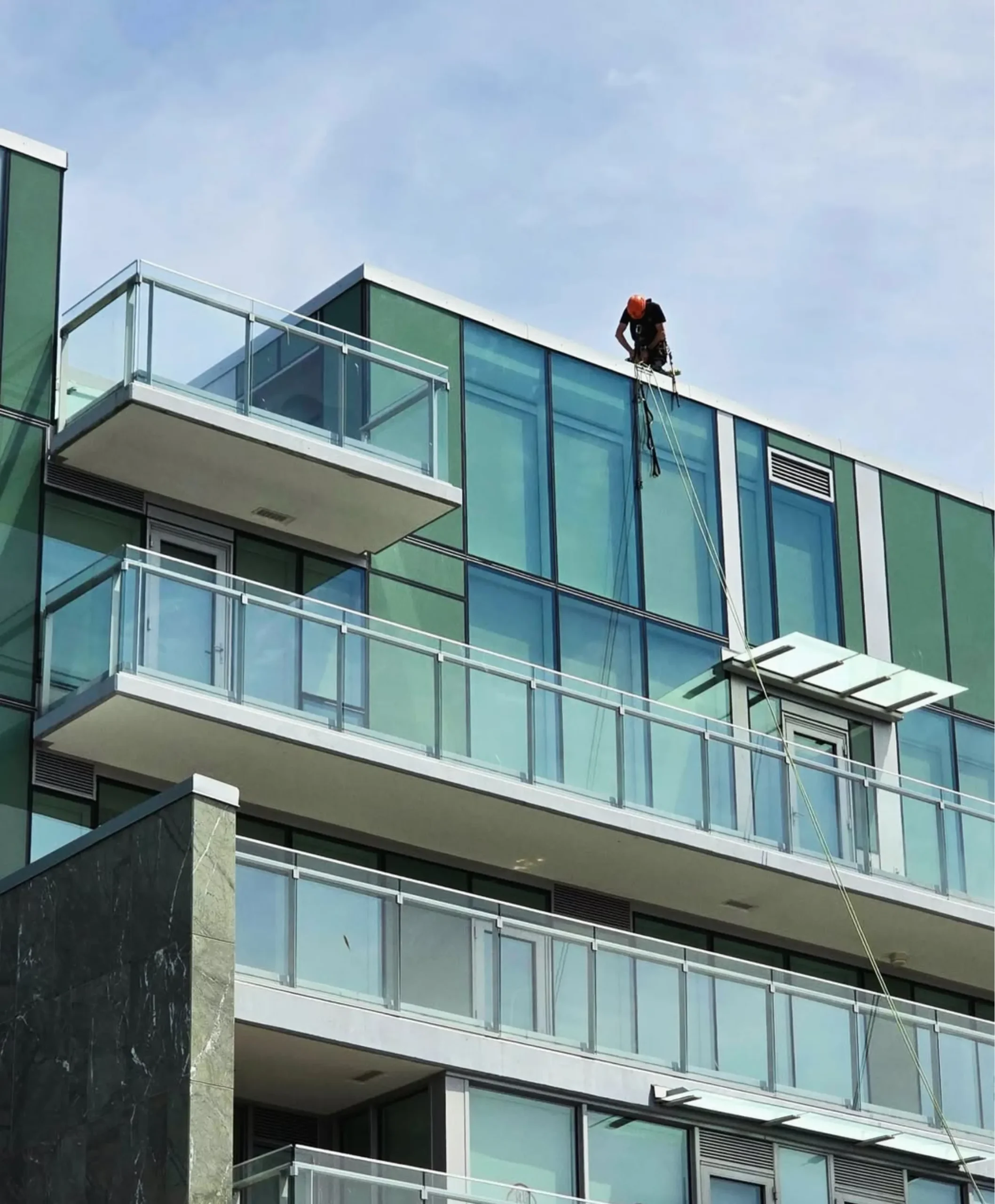
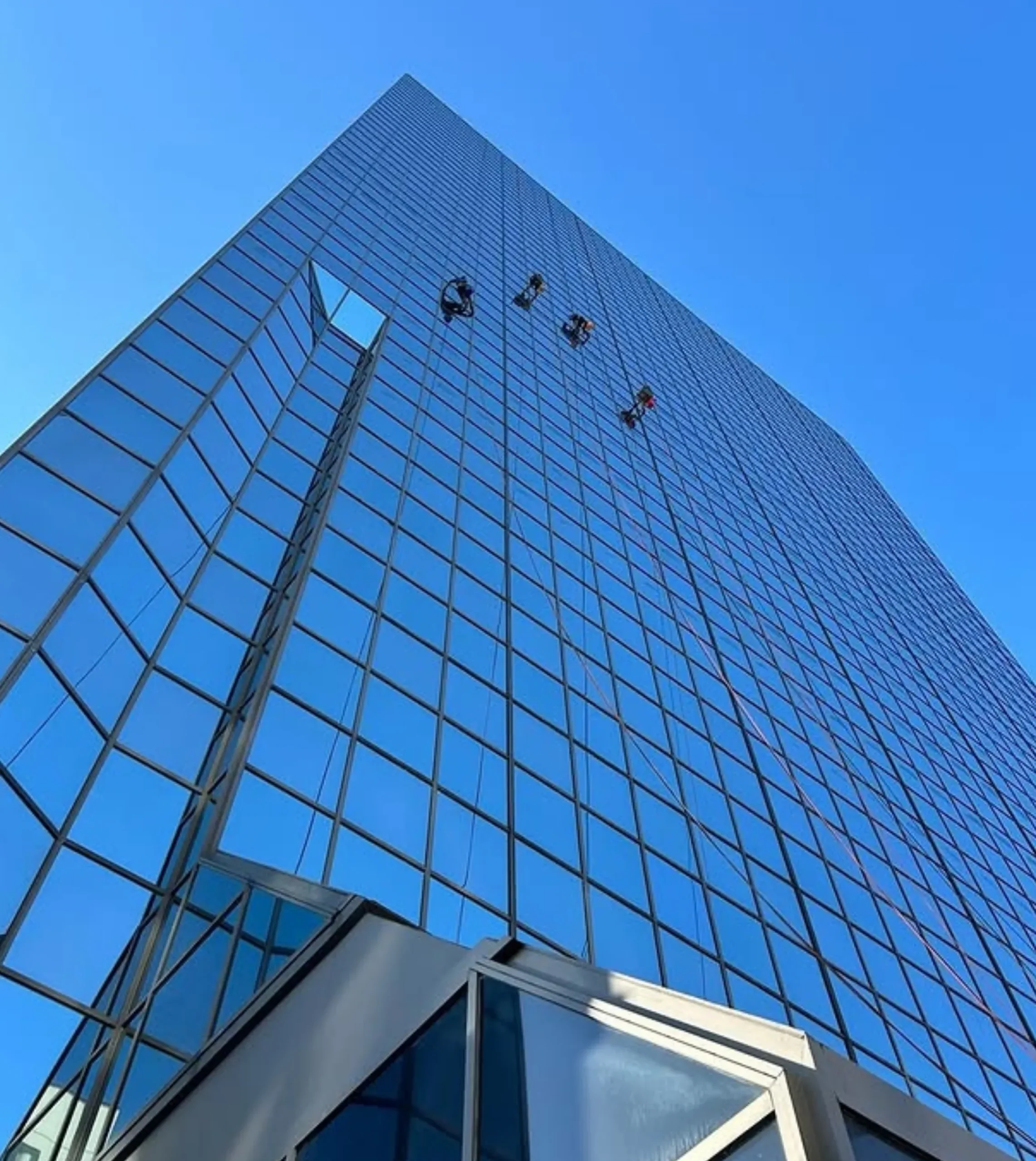
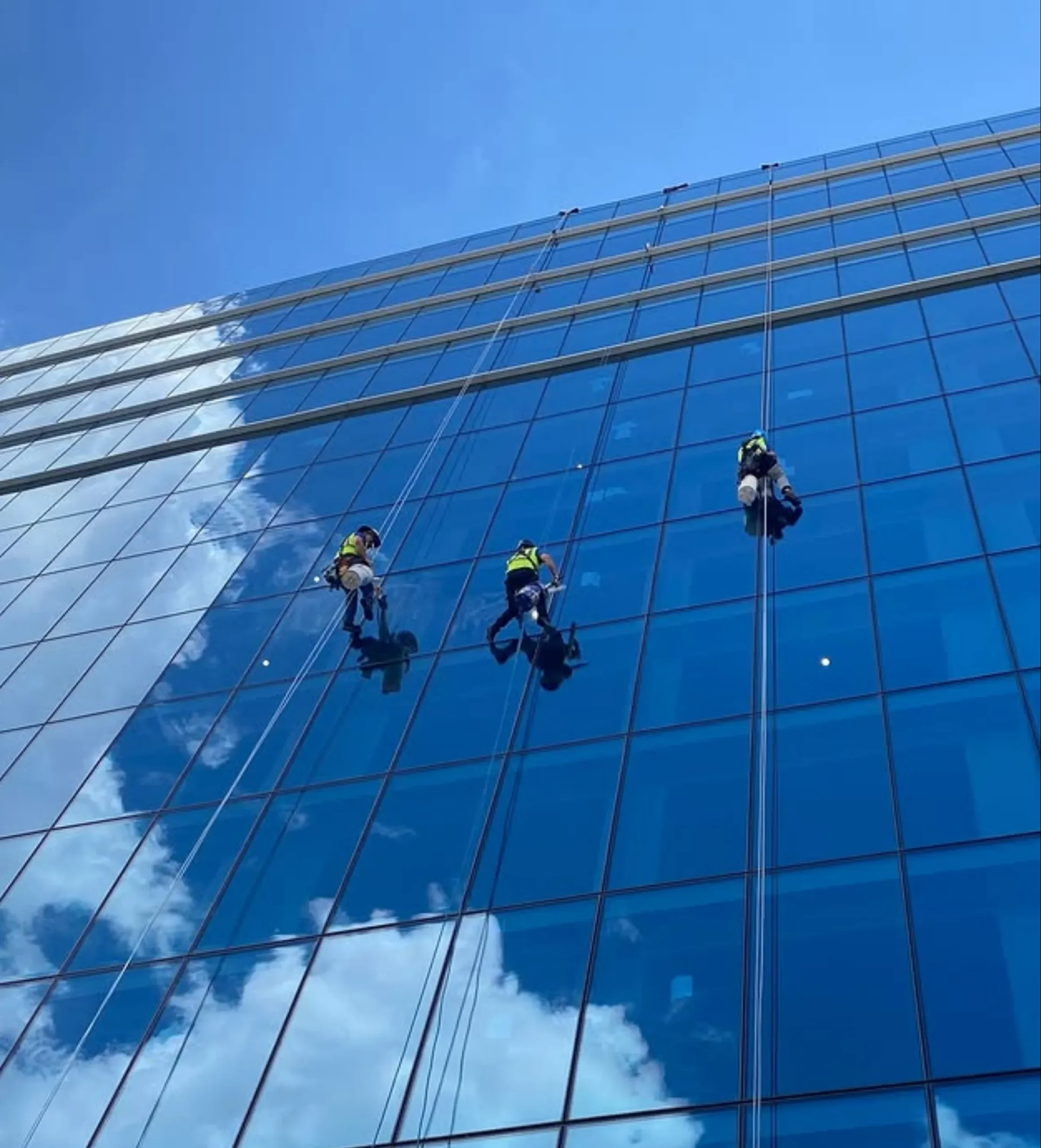
High-rise window cleaning removes dirt, traffic film, bird droppings, salt residue, water stains and other contamination from elevated glazing. At Window Cleaning Melbourne Crew, we assess the façade, glazing position, ground access and building access systems before selecting water-fed poles, an elevated work platform (EWP), a building maintenance unit or industrial rope access.
Height matters, but façade geometry, required reach and site conditions often determine the safest practical approach.


- Very nice and professional cleaning team. We order fully cleaning including gutter , townhouse exterior , all windows outside &inside.WaterCrew provides great service and affordable price .read moreread lessping lee10/11/2026Thankyou. Fantastic work, professional and very happy with how clean our windows and surrounds were.read moreread lessStephanie Johnston10/02/2026Excellent & professional in all ways.read moreread lessWendy Haines9/24/2026
- Eren did a sensational job & his communication was fantastic - would definitely use again & recommend 👍read moreread lessTony Murdoch8/26/2026Eren was professional, efficient and completed the roof cleaning to a very high standard. The service was prompt, the workmanship was excellent, and the overall result was fantastic. Highly recommend Eren for anyone looking for reliable and quality roof cleaning services.read moreread lessJanan8/24/2026Excellent. Efficient, thorough, and swift!read moreread lessLu Lu7/15/2026
- Very happy with the service. They were clean, professional and left everything tidyPlus the job was done beautifullyMany thanks!read moreread lessAdelle7/04/2026Highly recommend Eren and his WaterCrew. Have used for gutter cleaning and will in future use for terracotta roof tile cleaning & window cleaning. They do a very thorough and professional job at competitive rates. Also, they are polite, friendly and well spoken.read moreread less
 Alan Thomas6/30/2026Very professional job done in BrightonVery thorough and was on time !!!!read moreread lessRENATO CENEDESE6/12/2026


Benefits of Regular High-Rise Glass Cleaning
High-rise glazing collects airborne dust, traffic residue, bird droppings and rain spotting; in exposed locations, salt residue can add to the build-up. Regular cleaning removes this accumulated contamination and helps building, strata and facilities managers maintain a more consistent façade appearance.
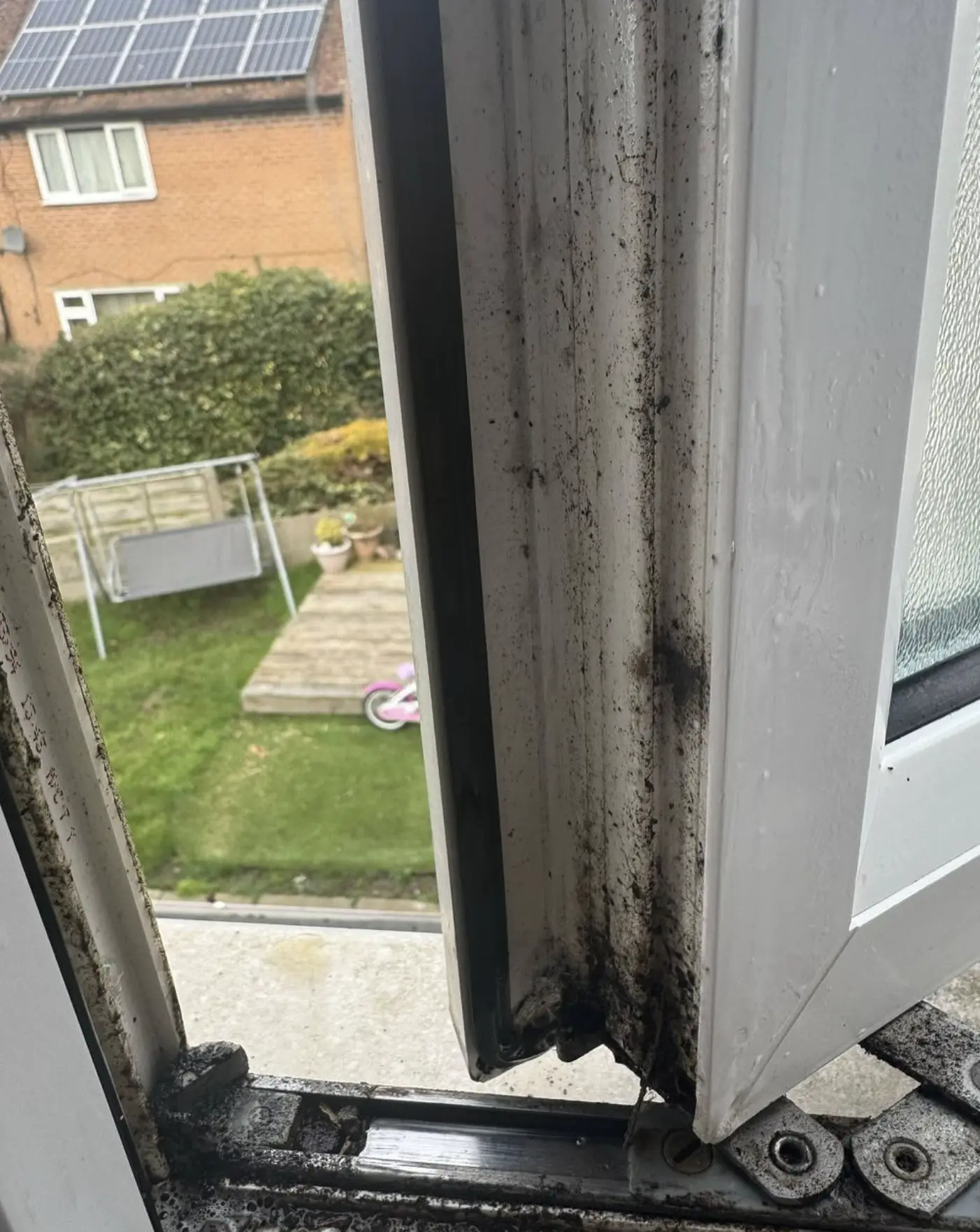
Cleaning removes contamination, not damage. Scratches, failed double-glazed units, deteriorated seals, coating damage and etching will not be repaired by cleaning. Established hard water stains may also remain, while tinted or coated glass can require particular care.
What Can We Clean at Height?
Depending on façade design and safe access, high-rise window cleaning can cover:
- Exterior windows and large glass areas;
- Apartment and strata glazing, plus commercial window cleaning;
- Balcony glass and balustrades;
- Skylights and atrium glazing;
- Glass awnings;
- Angled or recessed glazing;
- Windows above lower roofs or building setbacks;
- Elevated interior glazing.
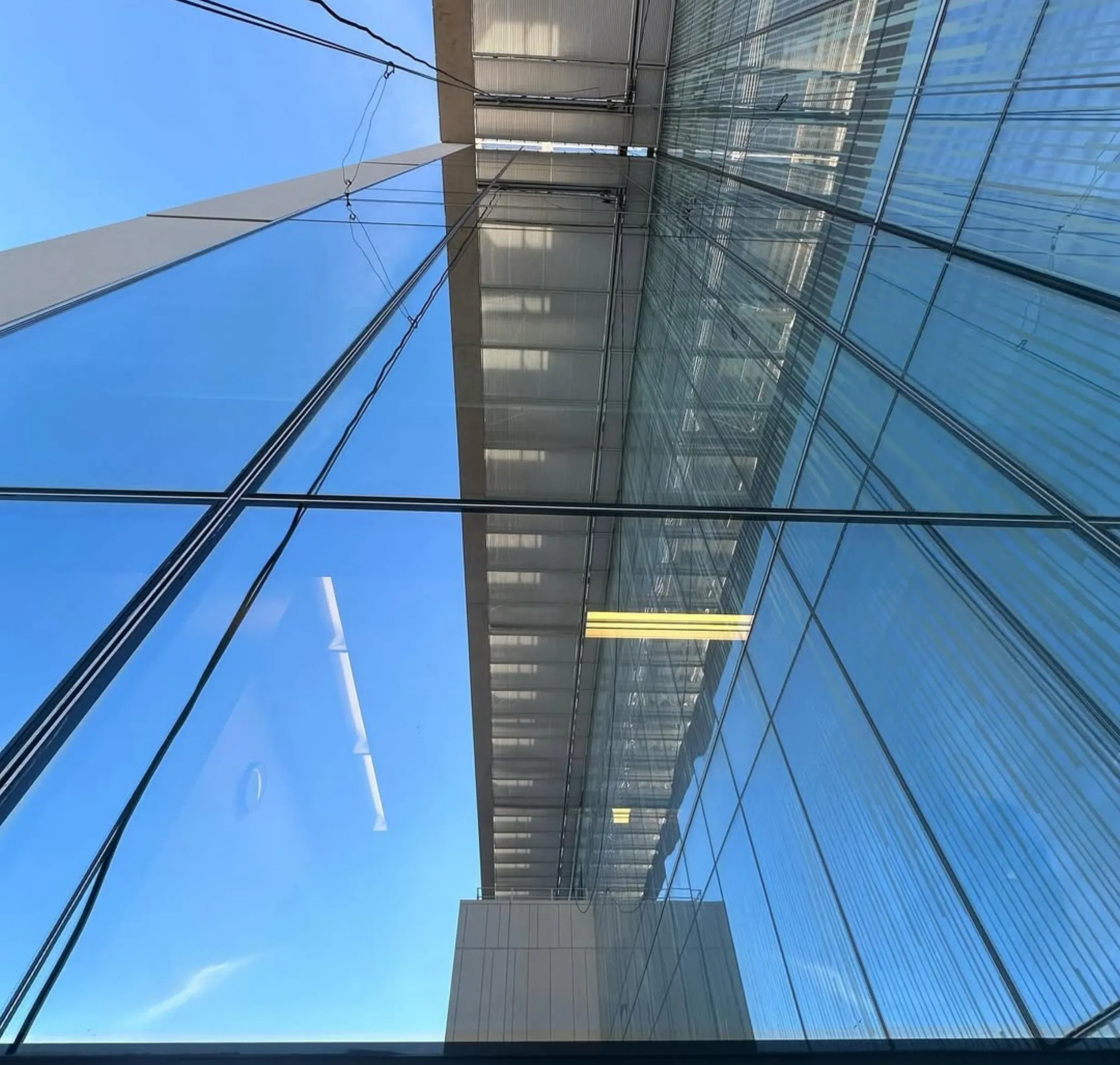
Overhangs, balconies, architectural fins, recessed windows and changes in façade depth can mean different sections of the same building require different access methods.
How We Approach High-Rise Glazing
Before selecting an access method, we assess height, required reach, roof access, anchor points, permanent building systems, façade geometry, ground conditions and obstacles. The contamination itself also shapes the approach: ordinary environmental residue requires different treatment than adhesive residue, salt deposits, or established hard water stains.
Larger strata and commercial jobs may require site-specific access planning and risk controls.
Access Equipment and Methods
| Method | Where It May Suit | Important Consideration |
|---|---|---|
| Water-fed poles | Elevated glazing reachable safely from ground level | Reach, façade geometry and surrounding access |
| Elevated work platforms and boom lifts | Glazing accessible from a suitable ground position | Working height, boom length, ground conditions, positioning space and overhead hazards |
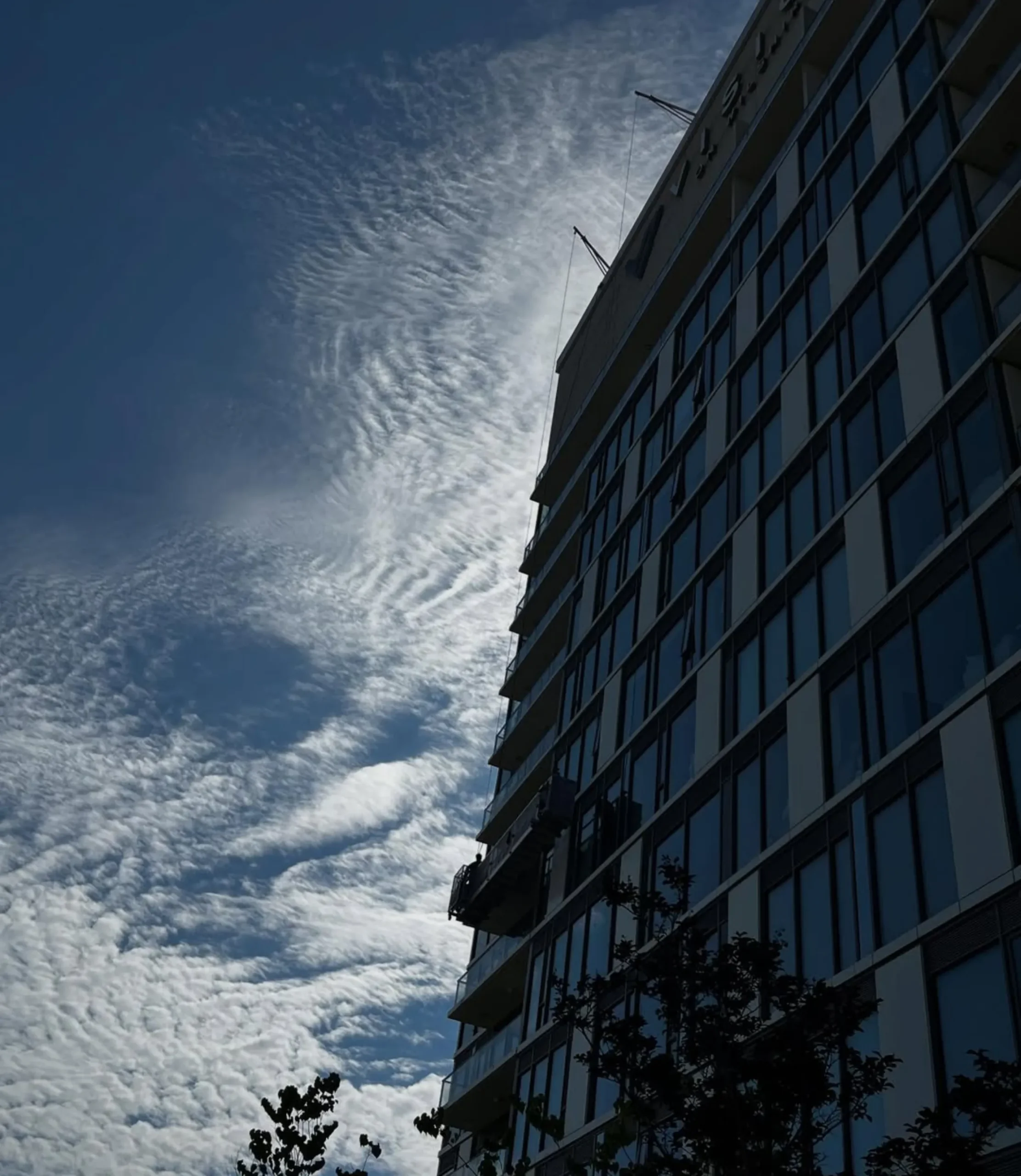
| Building maintenance units or swing stages | Buildings with permanent façade-access systems | Building-specific access and operating requirements |
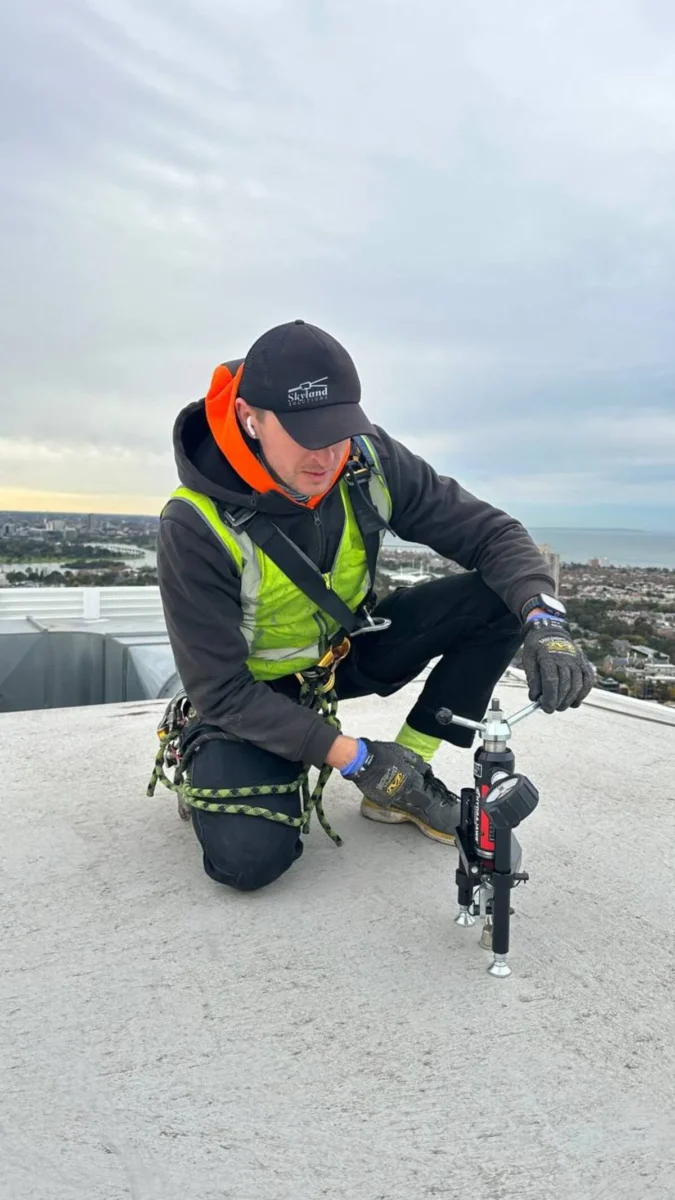
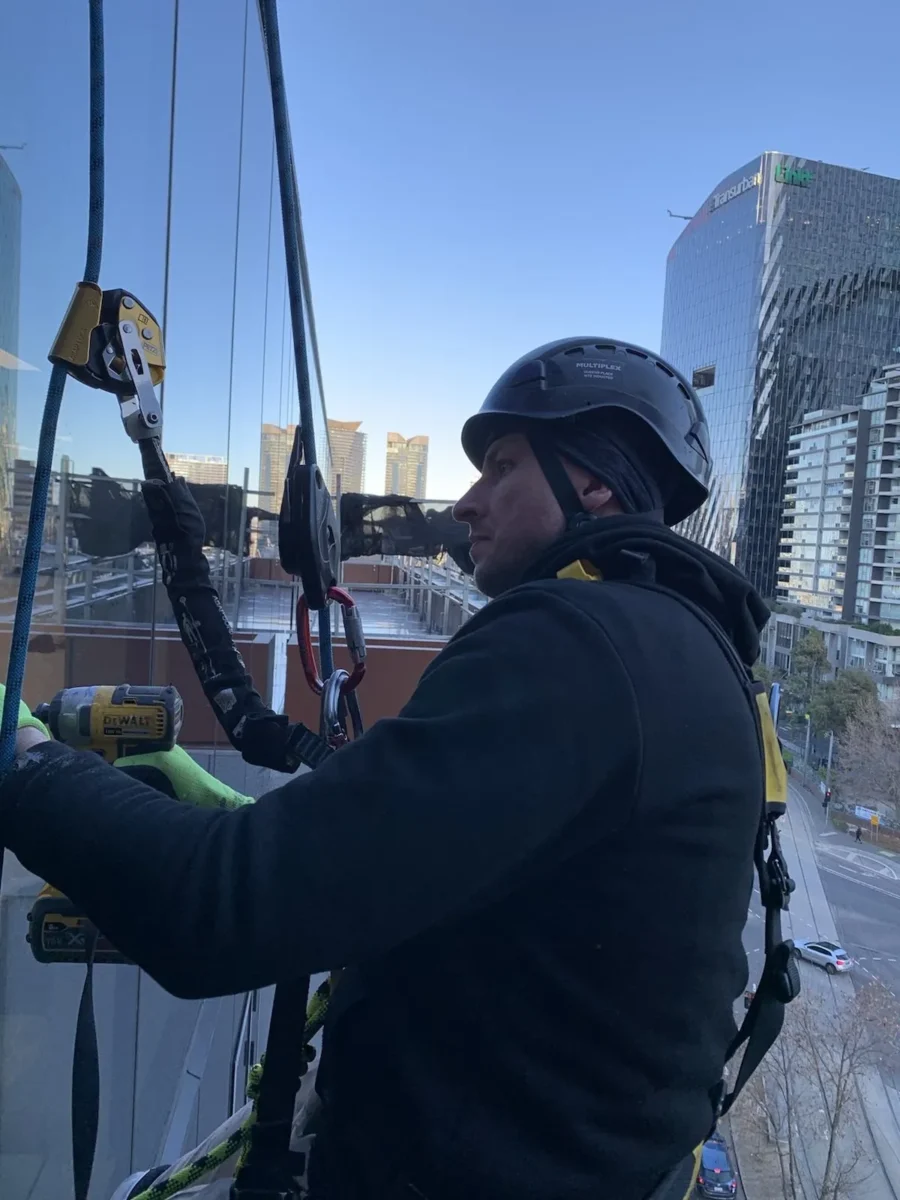
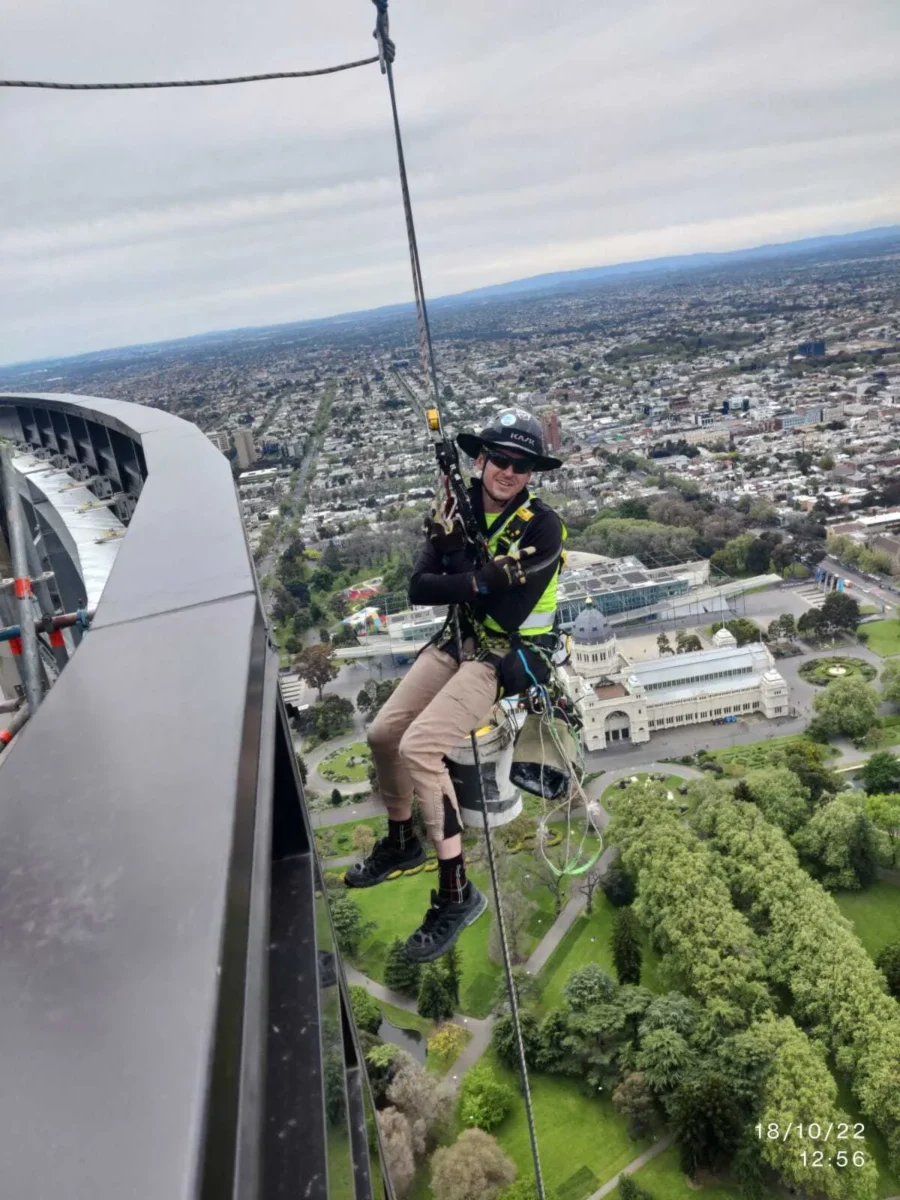
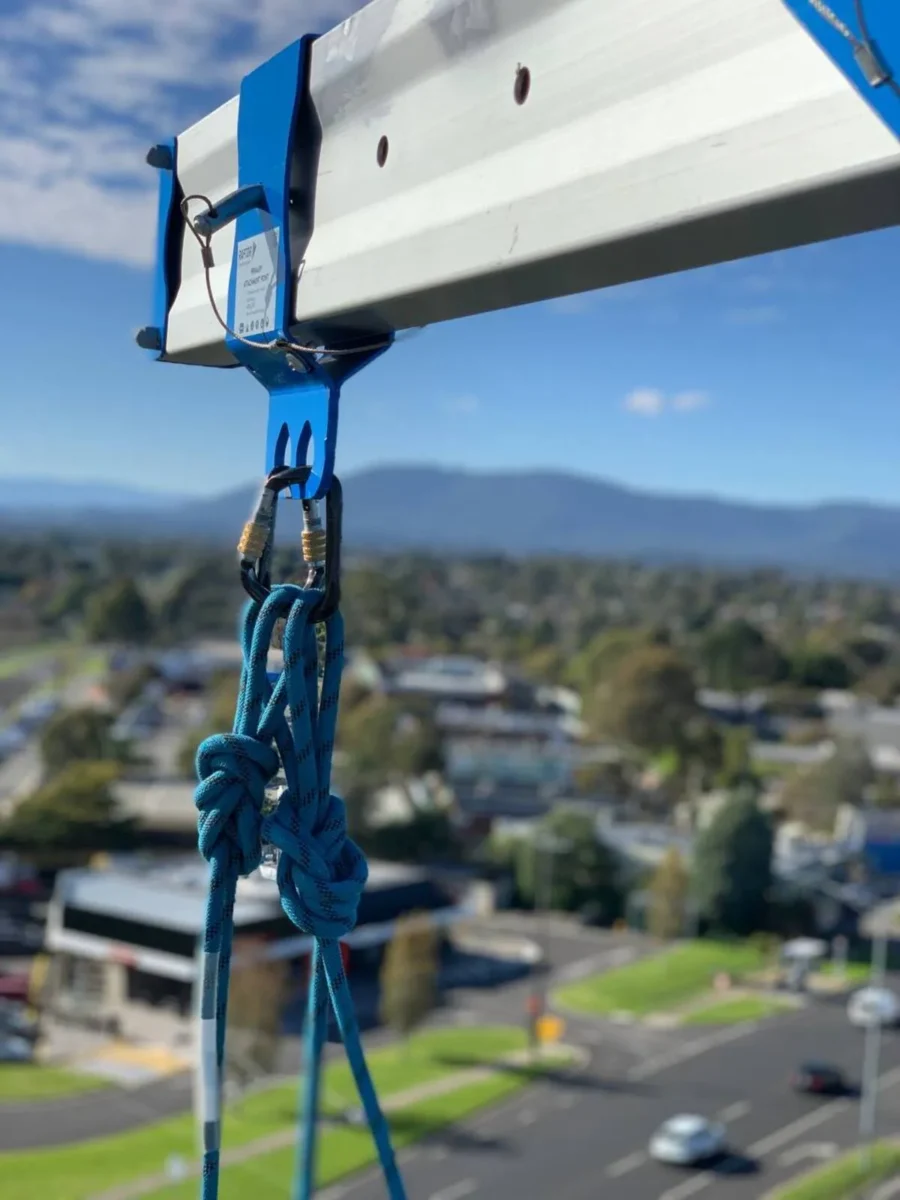
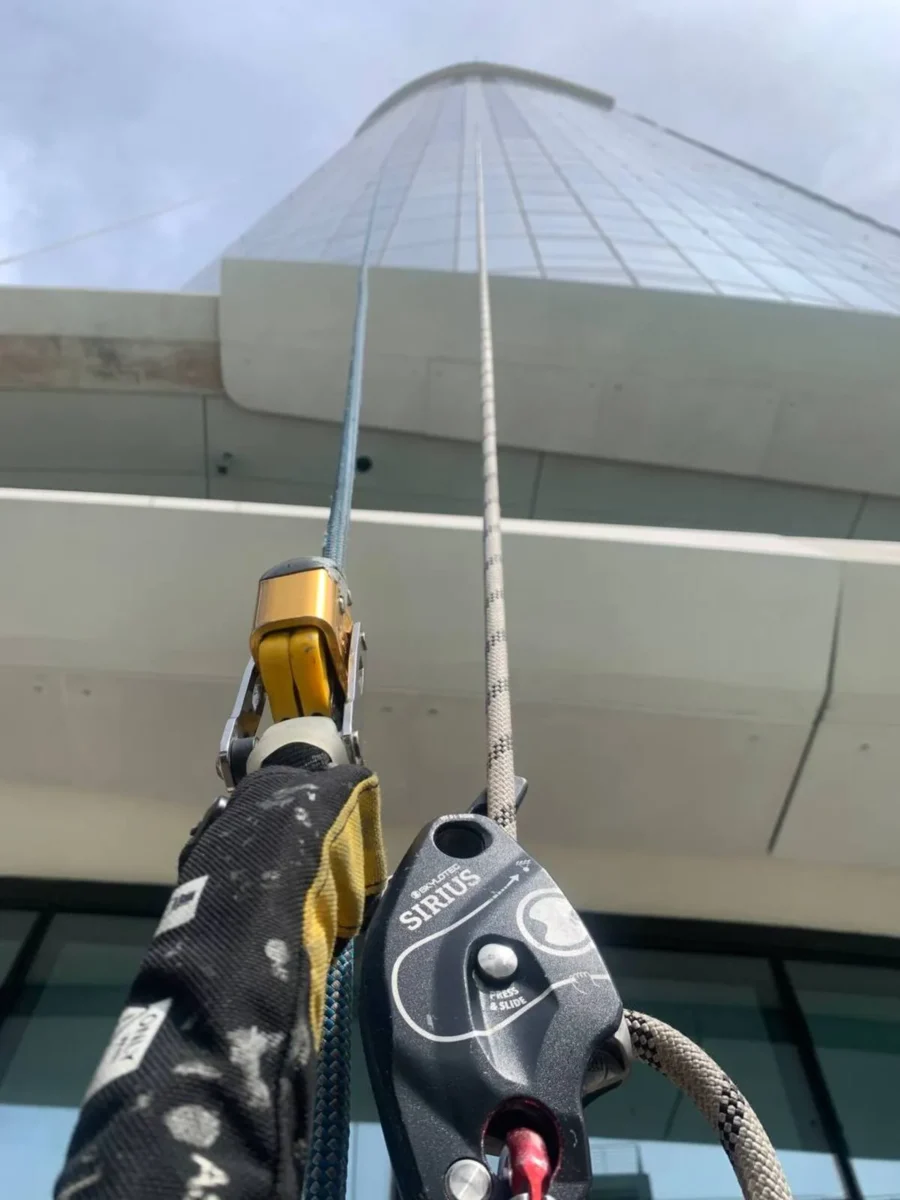
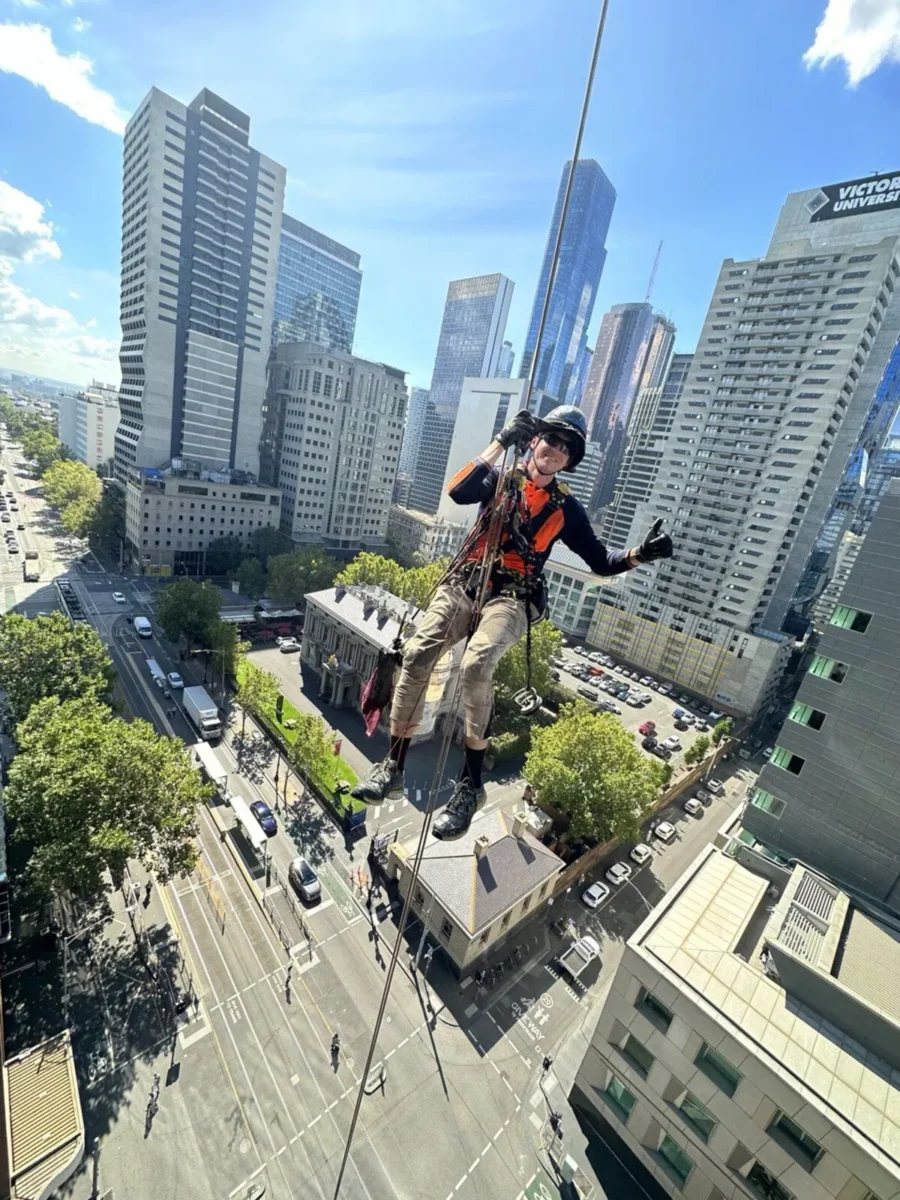
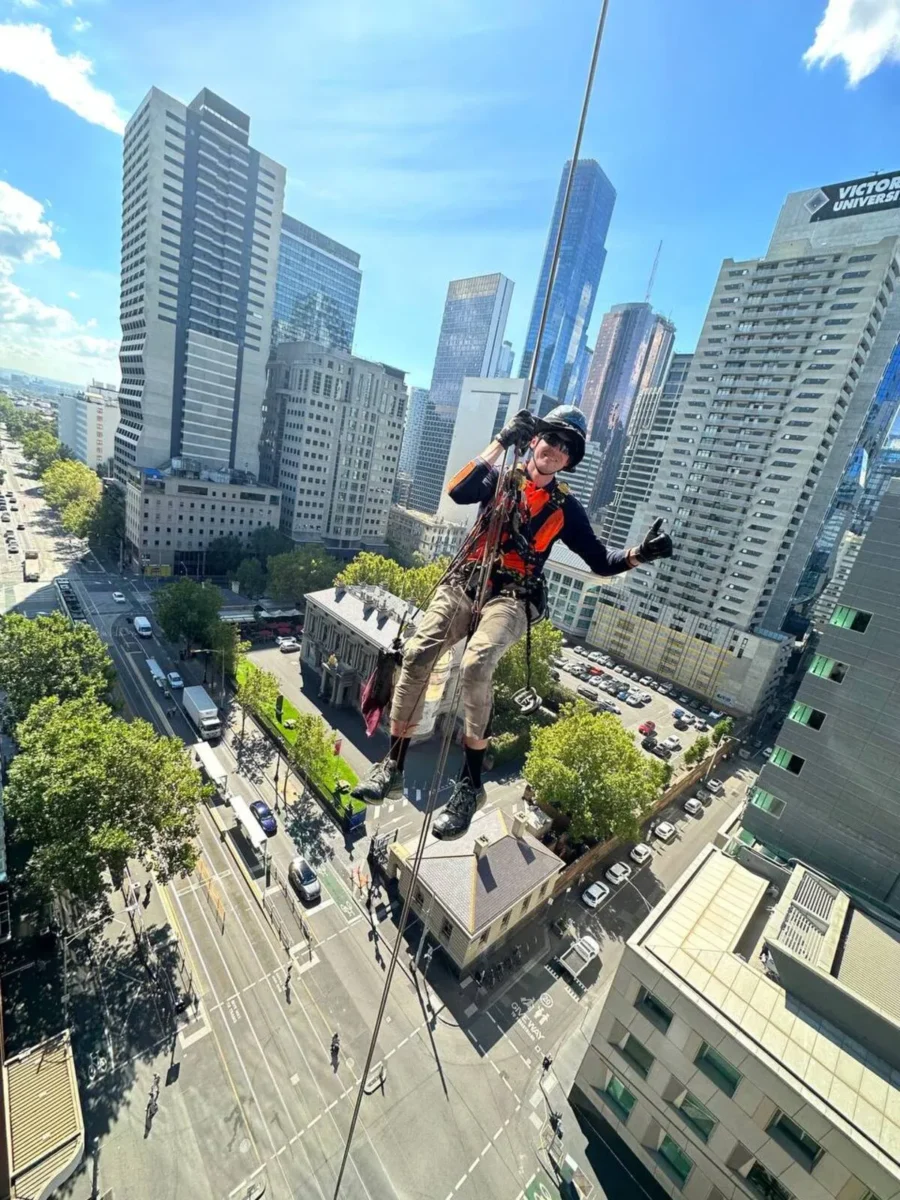
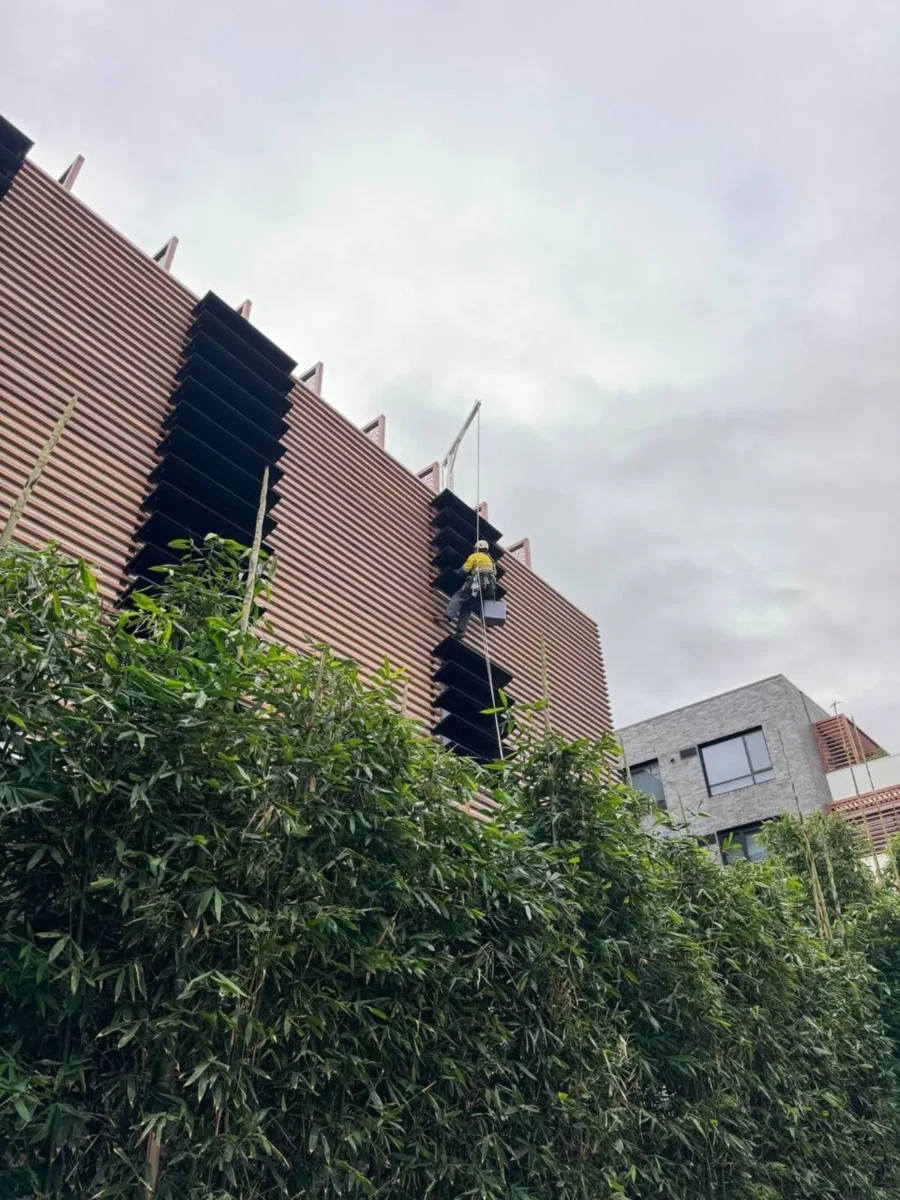
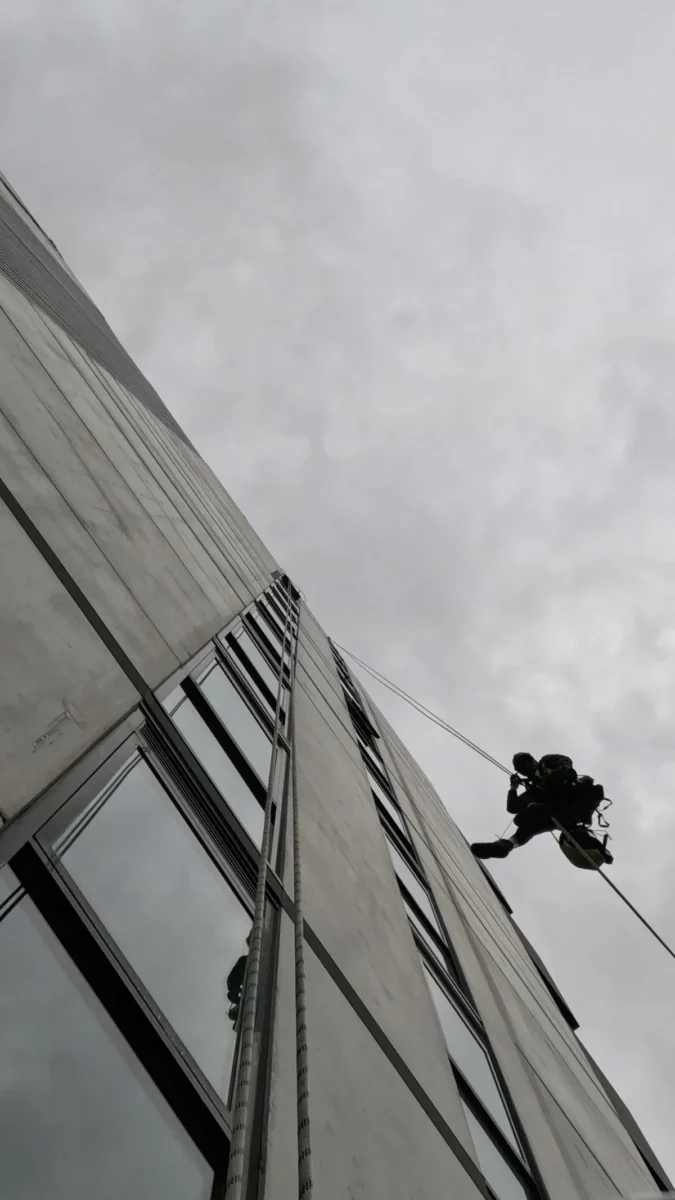
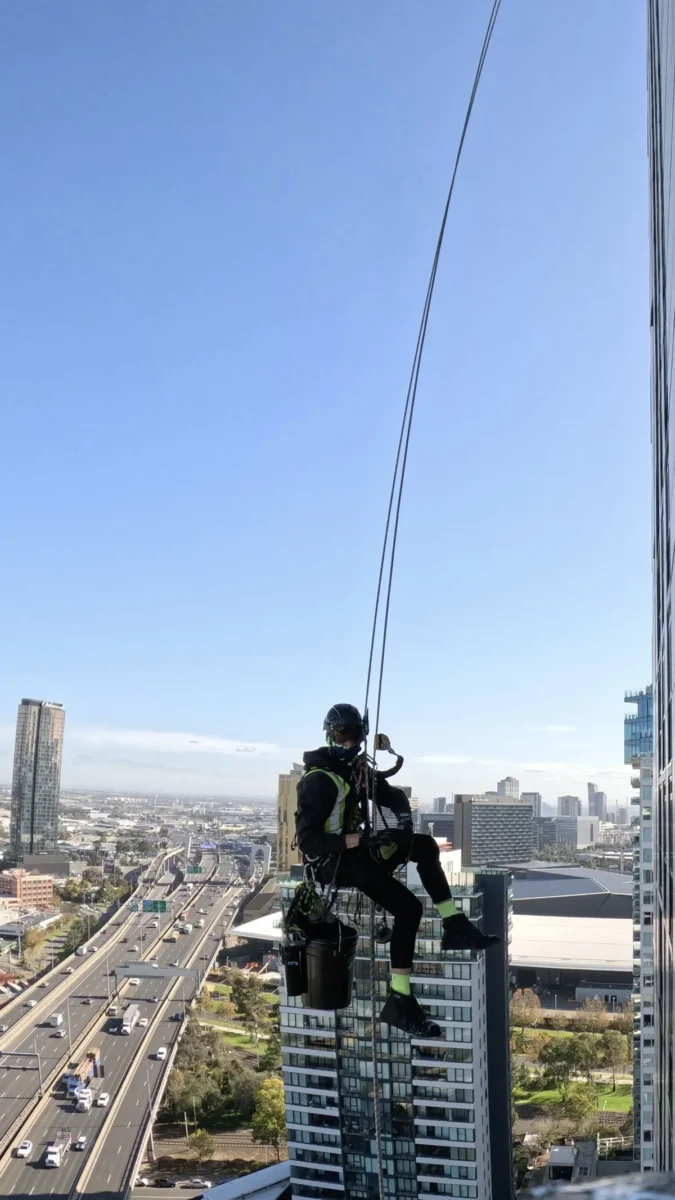
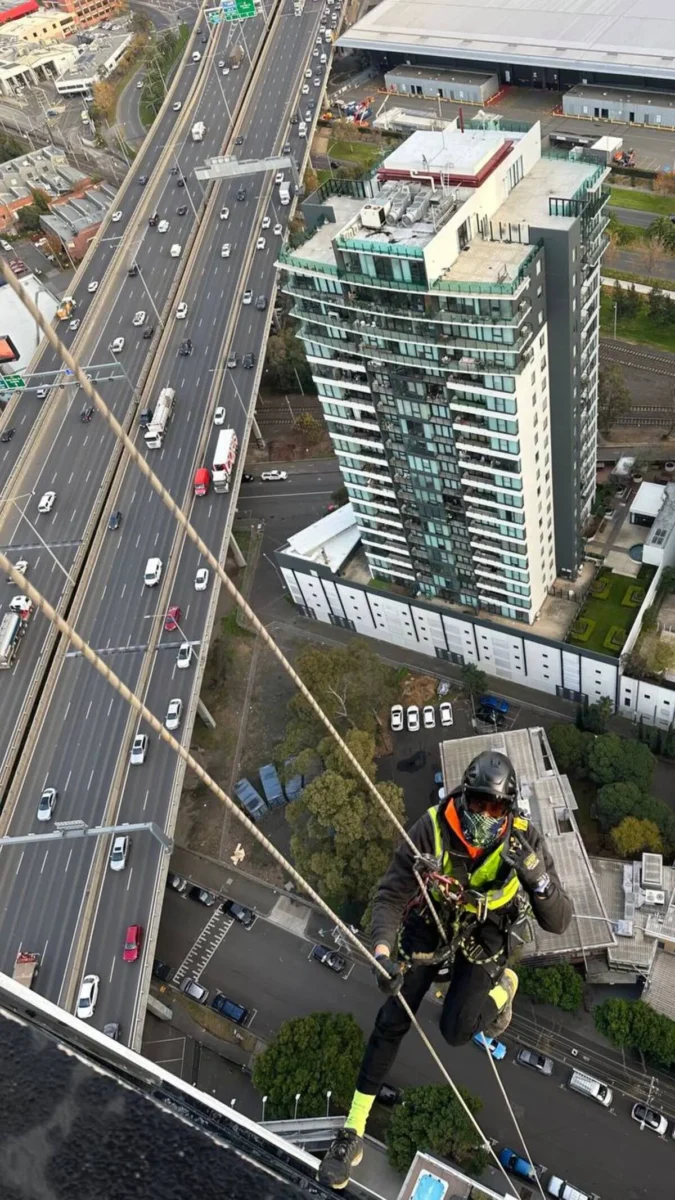
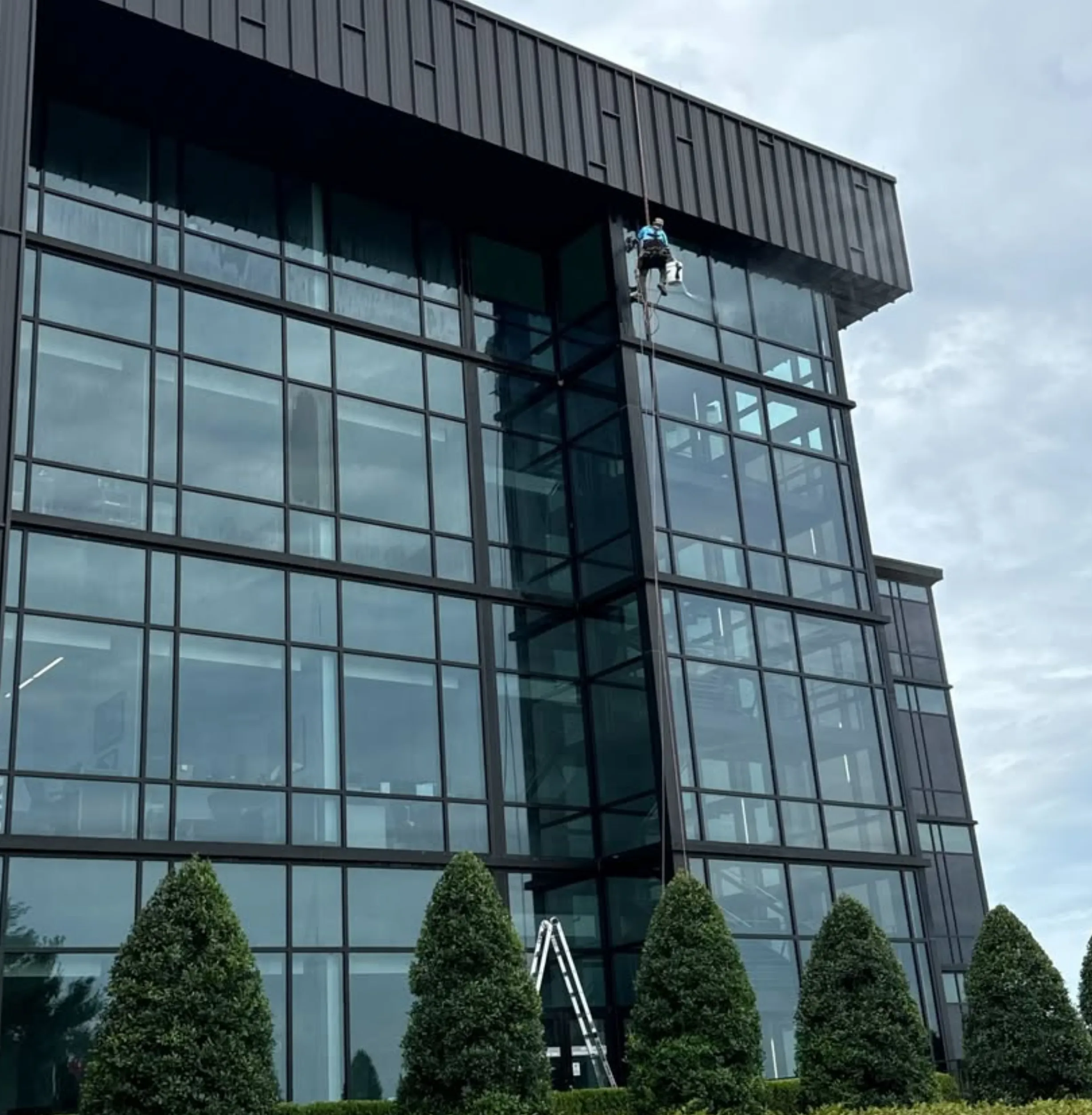
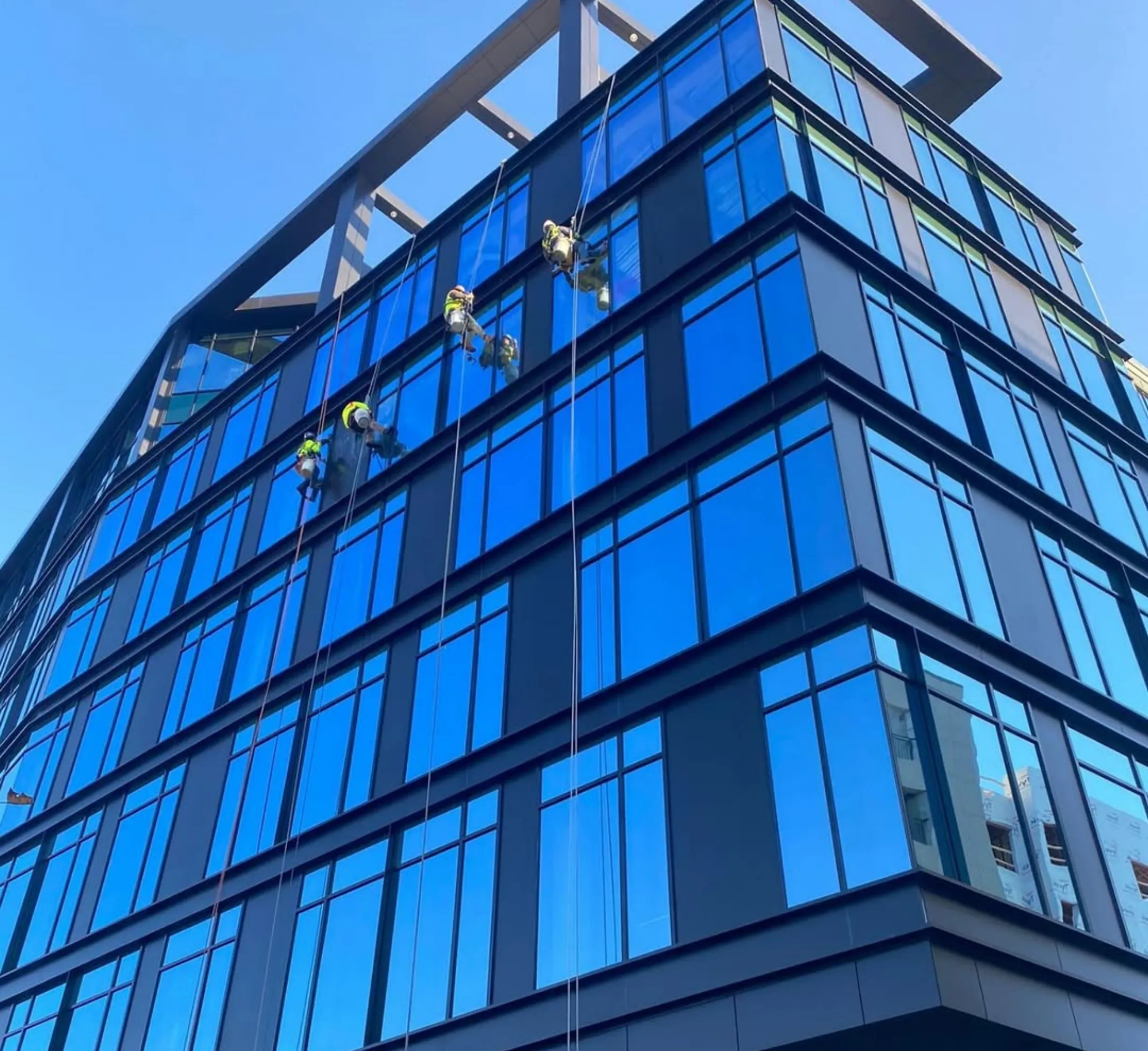
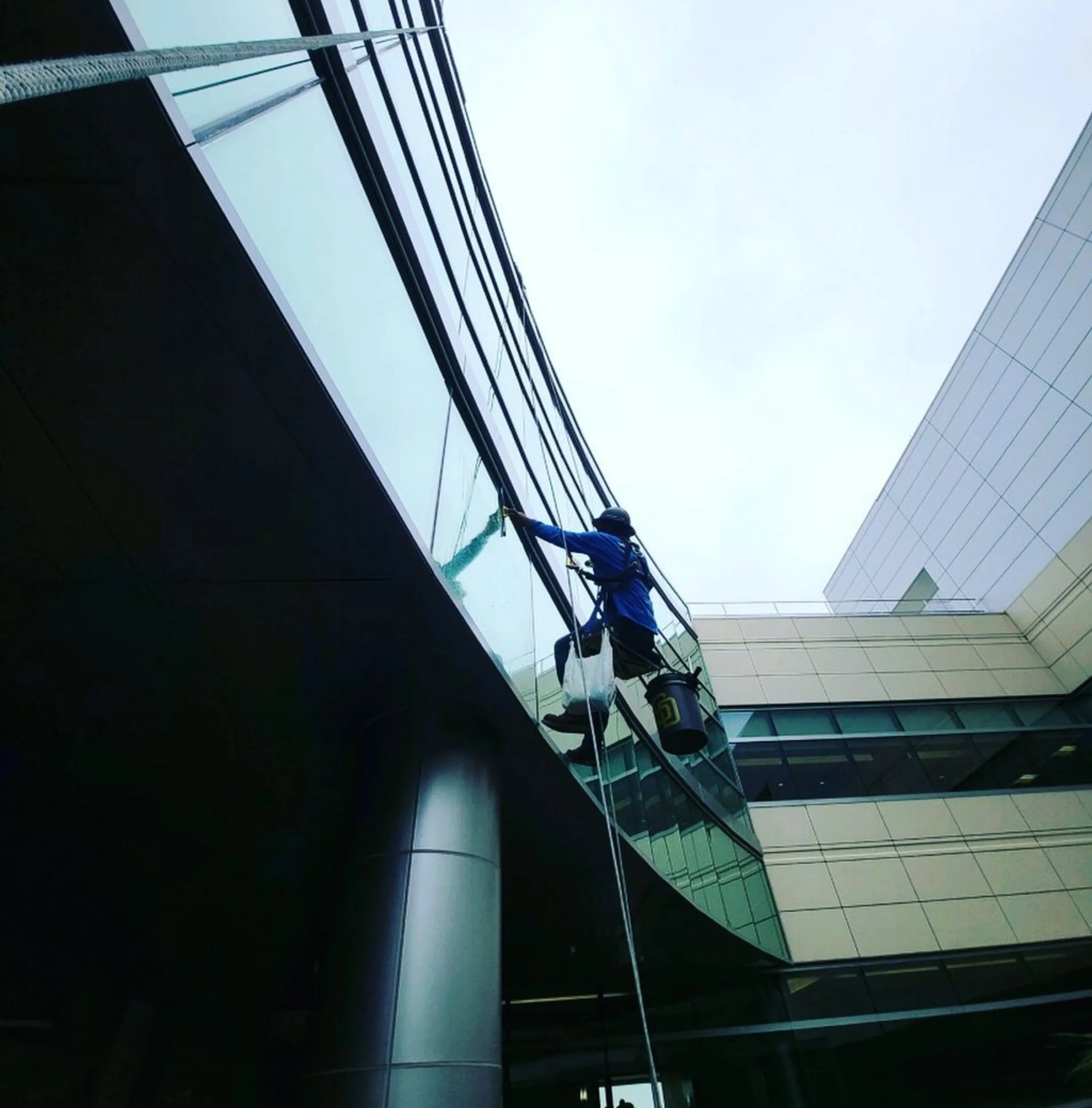
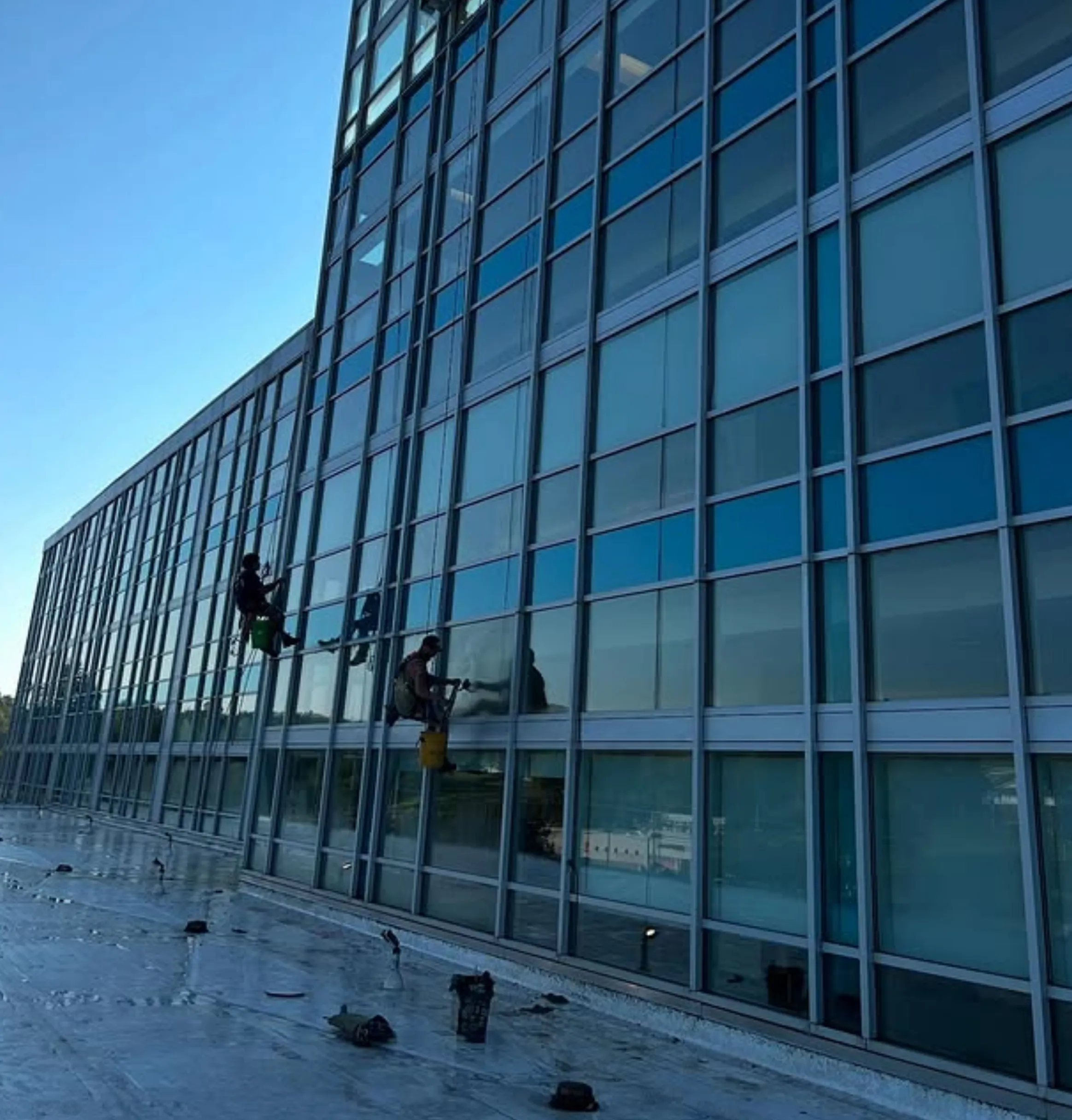
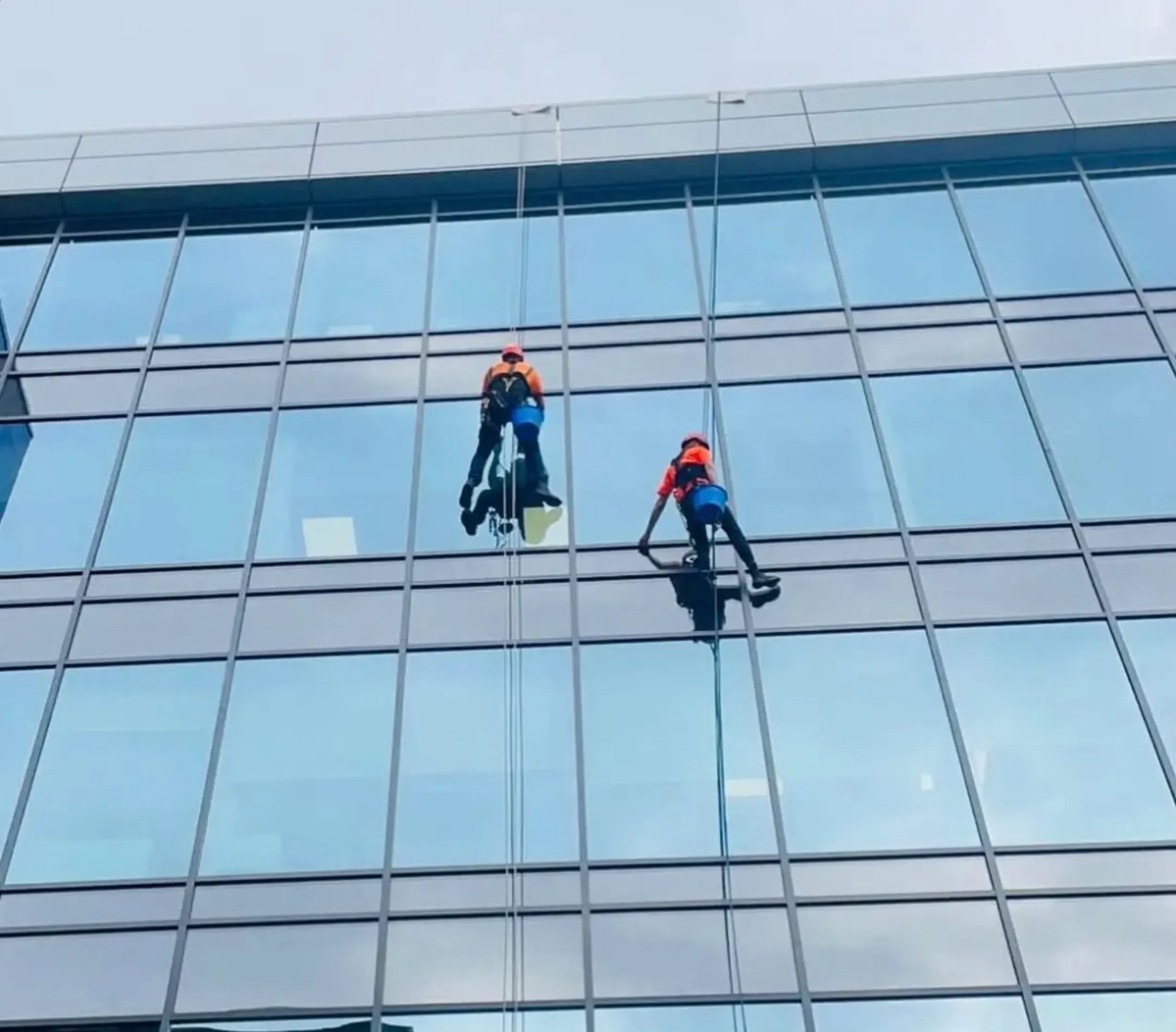
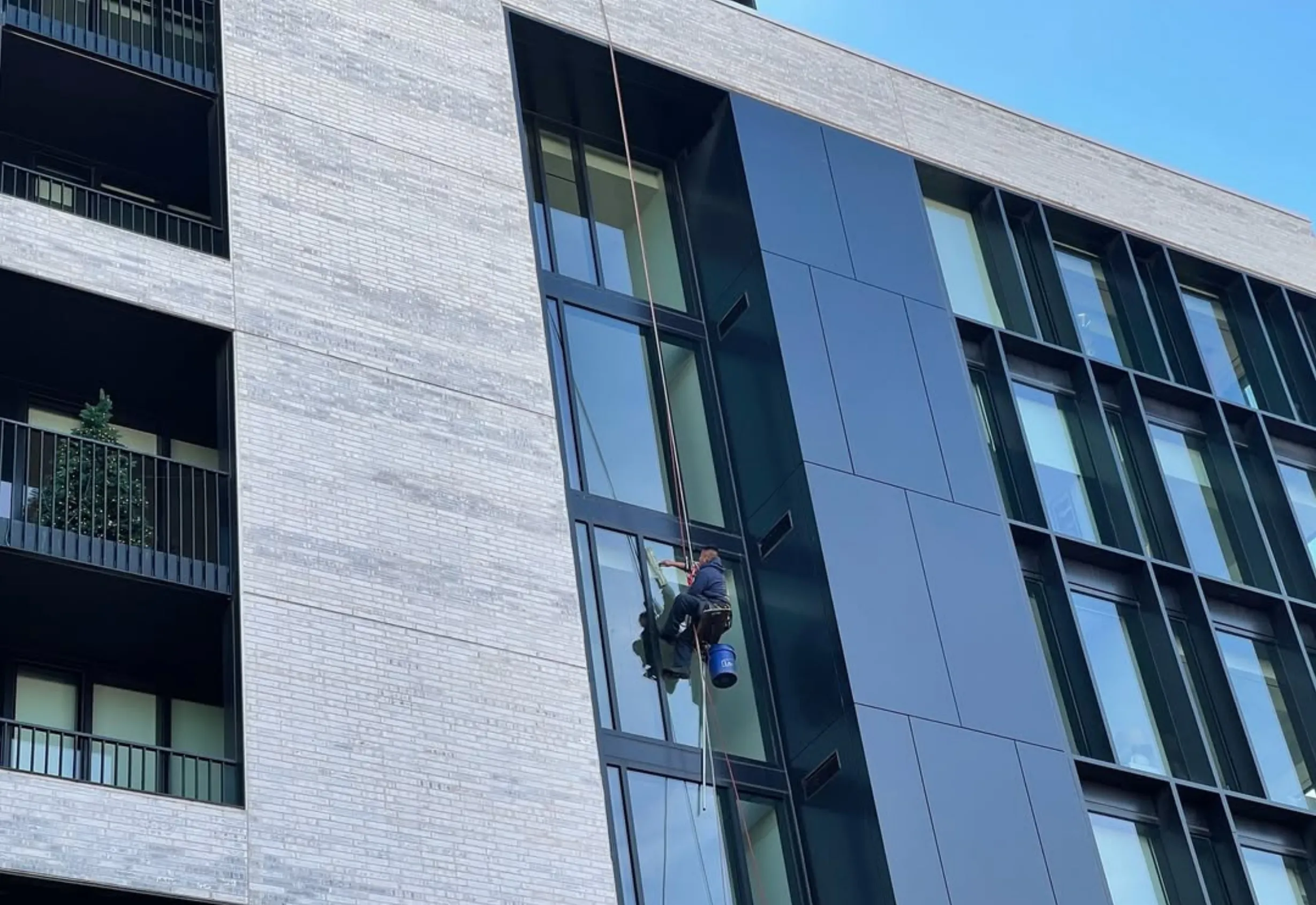
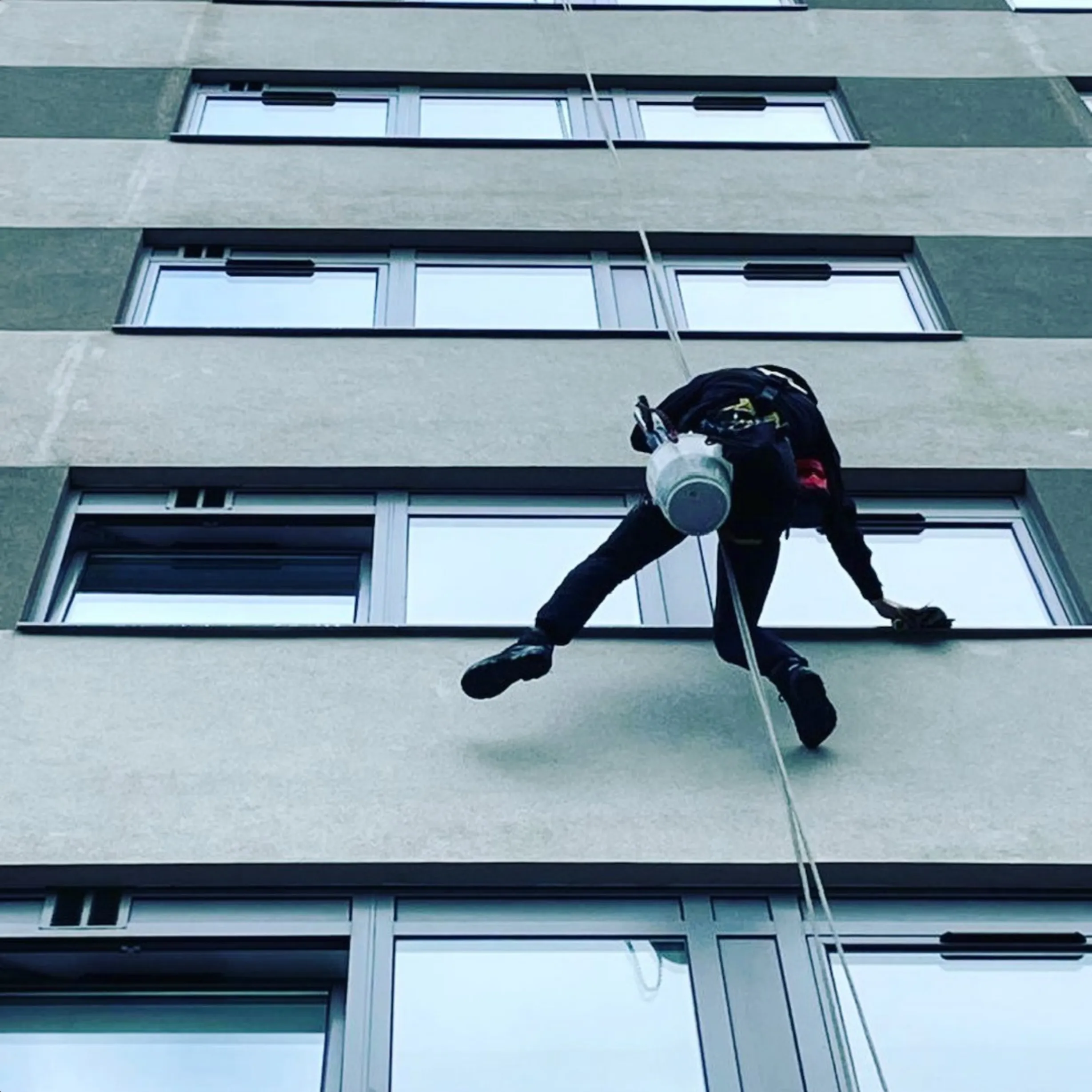
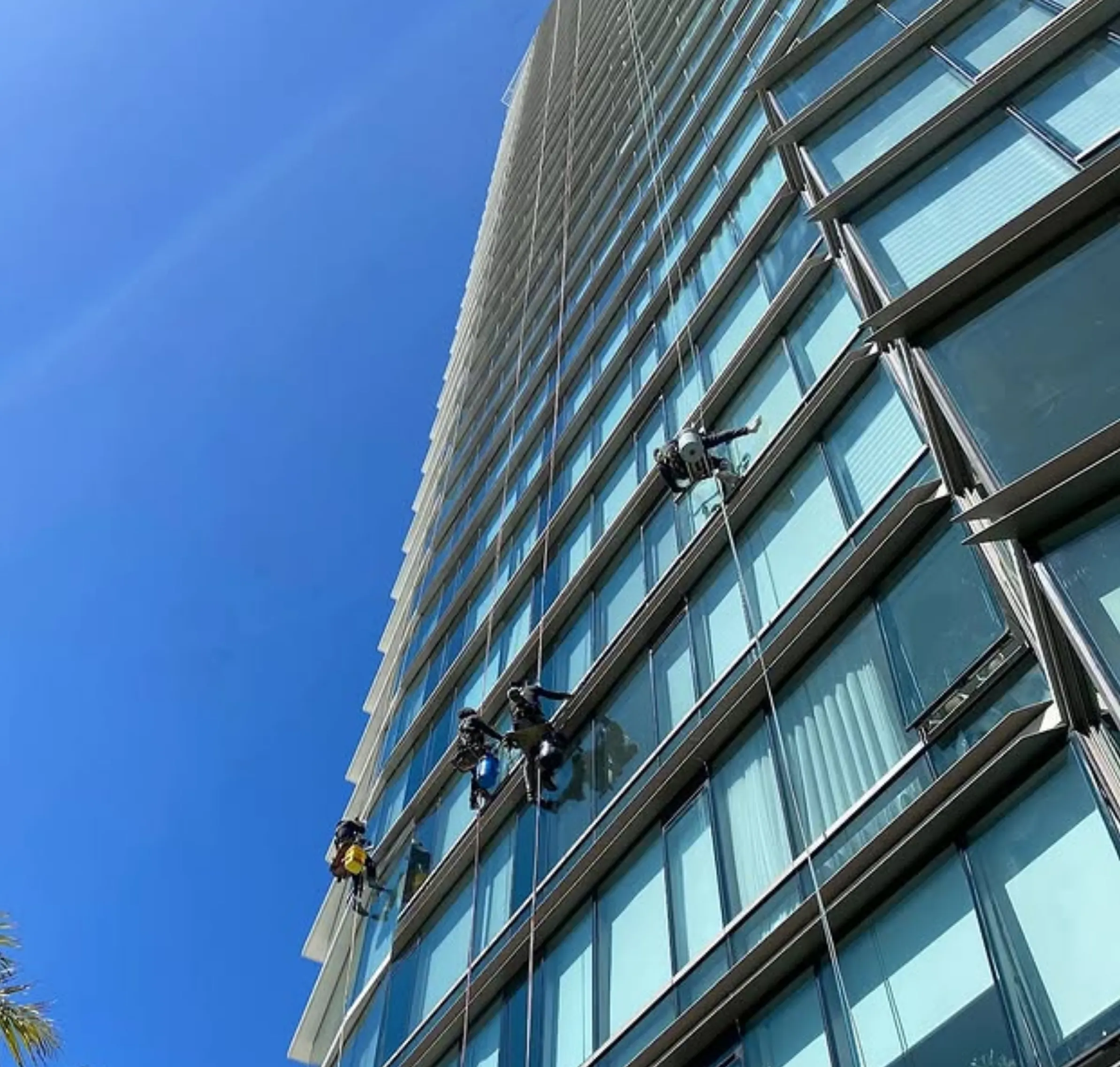
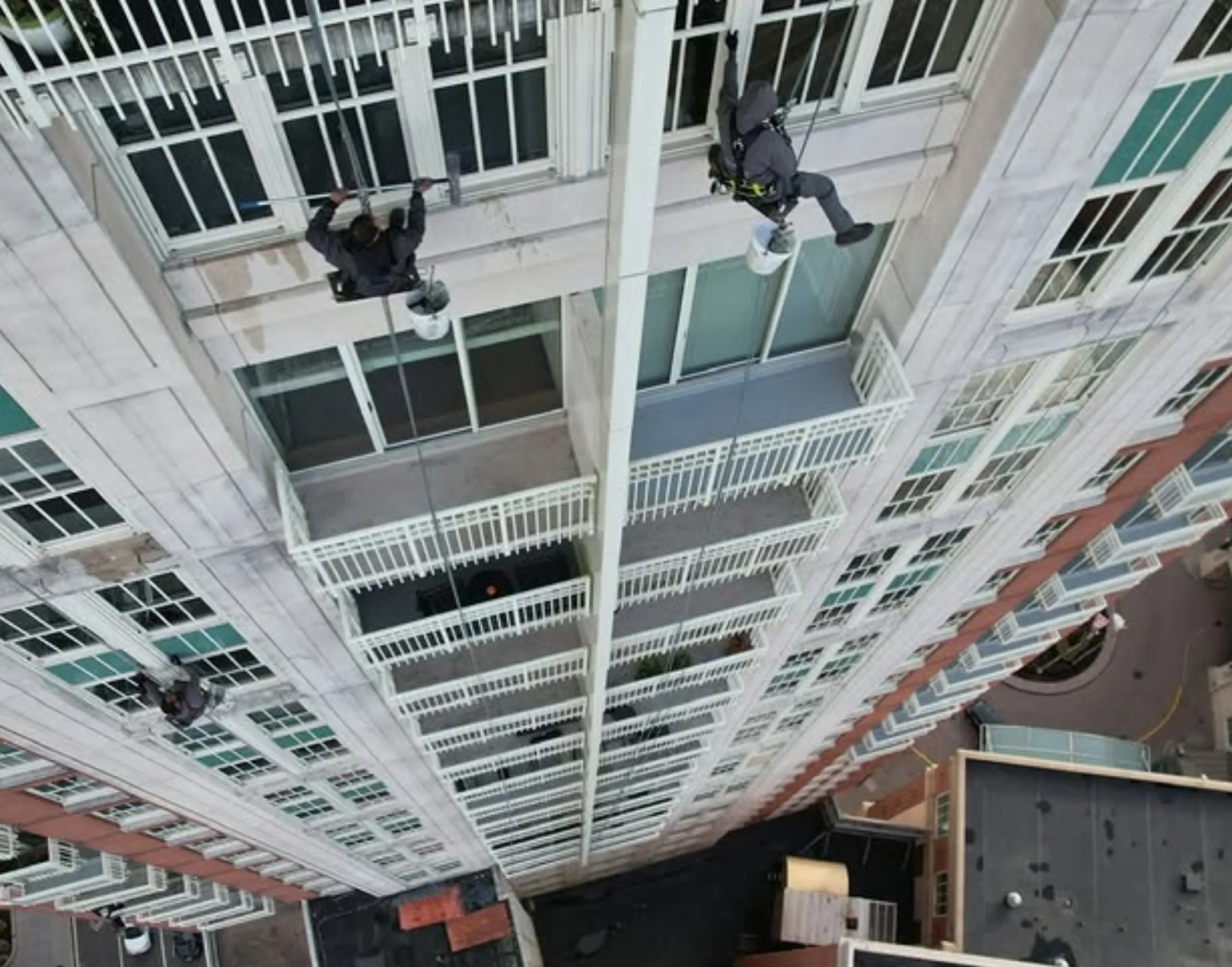
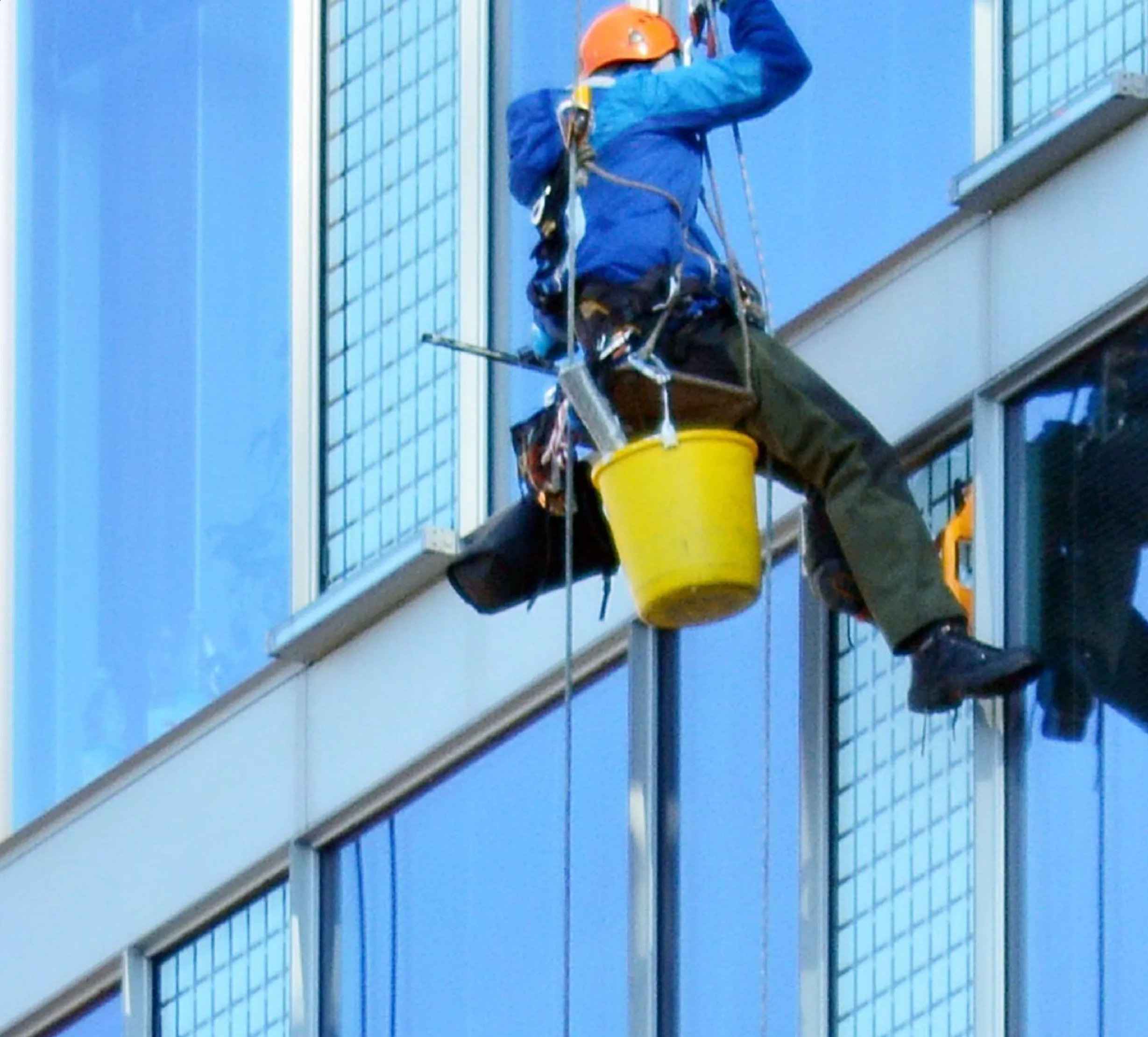
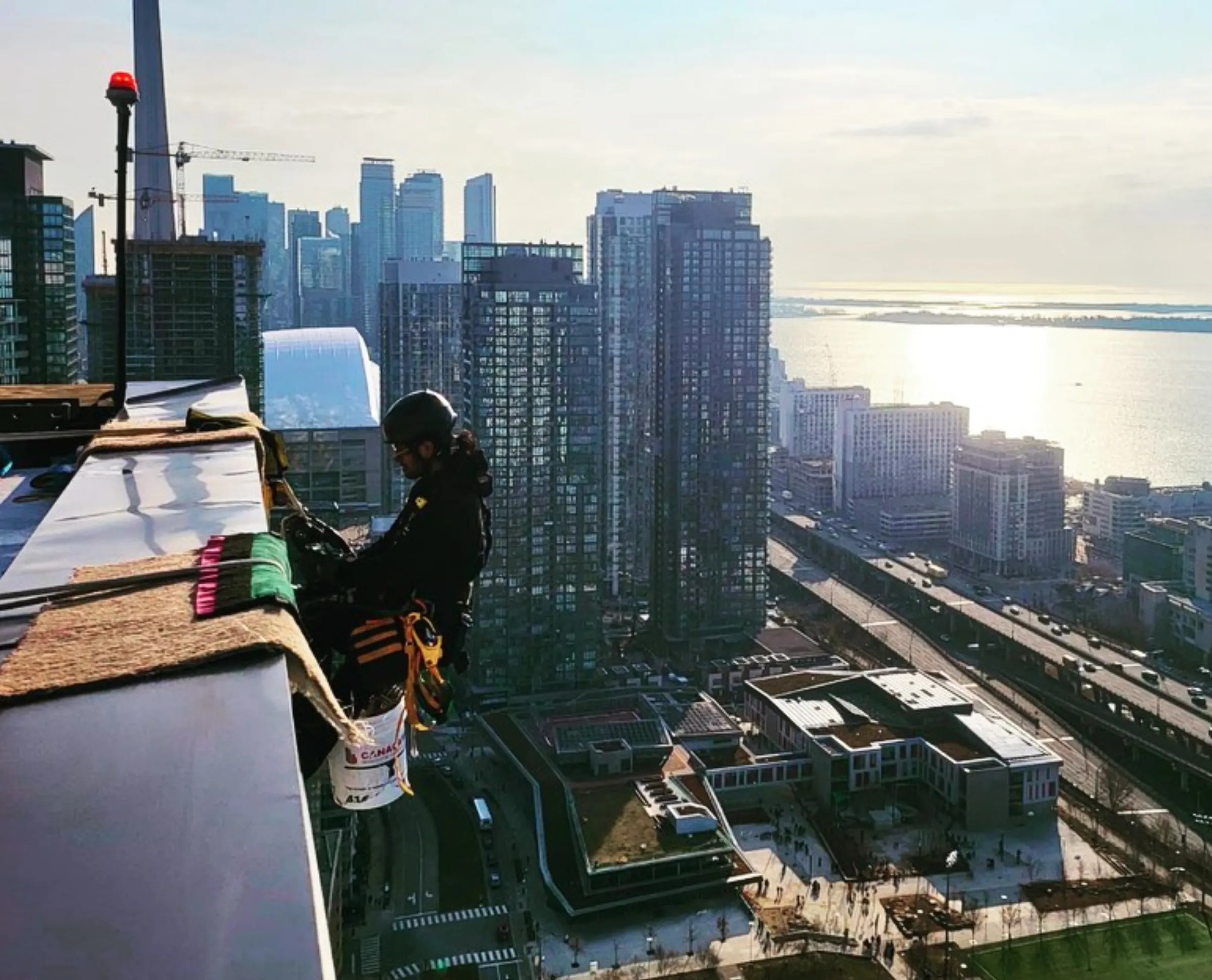
| Industrial rope access | Areas where ground-based or mechanical access is impractical | Anchor points, rigging, façade geometry, exclusion zones and specialist safety controls |
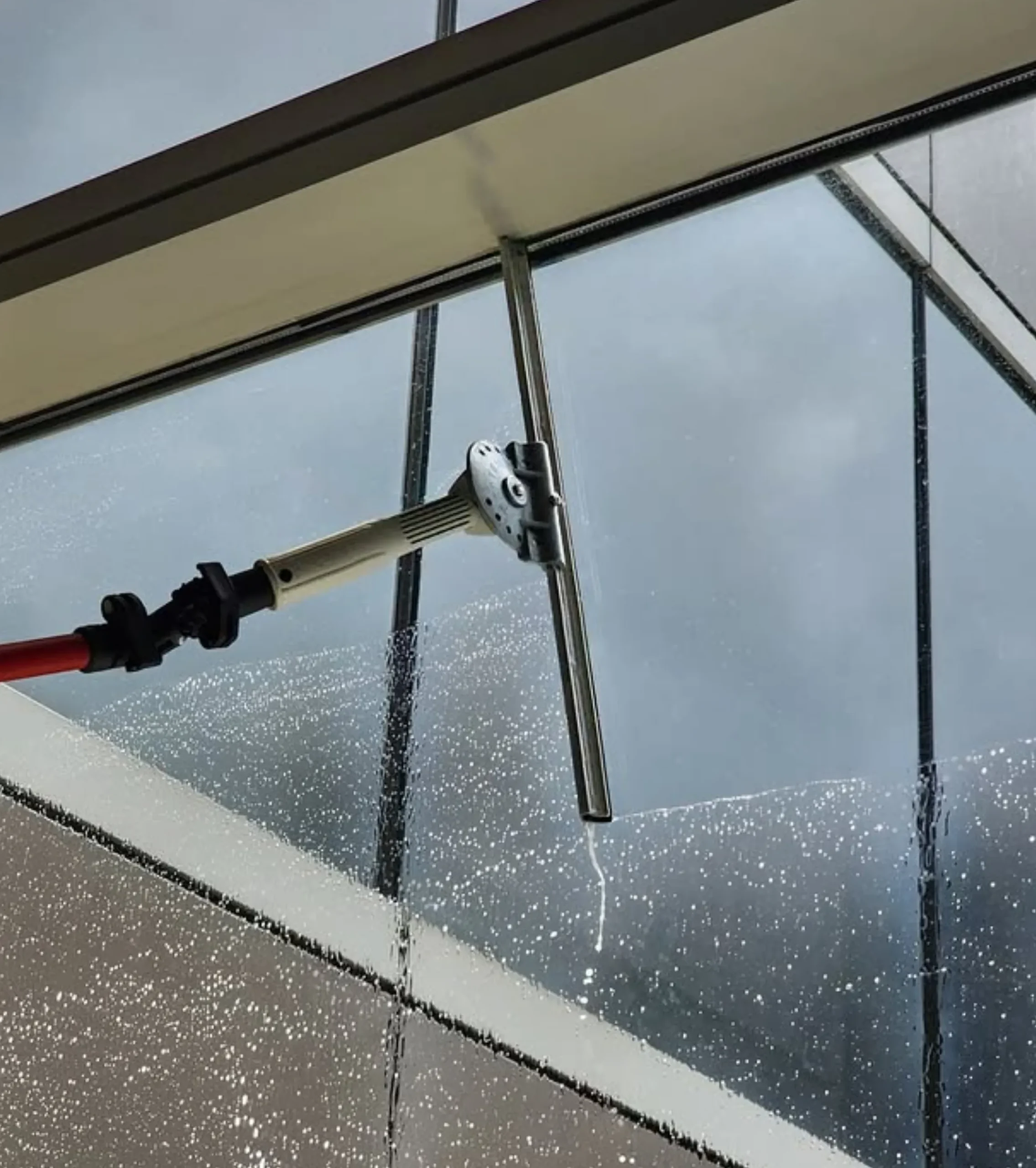
| Applicator and squeegee | Glass safely reachable from the selected access system | Method depends on glass and contamination |
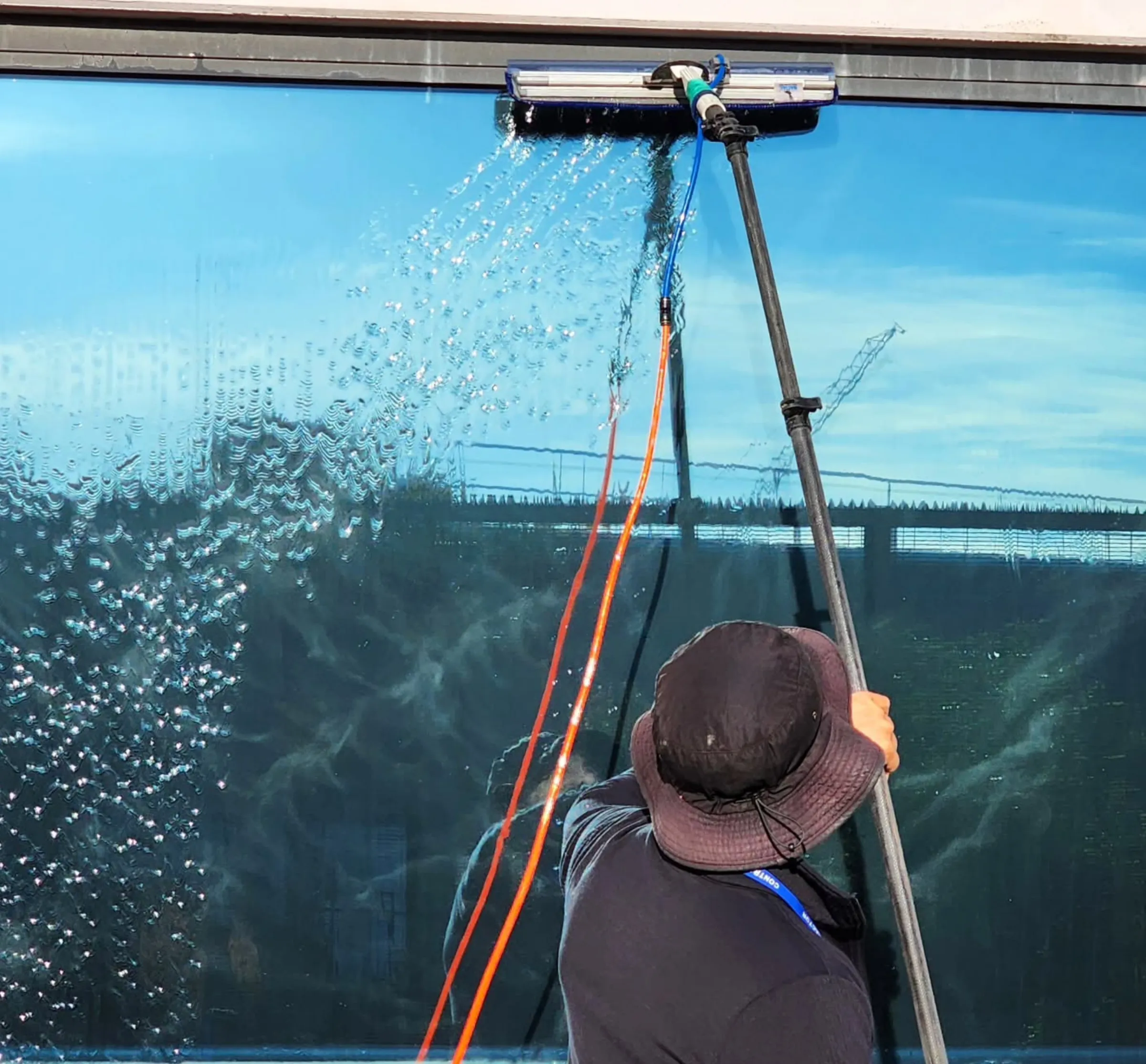
For ground-reachable glazing, water-fed poles with soft-bristle brushes can agitate contamination while purified water rinses the glass. Reducing dissolved minerals helps limit residue that might otherwise remain as the water dries. Other glazing may require applicator-and-squeegee cleaning from an appropriate access system.
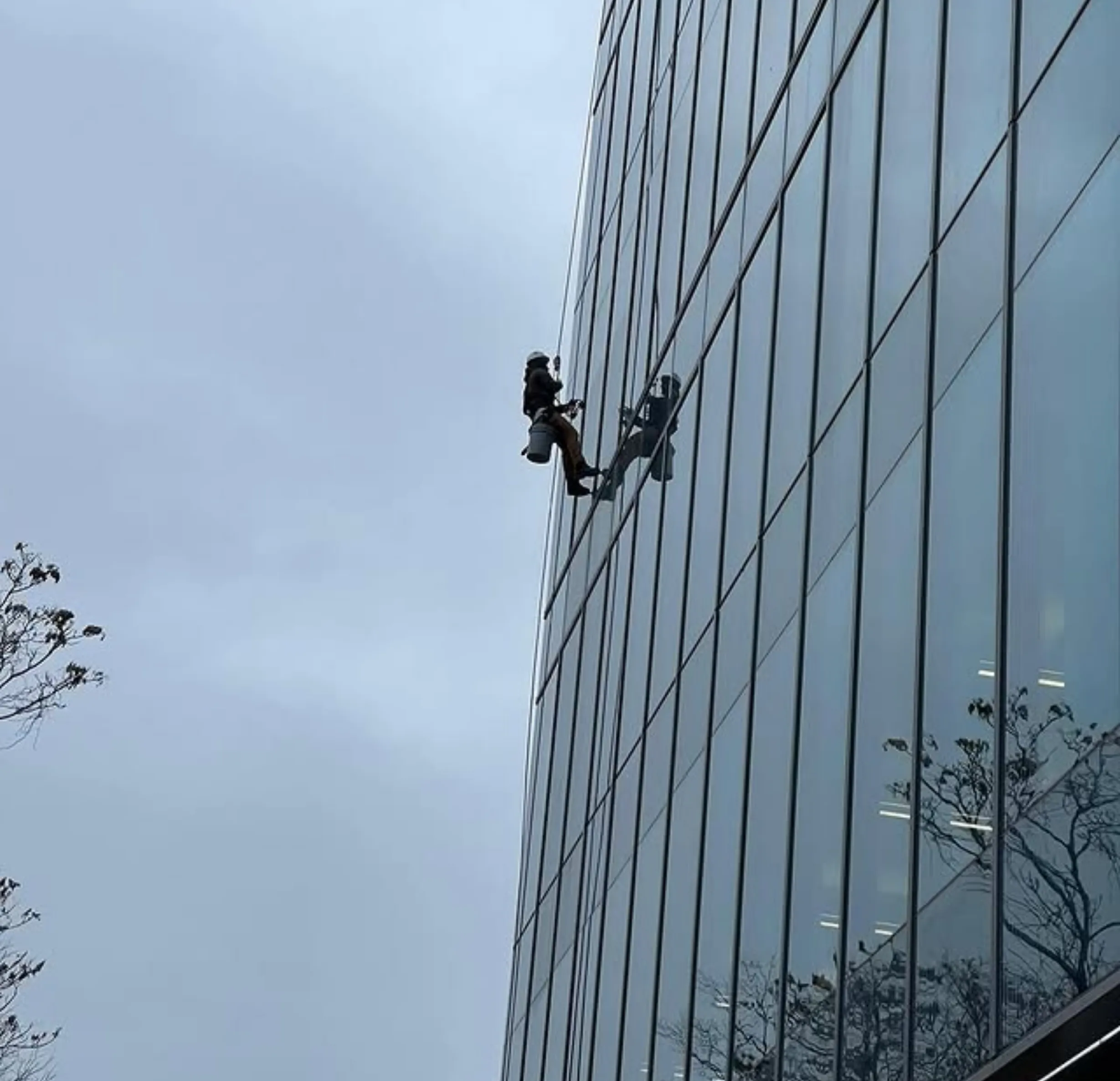
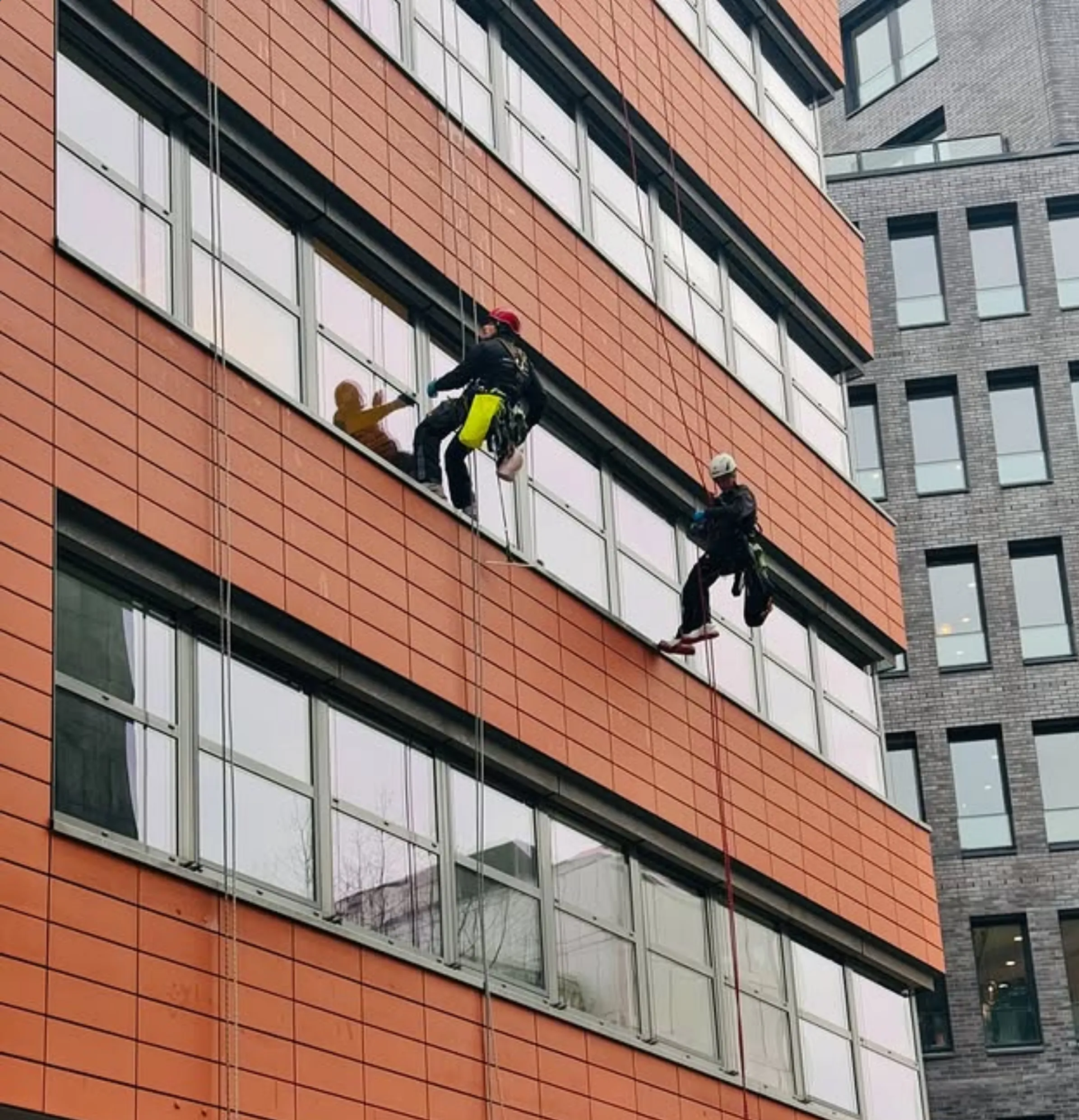
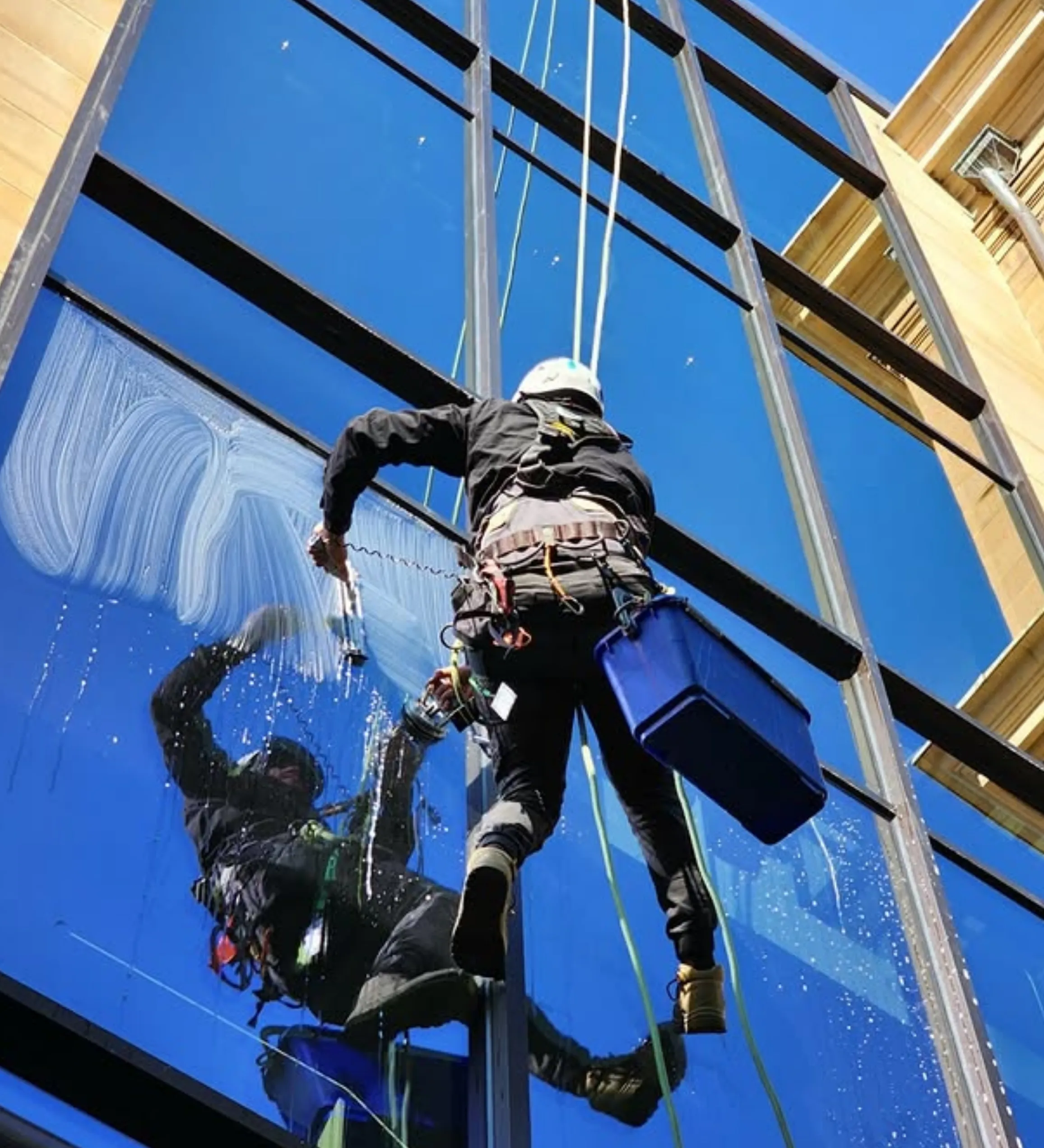
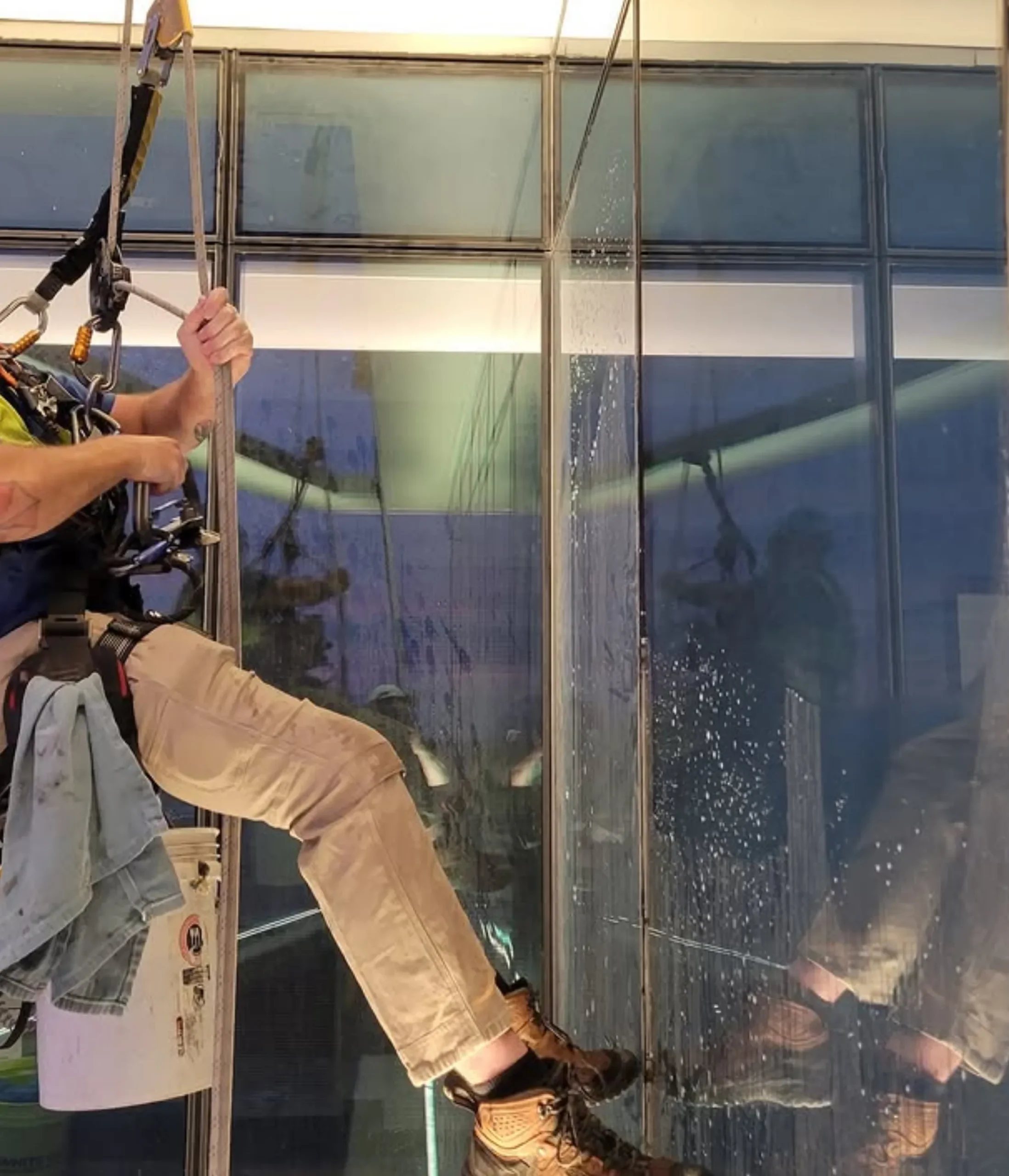
Where pole access is impractical, an EWP may be suitable for sites with adequate ground positioning. Abseil window cleaning can work where façade geometry or restricted ground access limits mechanical access. There is no useful universal maximum height for water-fed poles or rope access: practical reach depends on equipment, façade geometry, access arrangements and site-specific safety requirements.
For boom-type EWPs, 11 metres is an important Australian licensing threshold. Operating a boom-type EWP with a boom length of 11 metres or more requires the appropriate High Risk Work Licence. The threshold refers to boom length, not window height.
Safety and Access Planning
WorkSafe Victoria’s fall-prevention hierarchy prioritises working from the ground or a solid platform where reasonably practicable. Passive fall prevention, such as an EWP, sits above work-positioning systems such as industrial rope access.
Where a task is legally classified as construction work, a fall risk of more than 2 metres makes it high-risk construction work requiring a Safe Work Method Statement (SWMS). This does not mean every window-cleaning task above 2 metres automatically requires a SWMS.
Access planning considers anchor suitability, EWP positioning, pedestrians, exclusion zones and weather. Existing anchors must meet applicable inspection, testing and maintenance requirements.
No universal wind-speed limit applies to high-rise cleaning. Work must remain within equipment and site-specific operating limits, and unsuitable Melbourne conditions may require postponement.
How Melbourne Conditions Affect High-Rise Windows
Glazing near major roads and in busy urban areas can collect traffic-related particles and airborne dust. Buildings closer to Port Phillip Bay may also be exposed to wind-borne salt. EPA Victoria identifies vehicle emissions, road dust and sea salt as particulate sources relevant to Melbourne and Victoria.
Exposure can vary even across a single building. Façade orientation, prevailing weather, nearby construction, birds and surrounding buildings can cause some elevations to become contaminated sooner than others. A high-rise beside a major traffic corridor, near the bay or close to active construction may therefore need attention sooner than a more sheltered property.
When Should High-Rise Windows Be Cleaned?
There is no authoritative Australian interval for every high-rise building. Cleaning frequency is better based on contamination rate, façade exposure and presentation requirements.
Previous cleaning cycles provide a practical benchmark. If particular elevations become visibly contaminated sooner, they may need attention before sheltered glazing. This is more useful than imposing an arbitrary three-, six- or twelve-month schedule.
Need a Quote?
A high-rise window-cleaning quote depends on glazing area, building height, façade geometry, required access method, existing anchor or building maintenance systems, ground access and obstacles. Two buildings with similar amounts of glass can therefore require different approaches and quotes.
When requesting a quote, send us the property address, façade photographs and any available information about roof access, anchor points or building maintenance systems. These details help us assess likely access requirements.

Your satisfaction is our top priority. We tailor our services to meet your specific needs

We are committed to environmental responsibility. Our cleaning products are eco-friendly.

Pricing
We offer competitive pricing without compromising on the quality of our services.

Expertise
As a locally owned and operated company, we understand the unique needs of our community.
FAQ
How much does high-rise window cleaning cost in Melbourne?
Cost depends on glazing area, access method, façade complexity and site conditions. Buildings with similar amounts of glass can require different quotes when access requirements differ.
Is rope access always used for high-rise windows?
No. Water-fed poles, EWPs, boom lifts or permanent building access systems may be more appropriate. Rope access is one work-positioning option, not the default for every elevated window.
Can high-rise window cleaning remove hard water stains?
Some deposits can be removed, but established hard water staining or glass etching may require different treatment and remain visible after routine cleaning.
Can windows be cleaned in windy or rainy weather?
Only when conditions suit the planned access method and the applicable equipment operating limits. Wind, rain and changing conditions can make high-rise work unsuitable.
How often should high-rise buildings have their windows cleaned?
There is no universal interval. Traffic exposure, salt air, birds, nearby construction, façade orientation and presentation requirements affect how quickly glazing becomes dirty. The building’s actual contamination rate is a better basis for scheduling.
SEO Title: High Rise Window Cleaning Melbourne
Meta Description: High rise window cleaning Melbourne for commercial and strata buildings using water-fed poles, EWPs and rope access. Request a quote.