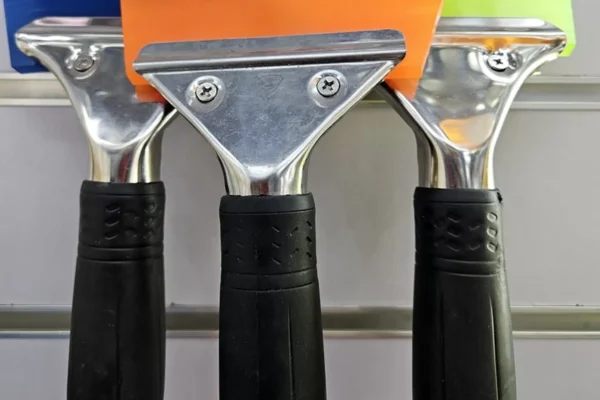
Office window cleaning keeps exterior, interior and high-touch workplace glass clear while accounting for differences in glazing, contamination and access. At Window Cleaning Melbourne Crew, we assess the glass, building height, access and surrounding work areas before selecting traditional squeegee cleaning, water-fed pole systems or specialist access.





- Very nice and professional cleaning team. We order fully cleaning including gutter , townhouse exterior , all windows outside &inside.WaterCrew provides great service and affordable price .read moreread lessping lee10/11/2026Thankyou. Fantastic work, professional and very happy with how clean our windows and surrounds were.read moreread lessStephanie Johnston10/02/2026Excellent & professional in all ways.read moreread lessWendy Haines9/24/2026
- Eren did a sensational job & his communication was fantastic - would definitely use again & recommend 👍read moreread lessTony Murdoch8/26/2026Eren was professional, efficient and completed the roof cleaning to a very high standard. The service was prompt, the workmanship was excellent, and the overall result was fantastic. Highly recommend Eren for anyone looking for reliable and quality roof cleaning services.read moreread lessJanan8/24/2026Excellent. Efficient, thorough, and swift!read moreread lessLu Lu7/15/2026
- Very happy with the service. They were clean, professional and left everything tidyPlus the job was done beautifullyMany thanks!read moreread lessAdelle7/04/2026Highly recommend Eren and his WaterCrew. Have used for gutter cleaning and will in future use for terracotta roof tile cleaning & window cleaning. They do a very thorough and professional job at competitive rates. Also, they are polite, friendly and well spoken.read moreread less
 Alan Thomas6/30/2026Very professional job done in BrightonVery thorough and was on time !!!!read moreread lessRENATO CENEDESE6/12/2026


How Our Service Works
Window height, façade design, internal access, pedestrian areas, staining, furniture and blinds can all affect how a job is approached. Even the two faces of the same pane may require different techniques.
The process generally involves:
- Assessing the glass, contamination and access;
- Selecting appropriate cleaning and access techniques;
- Planning around occupied areas;
- Cleaning with suitable tools or water-fed equipment;
- Checking for missed marks, drips and remaining contamination.
Where the work is classified as high-risk construction work, planning can include a Safe Work Method Statement (SWMS) as required. Elevated glazing alone does not automatically make routine window cleaning high-risk construction work.
Routine cleaning can remove dust, fingerprints, traffic film, cobwebs and bird droppings. Scratches, etched mineral deposits, failed seals or deterioration inside a double-glazed unit cannot be reversed by cleaning.
What We Check Before We Start
We assess the glazing type and condition, contamination, frames, surrounding surfaces and access. Inside, blinds, desks and electrical equipment need to be considered; outside, façade design, ground conditions, pedestrian areas and awnings can affect the method.
Existing scratches, damaged coatings or failed seals may become more noticeable once dirt is removed. Identifying them beforehand helps distinguish removable contamination from defects that cleaning cannot correct.
Offices and Workspaces We Service
Our office window cleaning service can be assessed for:
- Single- and multi-level offices;
- Corporate and professional workplaces;
- Meeting rooms and boardrooms;
- Reception, lobby and display glass;
- Glass doors and office partitions;
- Street-facing glass and glazing requiring high-rise window cleaning.
Two offices with similar amounts of glass may require very different approaches. One may offer straightforward ground-level access; another may have setbacks, awnings or restricted areas beneath the windows.
Complete Glass Care for the Workplace
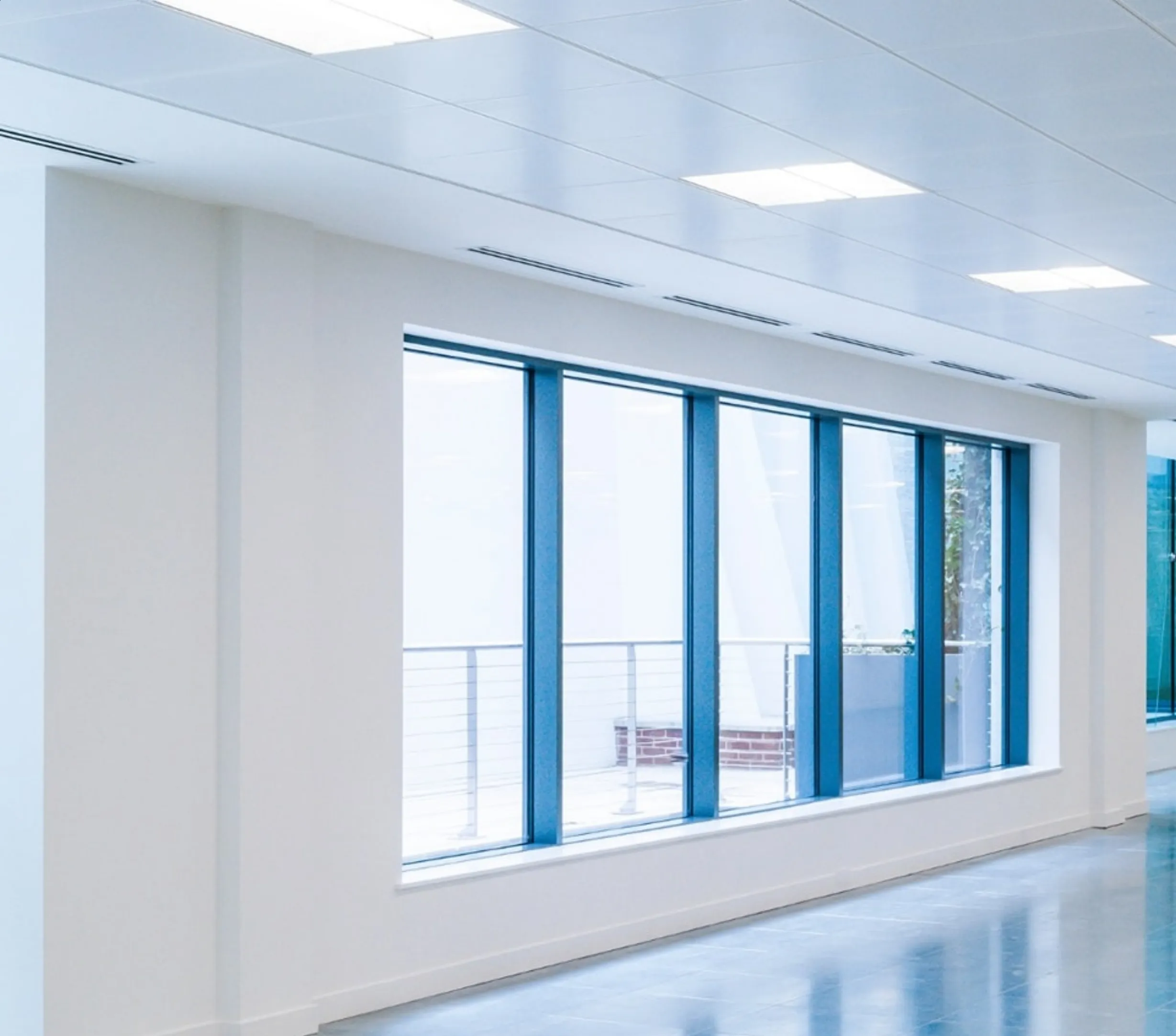
Office glazing requires different cleaning methods depending on its location, condition and accessibility. We assess each area individually, matching the method to the glass, contamination and surrounding workspace.
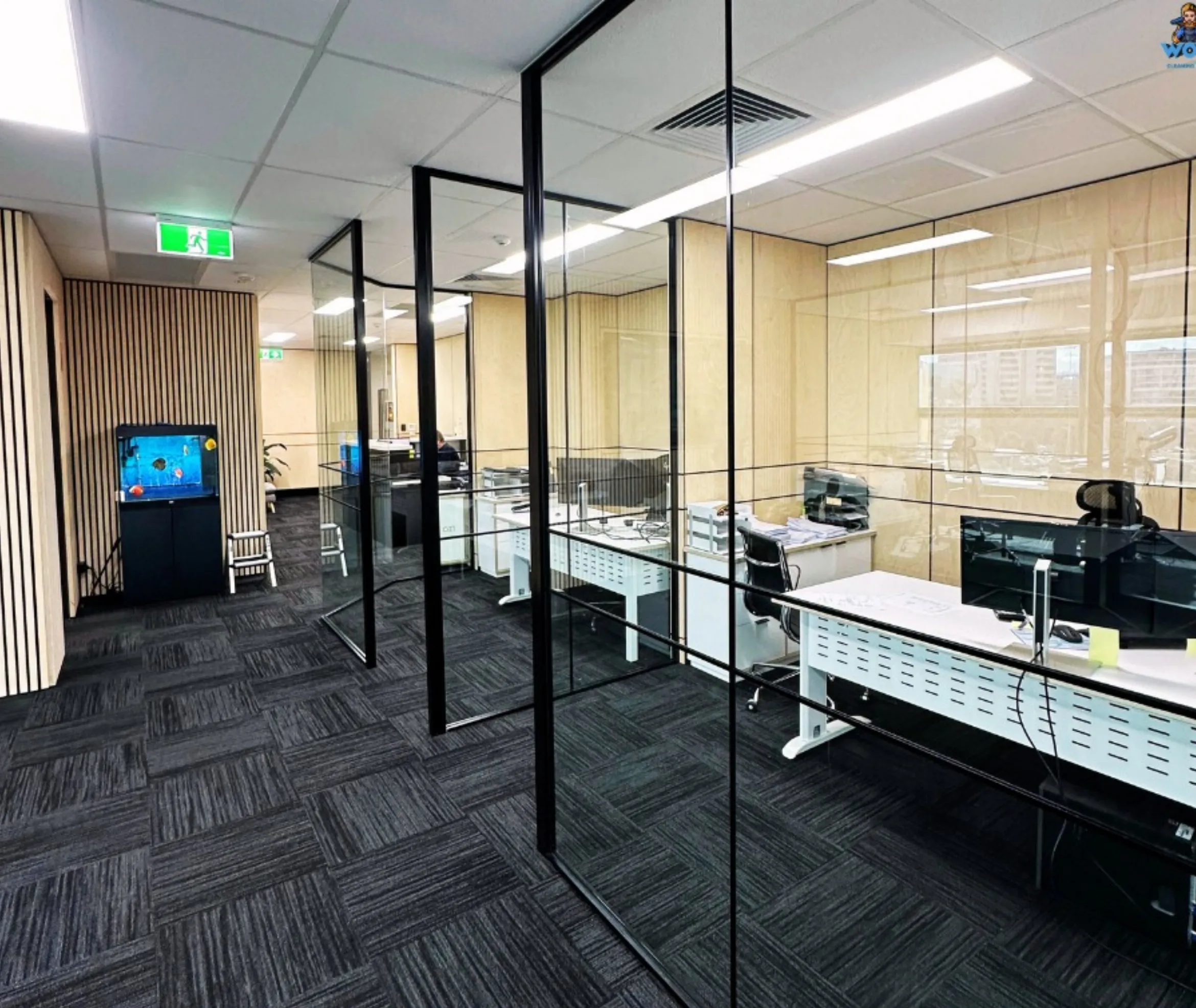
Internal Glass and Partitions
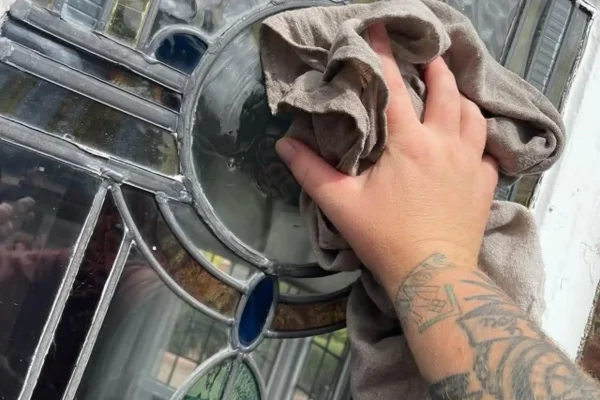
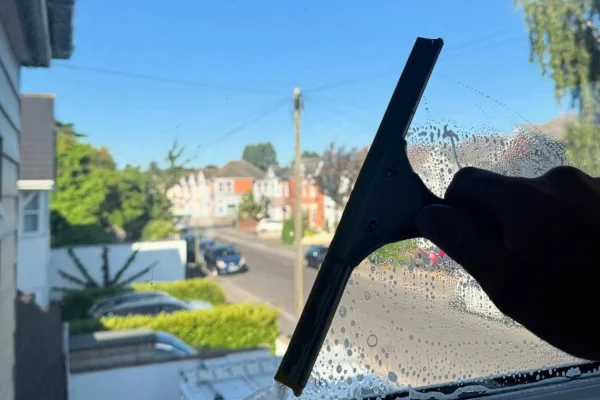
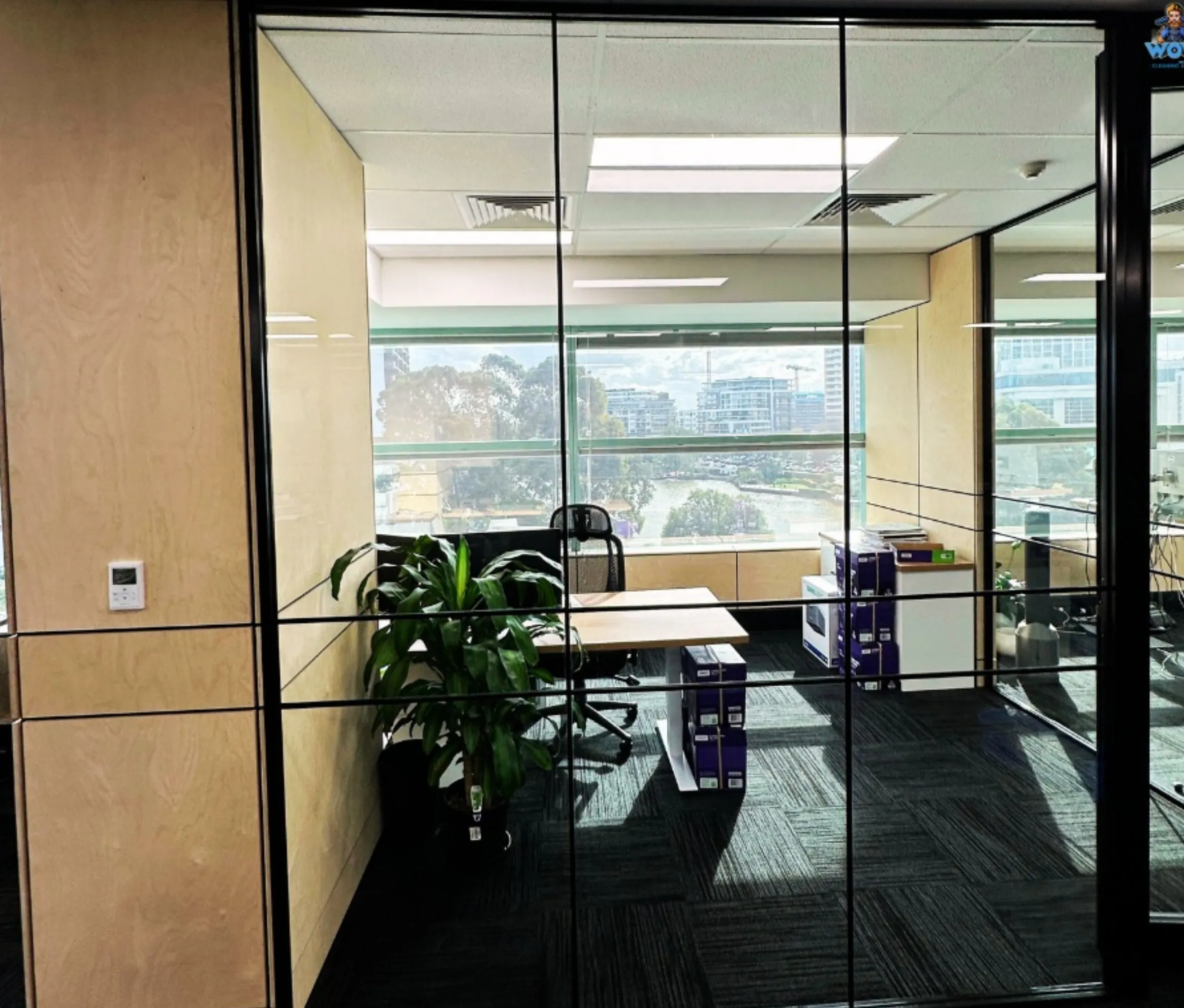
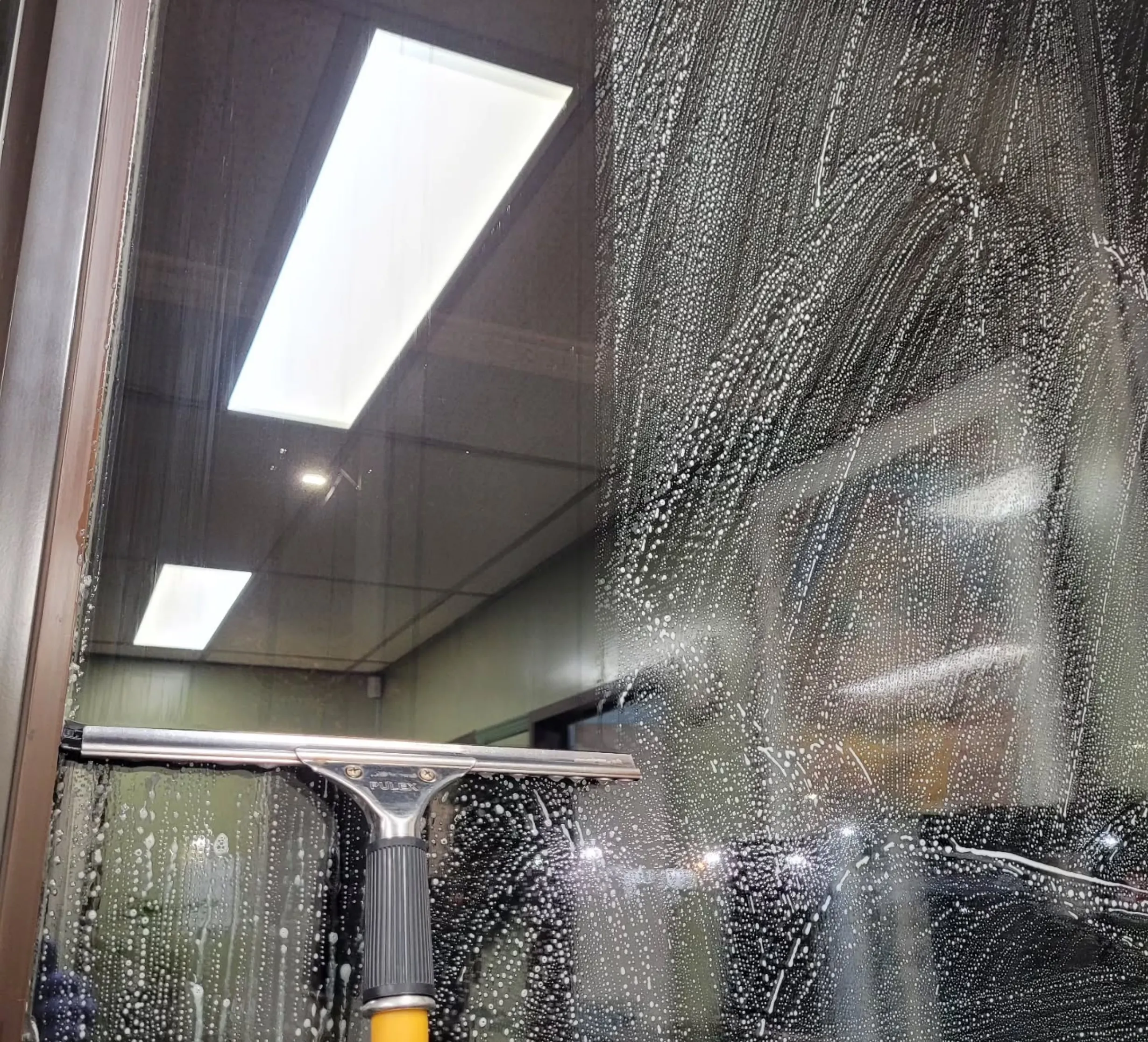
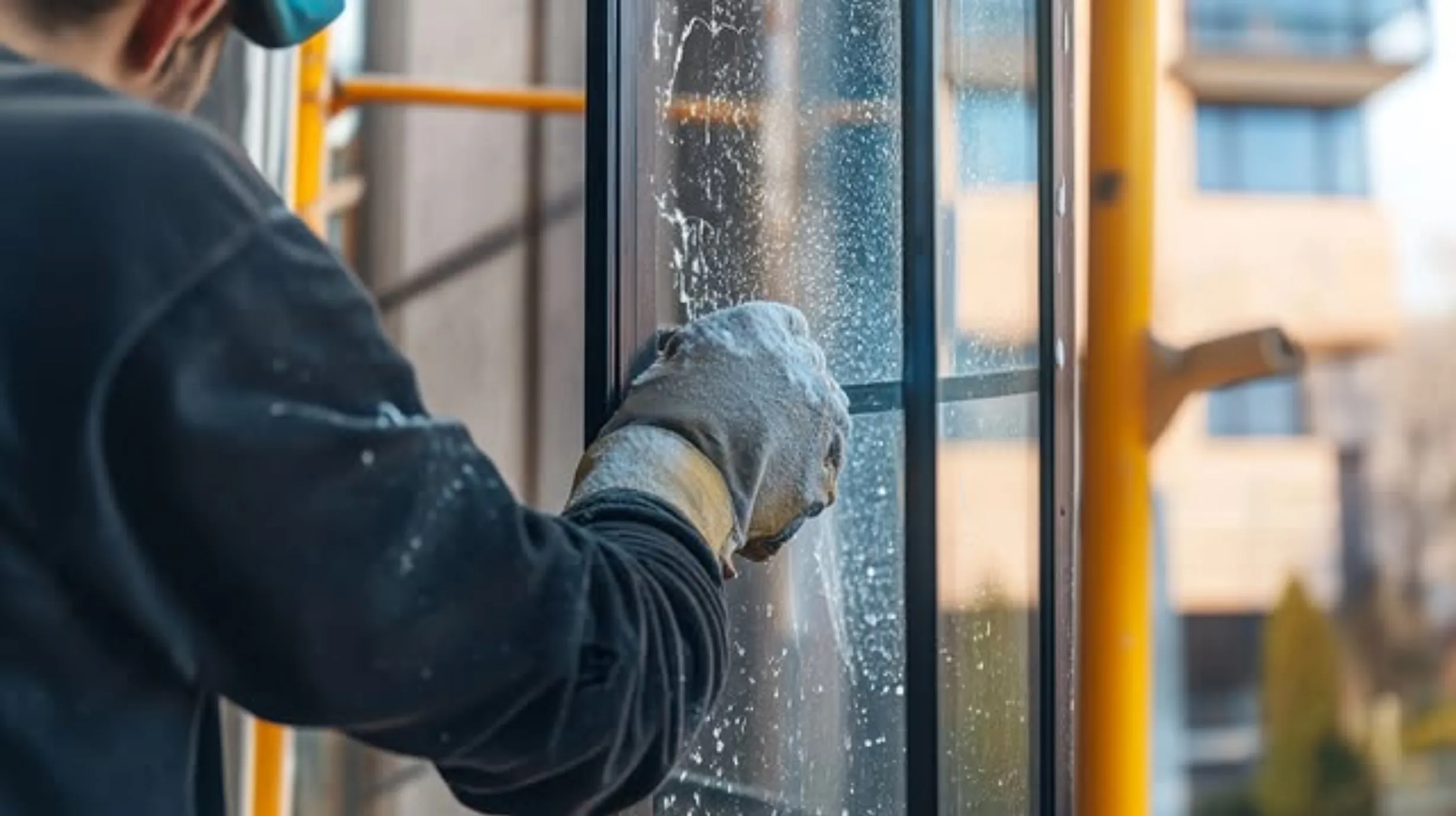
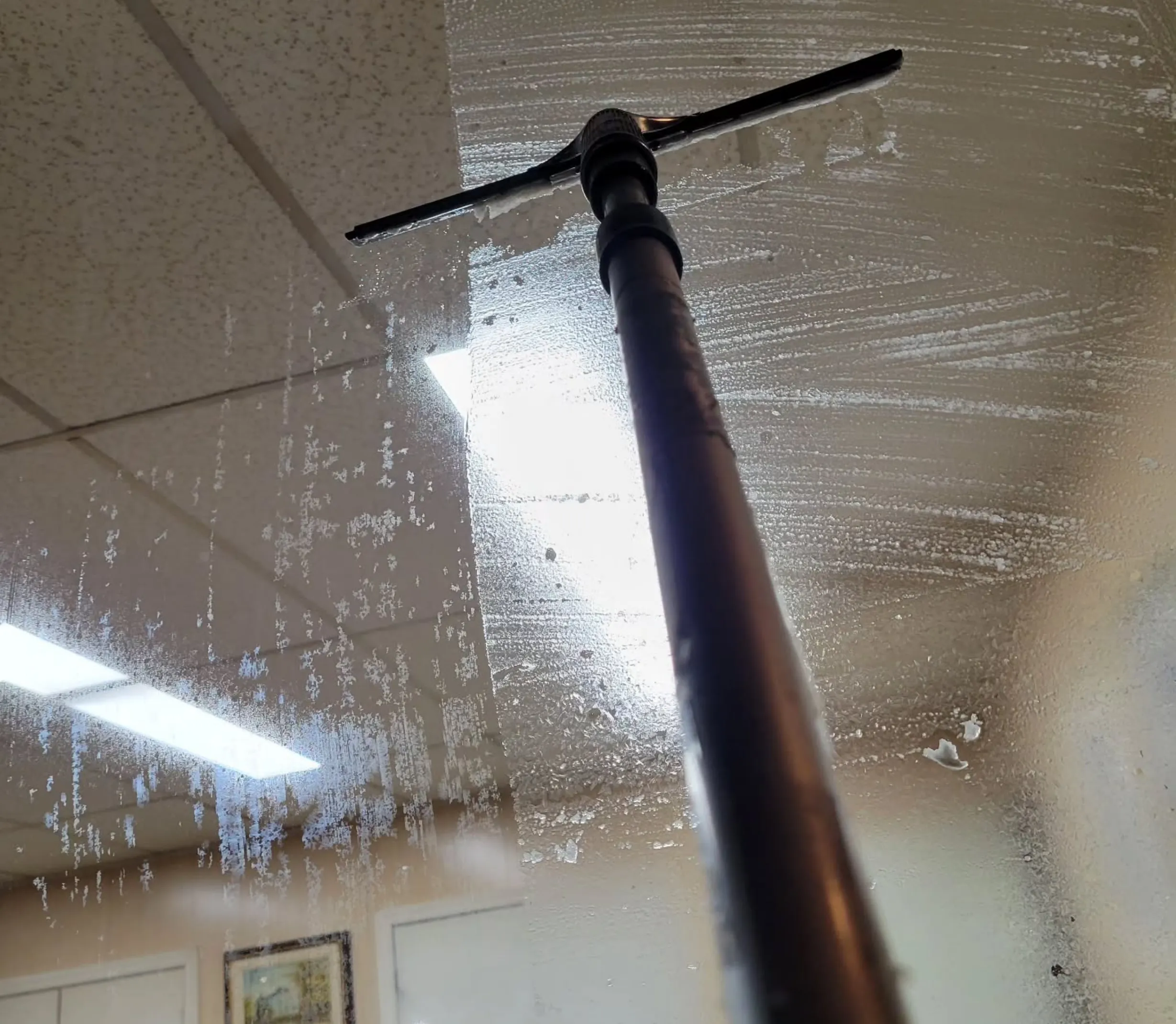
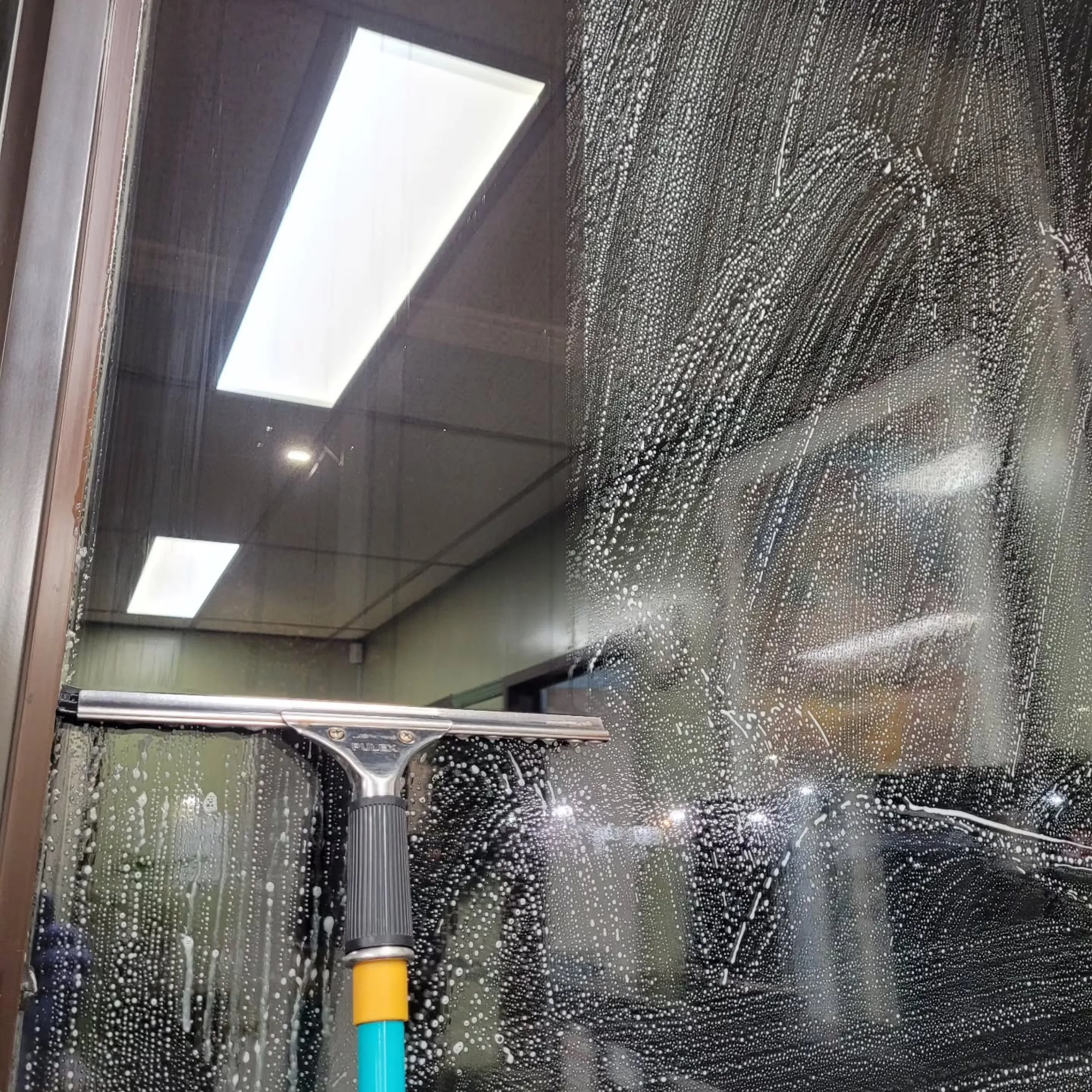
Interior glass commonly collects fingerprints, dust, grease and cleaning residue. Professional window cleaners can use applicators, a glass squeegee, a microfiber washer and a microfiber cloth to work around desks, carpets and electrical equipment.
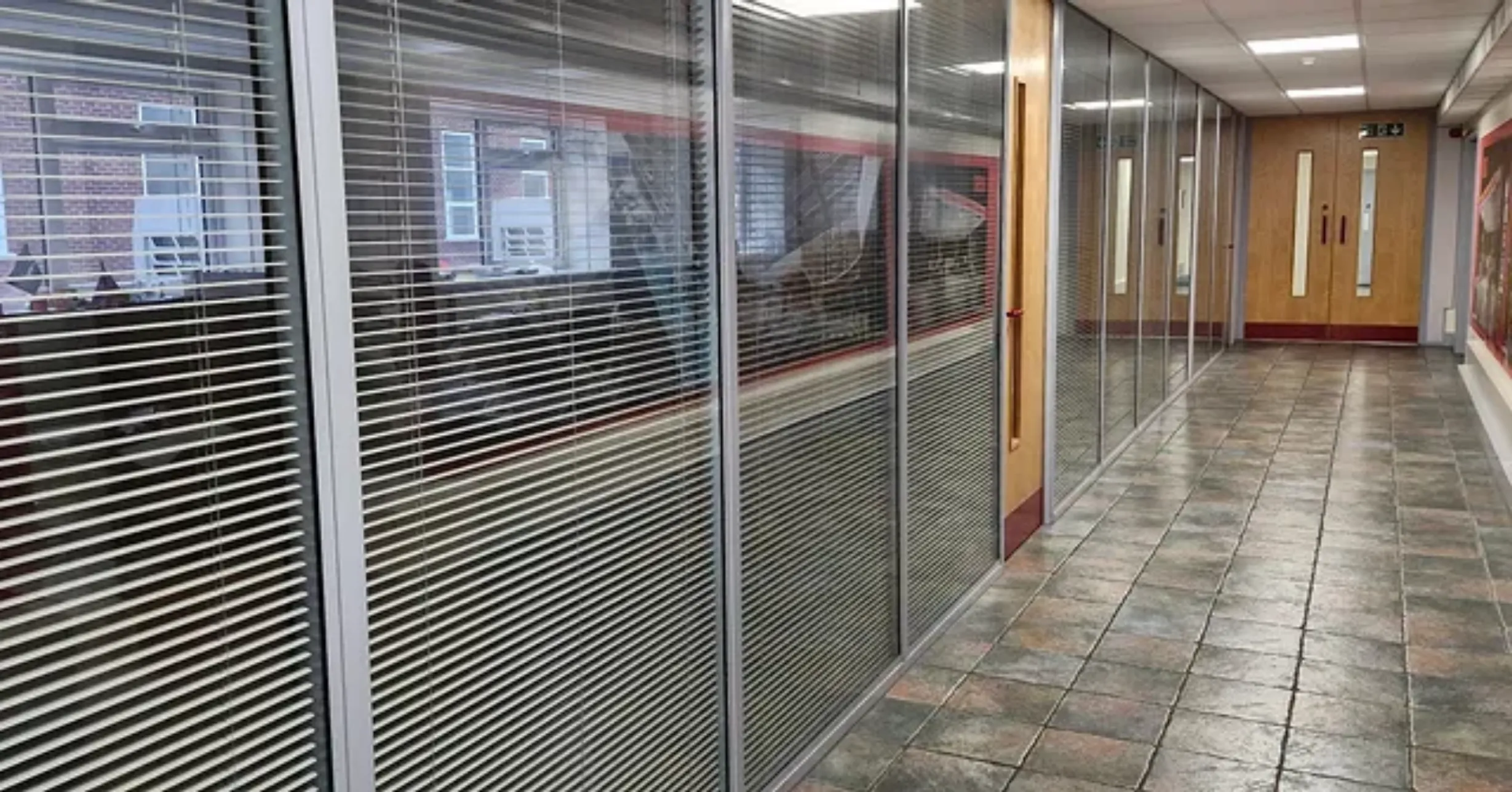
Partitions, doors and reception glass may need more frequent attention because they are touched more often. Furniture, blinds and office equipment can also restrict access.
Exterior Glass and Faсades
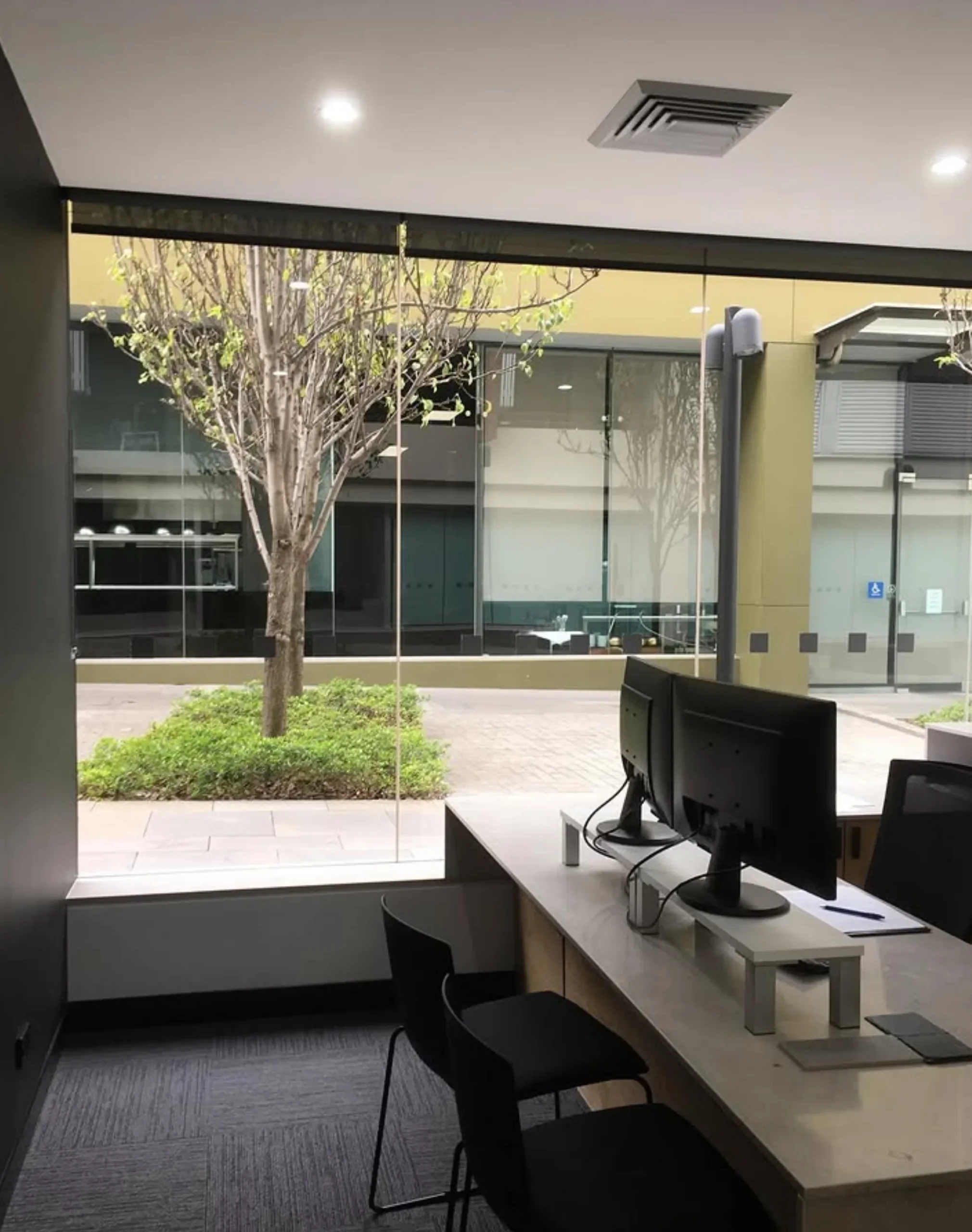
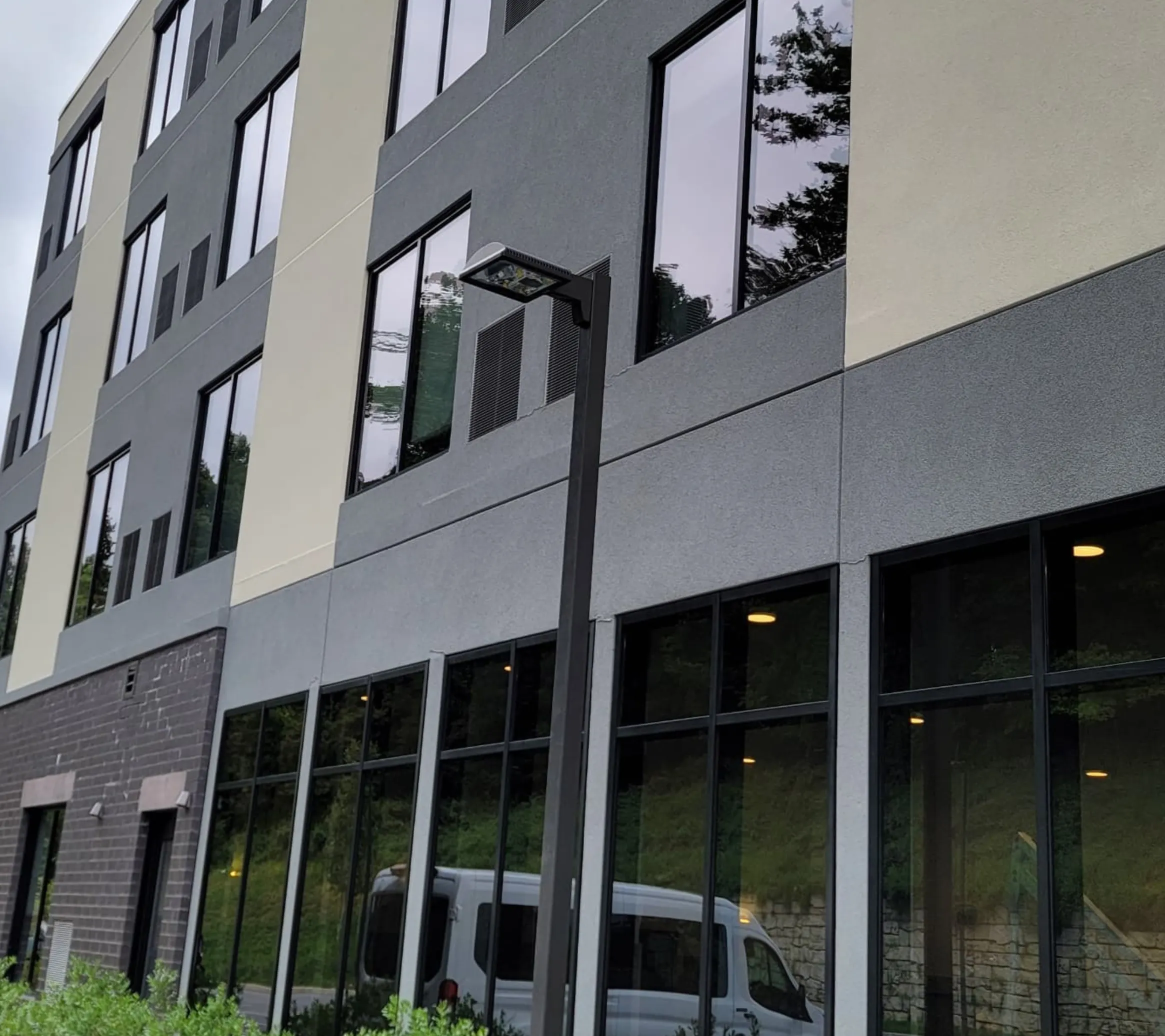
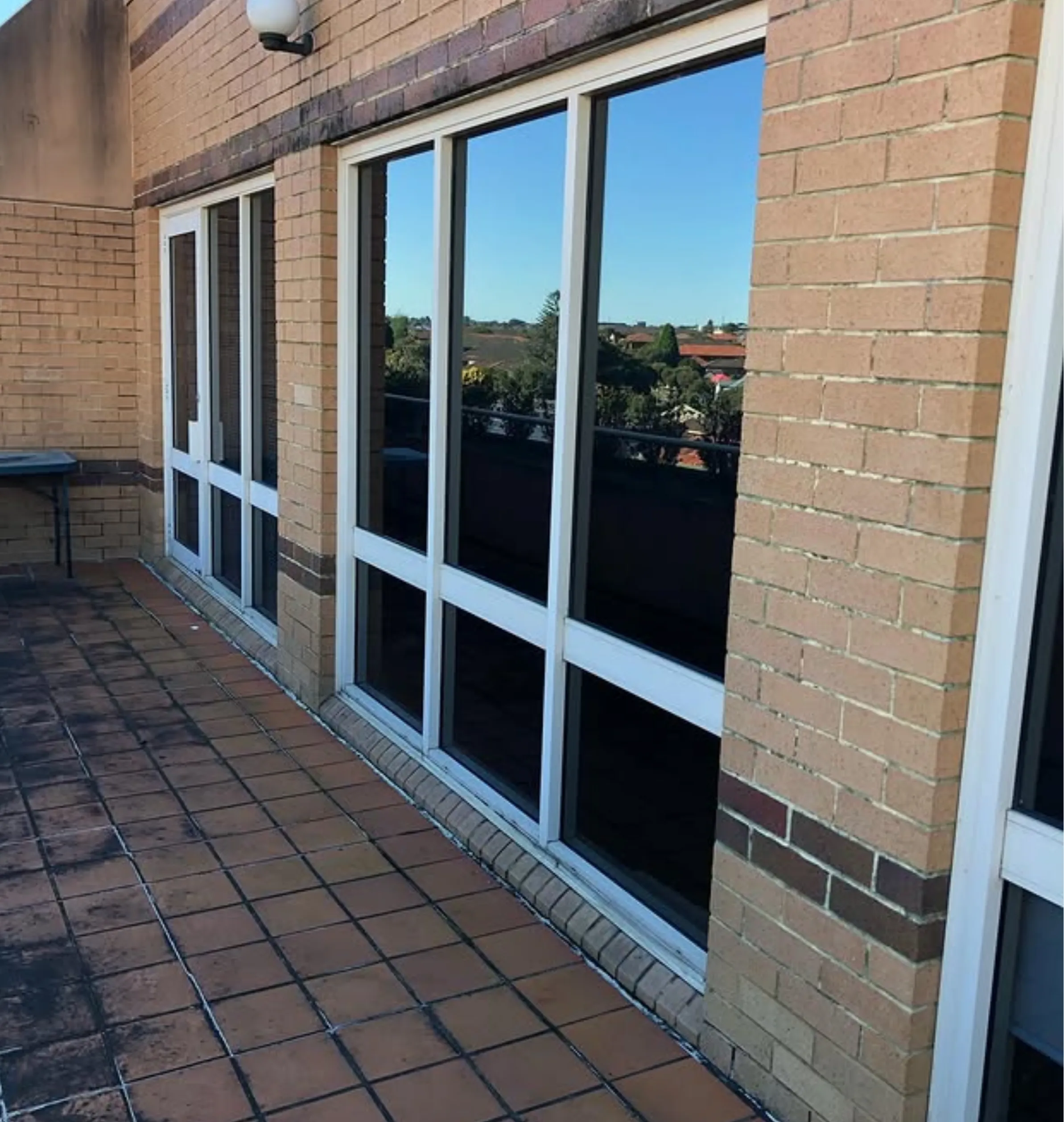
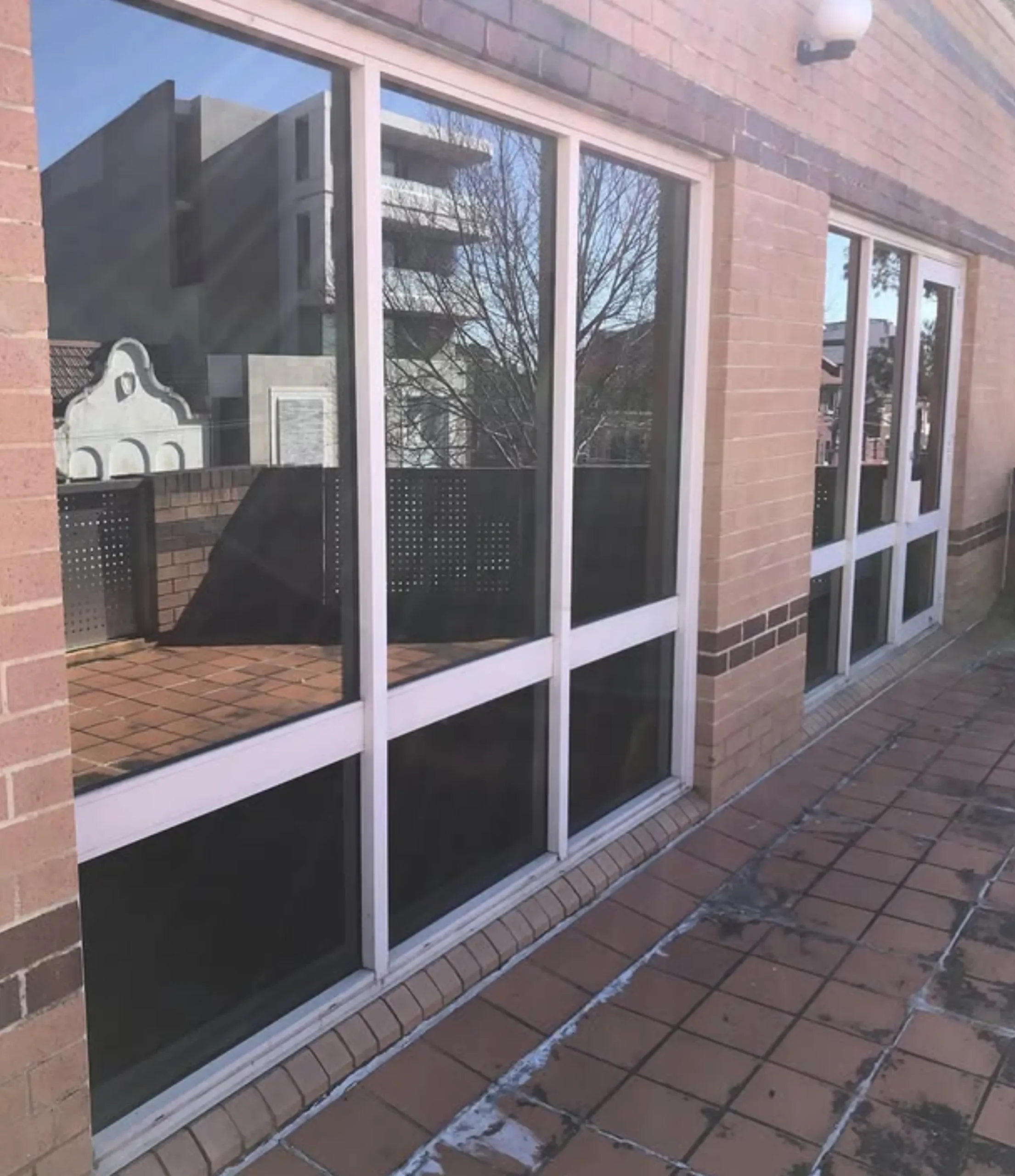
Exterior glass collects rain residue, airborne dirt, traffic film, bird droppings, pollen and cobwebs. Both the contamination and safe access determine the cleaning method.
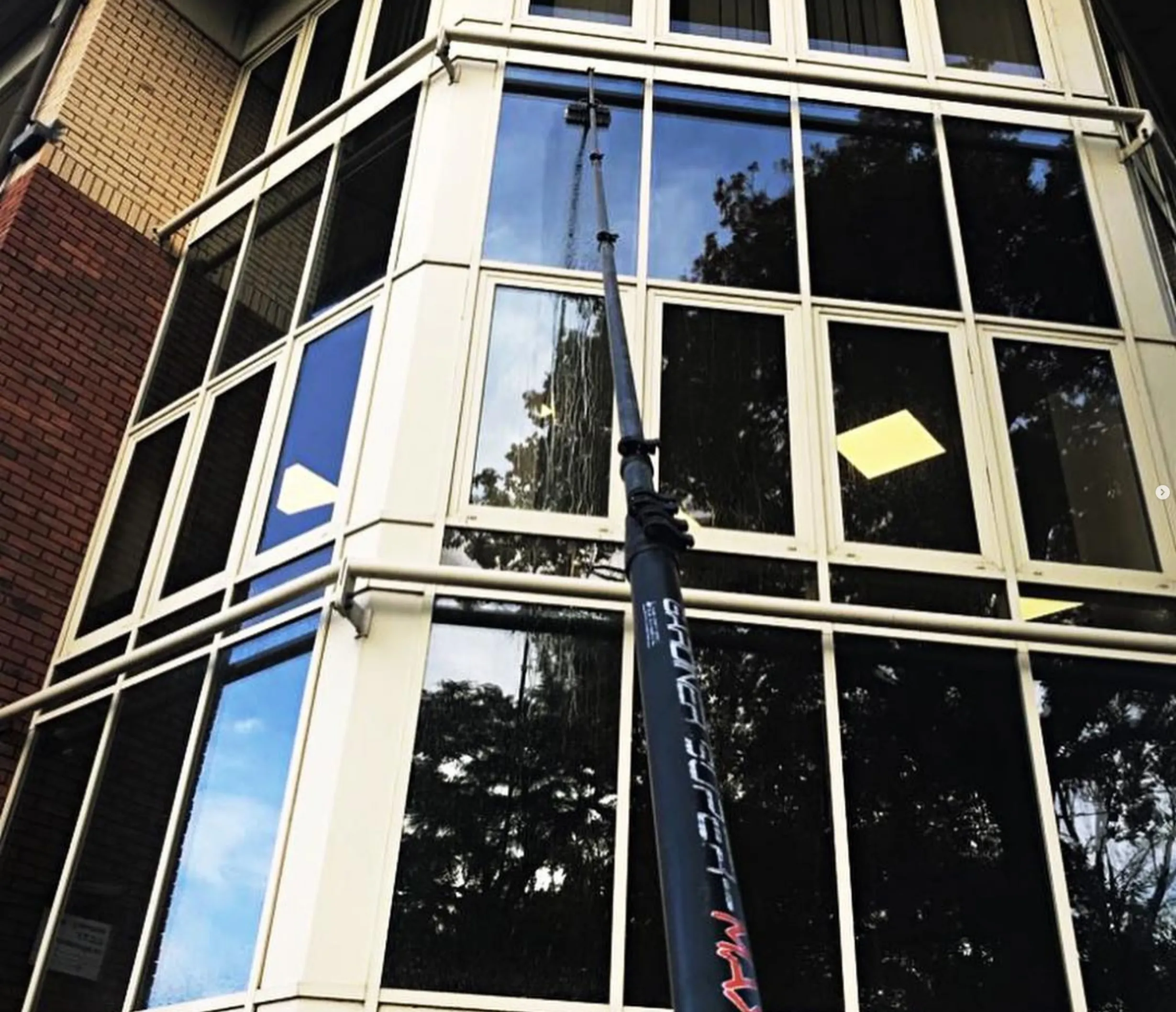
Pure water technology with water-fed pole systems is suitable for exterior windows that are easily accessible from ground level. That does not make every elevated window suitable for water-fed pole technology.
Bonded deposits may need separate assessment. A glass scraper is not automatically appropriate; the glass type, coatings and nature of the deposit must be considered first.
Different Glass Needs Different Care
Standard office glazing, tinted or coated glass, internal partitions, and exterior façade glass may require different treatments. Fingerprints and general dirt also differ from bonded deposits or mineral staining, so more aggressive scrubbing or scraping is not automatically appropriate, particularly where the glass type or coating is uncertain.
Choosing the Right Method
The best method is determined by the glass, contamination and access — not simply by the window-cleaning equipment with the greatest reach.
| Condition | Method that may be suitable | Main consideration |
|---|---|---|
| Accessible interior glass | Applicator, microfiber washer and glass squeegee | Controlled water use around office interiors |
| Ground-level exterior glass | Traditional tools or pure water technology | Contamination and surrounding surfaces |
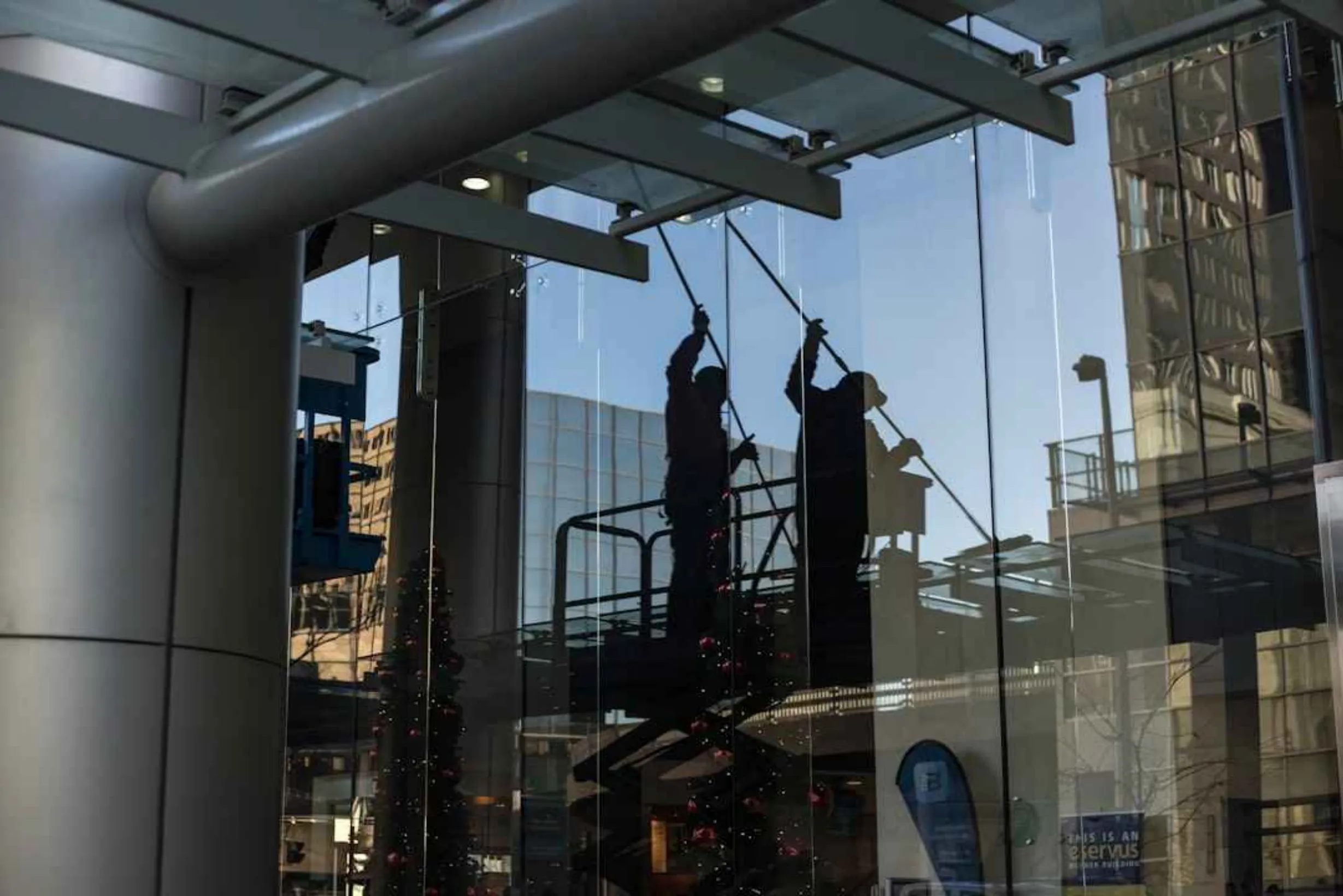
| Elevated accessible glazing | Water-fed pole systems and telescopic poles | Safe ground position and practical reach |
| Difficult high windows | Specialist access method | Building design and site-specific risks |
| Mineral staining or bonded deposits | Separate assessment | Standard cleaning may not remove permanent damage |
Coated or tinted glass, deteriorated frames, and unknown deposits should also be considered before using more aggressive window cleaning techniques. Harder scrubbing is not automatically safer or more effective.
Preparing Your Office
Where practical, blinds should be raised and movable items immediately against the glazing cleared before an internal clean. Desks, computers and fixed furniture do not necessarily need to be moved, although they can limit access.
Staff can also be advised which offices, meeting rooms or shared areas will be entered. Restricted rooms, scheduled meetings or sensitive equipment should be identified beforehand so work can be planned around normal operations.
Working Around Your Business
Occupied offices require cleaners to work around desks, entrances, meeting rooms and pedestrian routes.
Raising blinds and providing access to the glazing before an internal clean can reduce interruptions. Where practical, movable items immediately against the windows should be cleared, and staff advised on which areas will be accessed.
Internal areas can then be cleaned in sections where practical. Exterior work may require control of the space below the windows, particularly around entrances and footpaths. Building-specific safety induction requirements can also affect access.
Reaching Upper-Level Glass
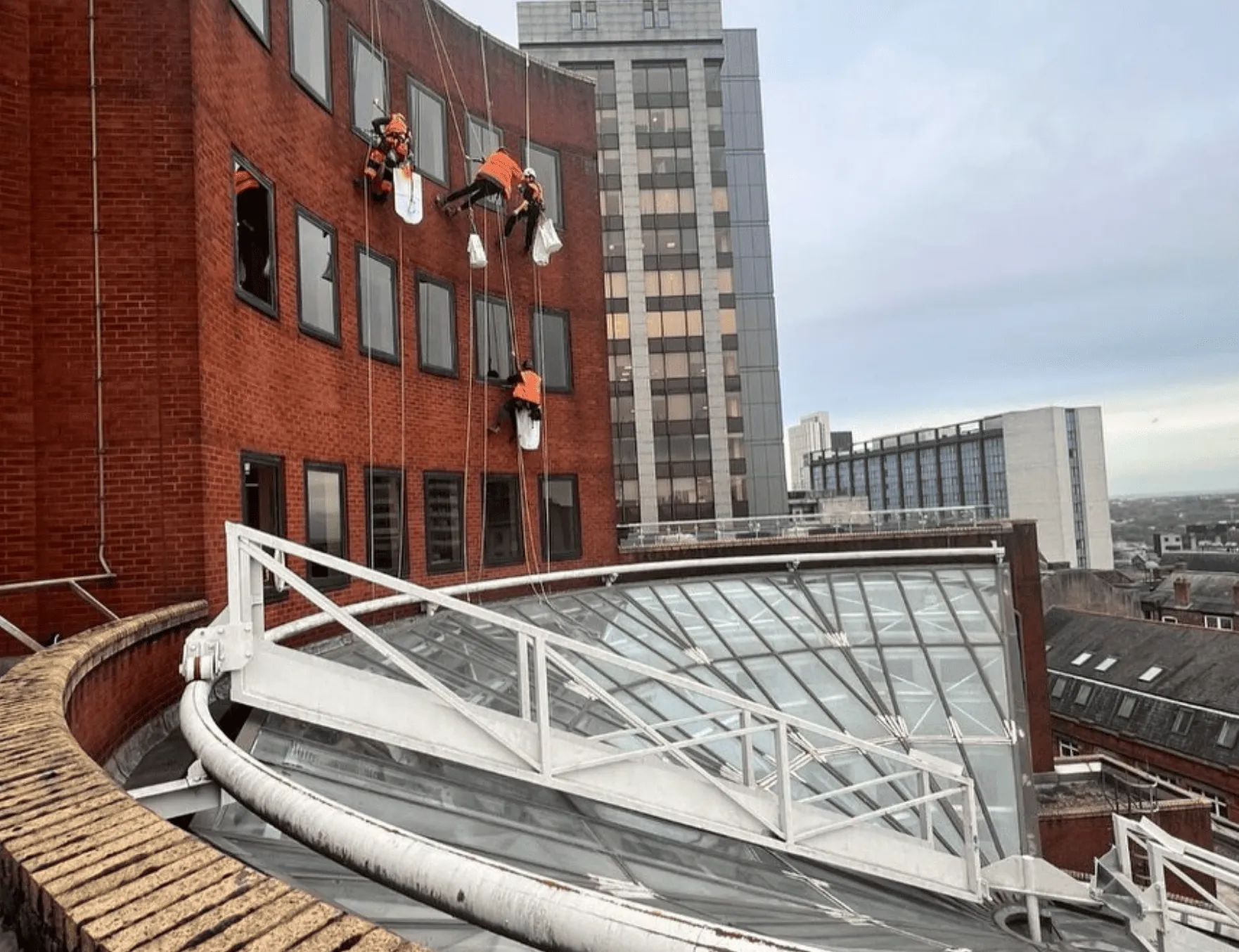
High windows do not automatically require ladders or abseil window cleaning methods. The first consideration is whether they can be cleaned effectively from ground level.
In Victoria, Part 3.3 fall-prevention requirements apply where there is a risk of falling from more than 2 metres, although lower-level fall risks must still be controlled.
Portable ladders are intended for simple, short-duration tasks rather than as the default method for extended window cleaning. Where practical, we favour ground-based or purpose-suited access methods.
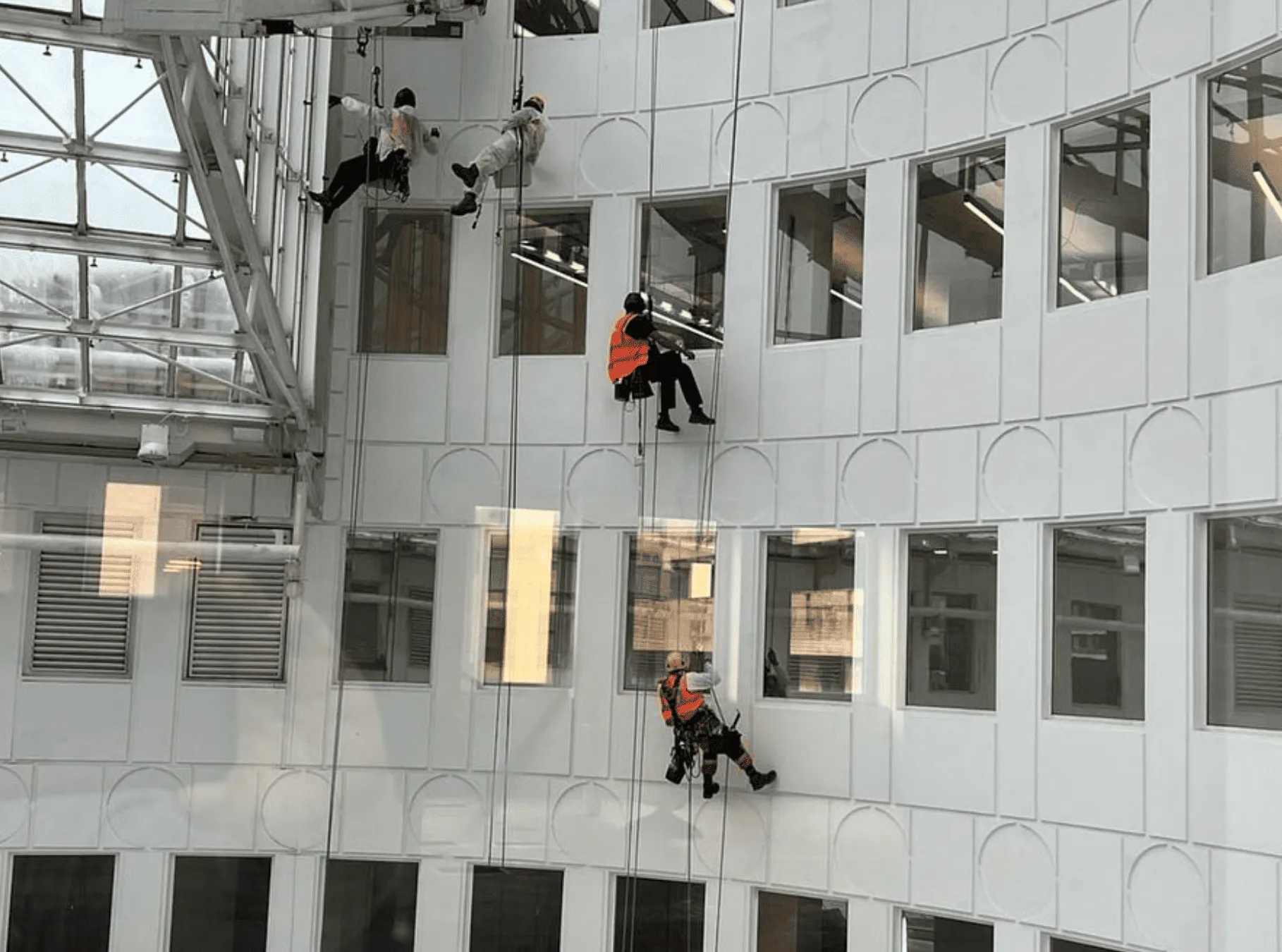
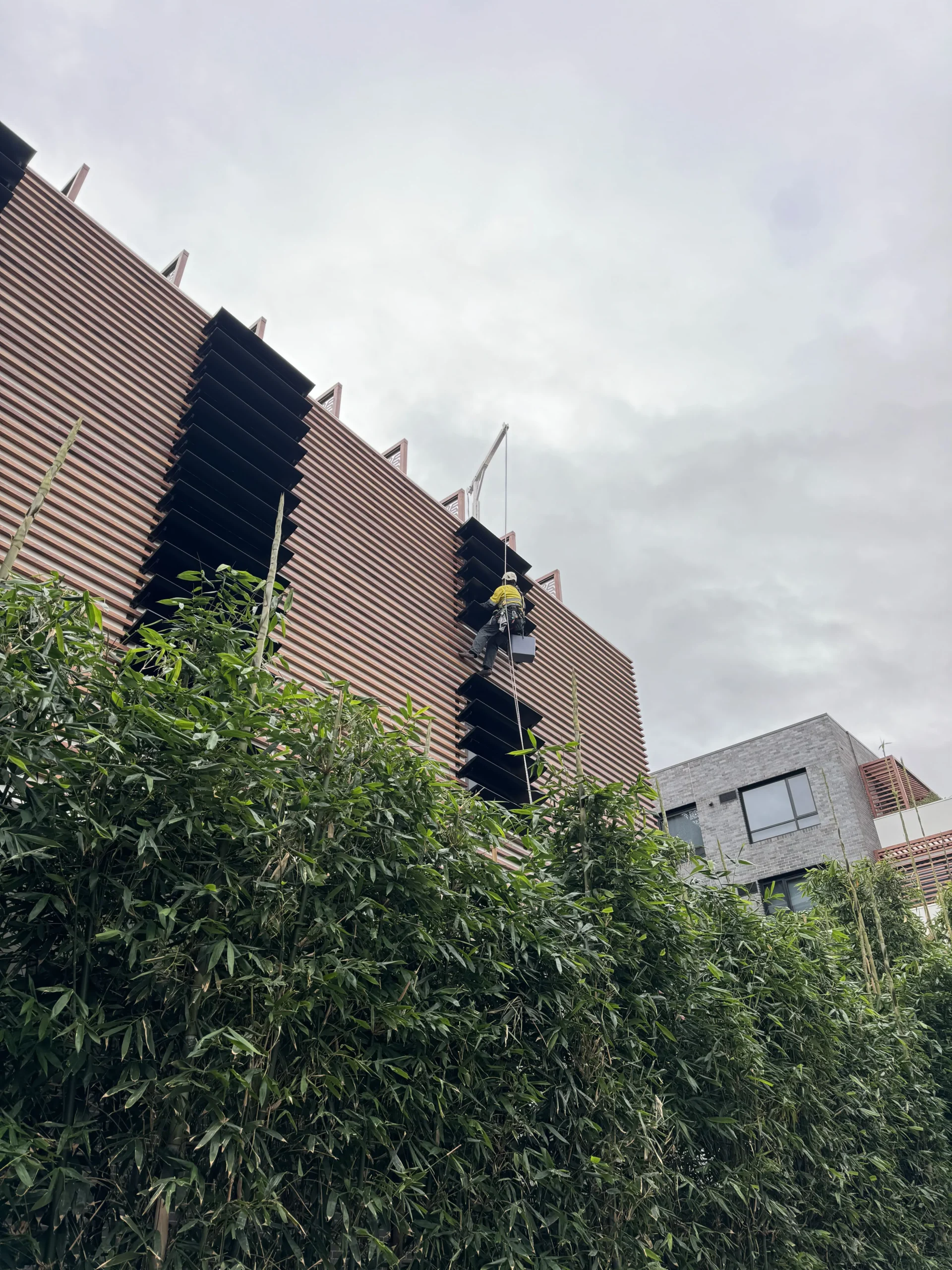
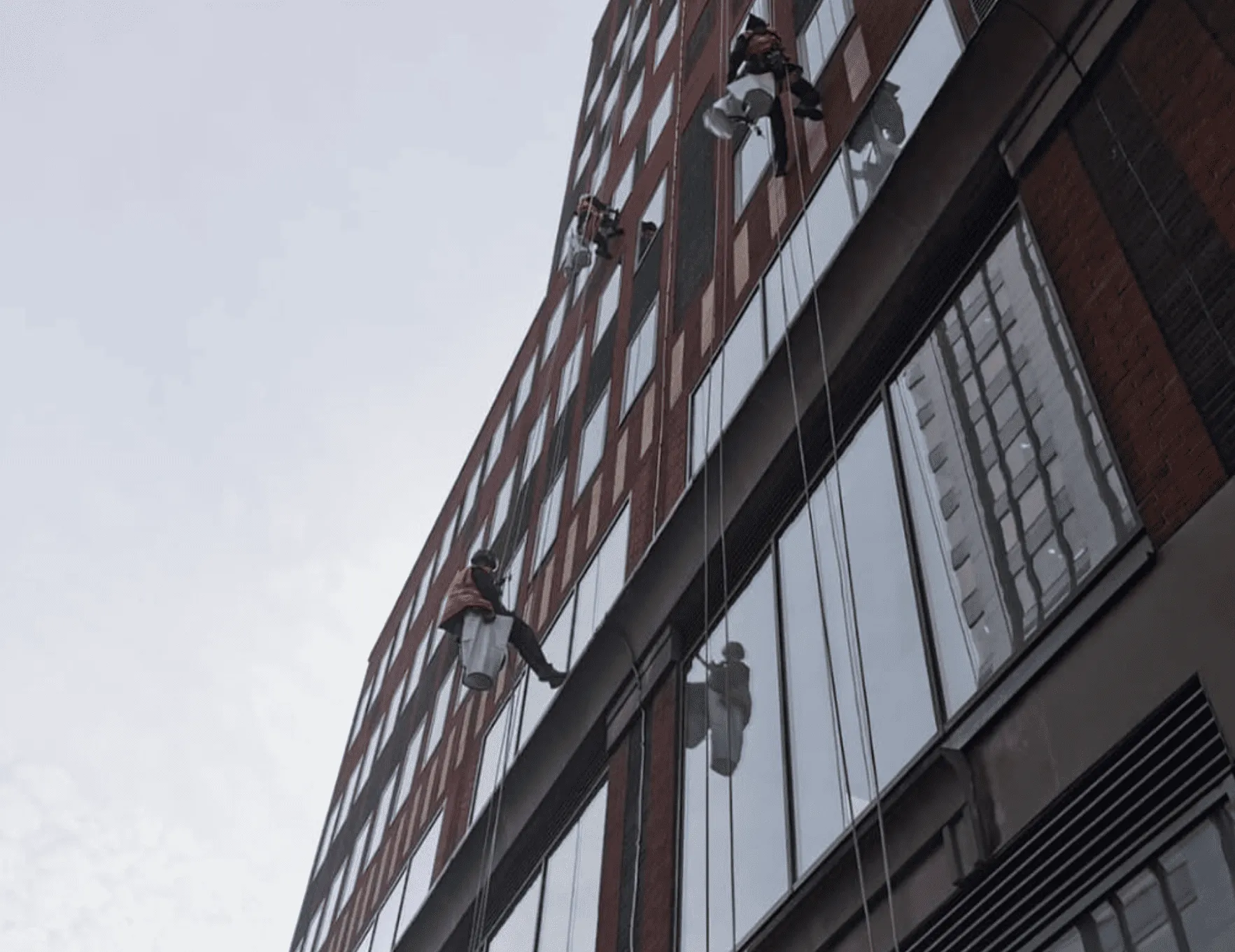
Elevated glazing may be reached using water-fed poles, an elevated work platform (EWP) or specialist rope access, depending on available access and site conditions. Setbacks, awnings, landscaping, pedestrian traffic, overhead obstacles and equipment positioning can make windows at the same height very different access jobs.
Where equipment could approach overhead power lines, the electrical asset and required clearance must also be considered before selecting access.
What the Service Covers
The scope should be established before quoting because “all office windows” can mean different things.
An assessment can distinguish exterior glass, interior glass, doors, partitions, display glass and other agreed glazing while identifying inaccessible sections or contamination outside routine cleaning.
The amount of glass, height, access complexity, glass condition, internal obstacles and service frequency can all affect the quote. A smaller office with difficult access may therefore require more work than a larger property with easily reached glazing.
Setting the Right Cleaning Frequency
There is no defensible one-size-fits-all cleaning interval for office windows. Street-facing glazing, traffic pollution, coastal salt, bird activity, landscaping, sheltered façades and presentation requirements all affect how quickly another clean becomes practical.
Different areas may become dirty at different rates. High-touch doors and partitions can show fingerprints quickly, while sheltered exterior panes may remain presentable longer.
Rather than applying an arbitrary fixed interval, we can set a recurring schedule after seeing how quickly contamination returns in the building.
One-Off vs Routine Service
One-off cleaning may suit an office after extended build-up, before an important presentation or following a tenancy change. Planned cleaning is more appropriate where fingerprints, traffic film or exterior contamination return consistently.
The schedule can follow the areas that actually need recurring attention rather than treating every pane alike.
Planned Maintenance
Maintenance programs suit workplaces where consistent presentation is preferable to waiting for visible build-up. Frequency can follow actual exposure rather than a universal monthly, quarterly or six-monthly rule.
The scope can also be reviewed if tenancy layouts, access arrangements or surrounding site conditions change.
Request a Quote
We consider the amount and location of glazing, interior and exterior scope, building height, access, glass condition, internal obstacles and site restrictions when quoting.
Two offices with a similar number of windows may require different amounts of work if one has straightforward ground-level glazing while the other involves upper-storey windows, awnings, restricted pedestrian areas or specialist access.
When requesting a quote, provide the property location, number of levels, whether you need internal, external or both sides cleaned, and any known access difficulties. Photos can help us assess the glazing and access and determine whether an on-site assessment is required.
Contact Window Cleaning Melbourne Crew to request an office window cleaning quote for your Melbourne workplace.
Why Choose Us

Your satisfaction is our top priority. We tailor our services to meet your specific needs

We are committed to environmental responsibility. Our cleaning products are eco-friendly.

Pricing
We offer competitive pricing without compromising on the quality of our services.

Expertise
As a locally owned and operated company, we understand the unique needs of our community.
FAQ
Can office windows be cleaned while employees are working?
Yes, depending on access and workplace layout. Cleaning can often be organised by area, although desks, blinds, meetings, safety requirements and busy walkways may affect access.
Does rain stop office window cleaning?
Not necessarily. Light rain does not automatically prevent cleaning, but exterior or high-access work may need to be rescheduled when conditions affect safety or cleaning quality.
Why are some marks still visible after professional window cleaning?
Some marks are glass damage rather than dirt. Mineral etching, scratches, failed glazing seals and damaged coatings can remain visible after removable contamination has been removed.
What affects the cost of commercial window cleaning?
The amount of glass, interior and exterior scope, height, access difficulty, glass condition and site constraints affect the quote. Difficult access can make a smaller office more labour-intensive than a larger building with easily reached glazing.
Do upper-storey office windows always require rope access?
No. Some can be cleaned from ground level using water-fed pole systems or telescopic poles; others may require an EWP, rope access or another suitable method. The decision depends on façade design, practical reach and site-specific risks rather than floor number alone.
SEO Title: Office Window Cleaning Melbourne
Meta Description: Professional office window cleaning in Melbourne for interior, exterior and high windows. Water-fed poles and specialist access.