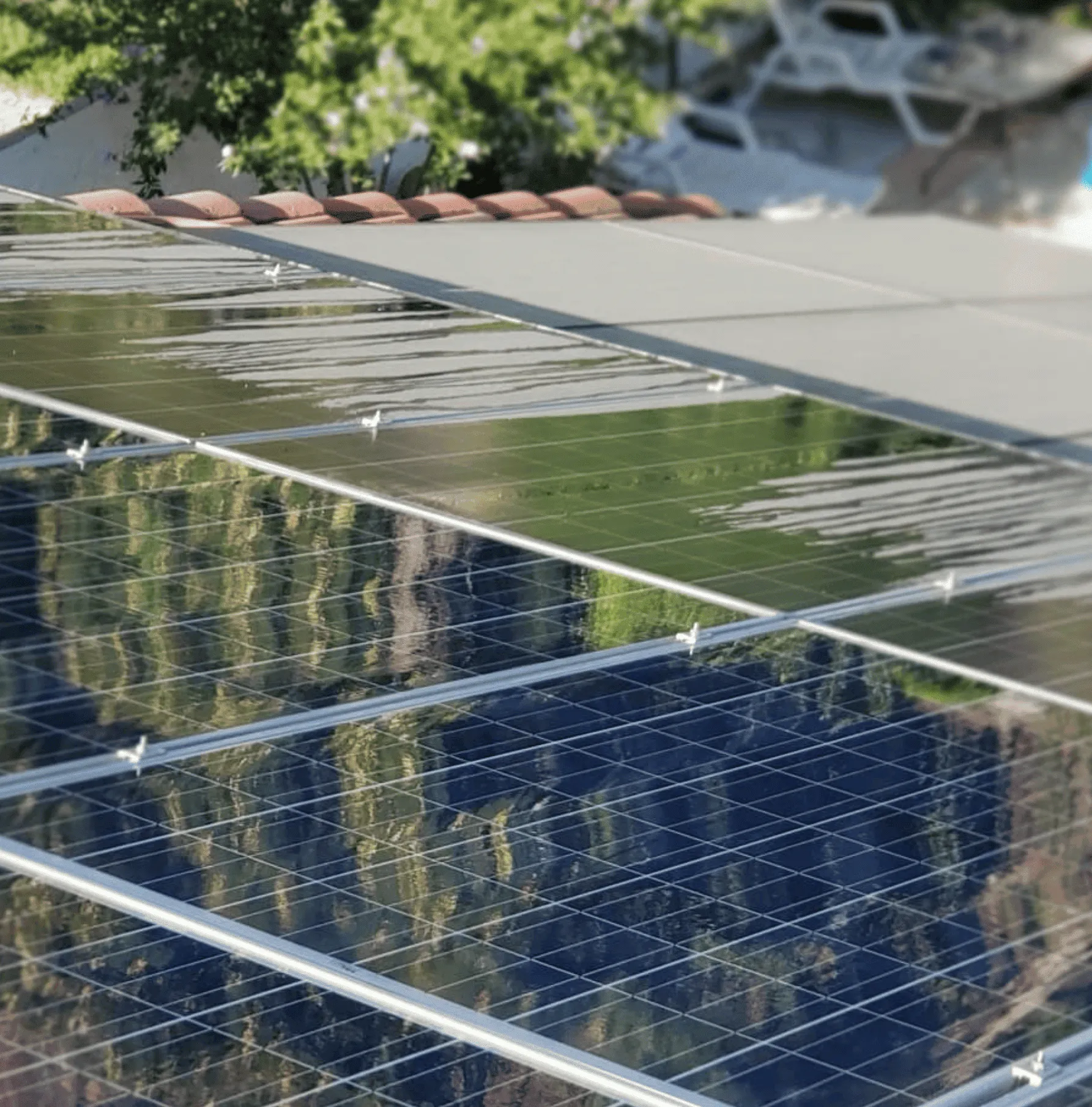
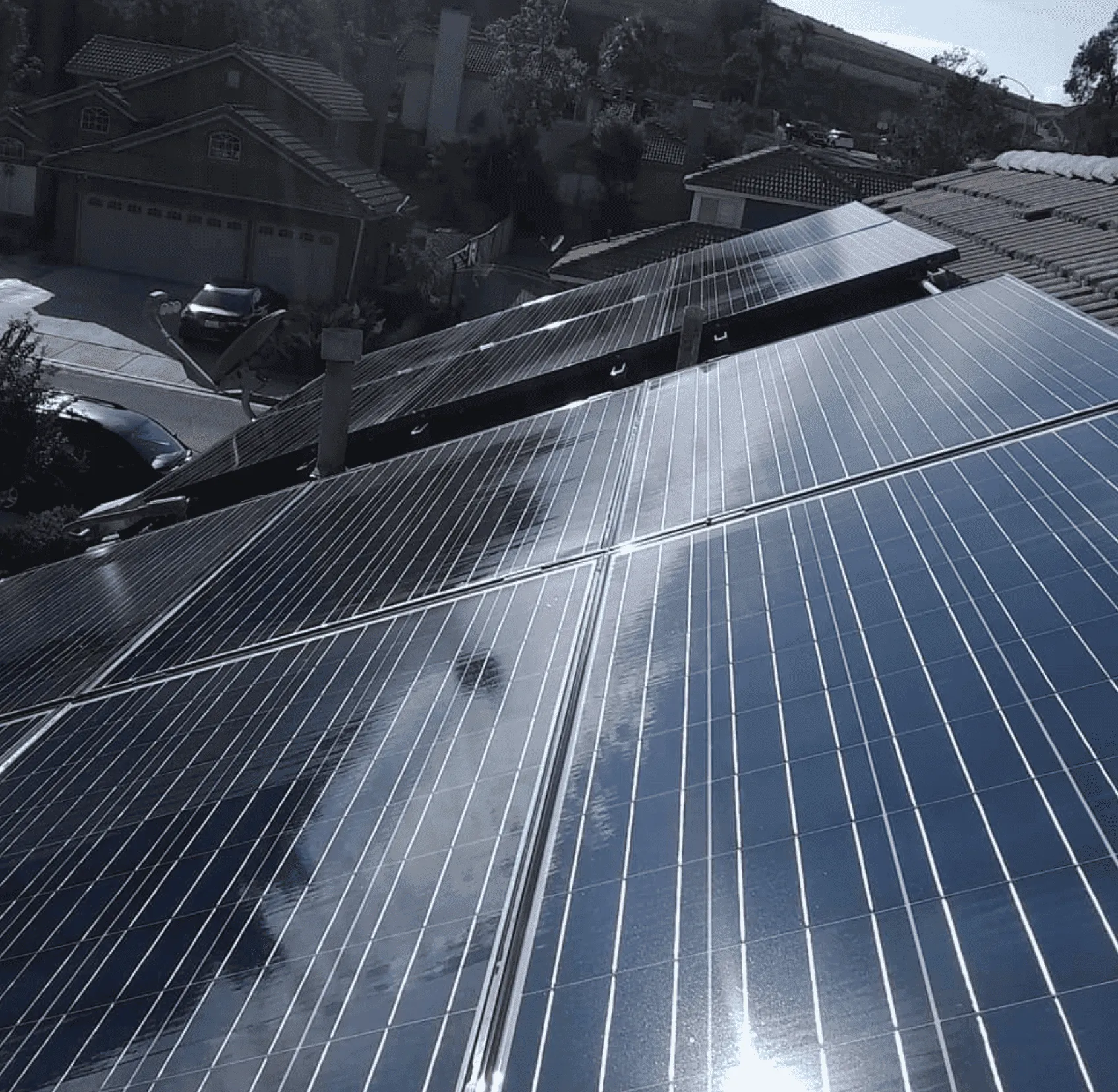
Solar panel cleaning removes dust, bird droppings, pollen, leaf residue, salt and other surface contamination that can reduce the amount of sunlight reaching your solar PV panels. At Window Cleaning Melbourne Crew, our solar panel cleaning service covers residential and commercial solar power systems, with the cleaning process tailored to panel condition, contamination, panel tilt, roof access, and manufacturer requirements.
Cleaning maintains the exposed surface of a solar system; it is not electrical system maintenance or repair. If a visual inspection reveals cracked glass, corrosion, damaged frames, or any other visible concern, cleaning alone will not correct the underlying fault.
- Very nice and professional cleaning team. We order fully cleaning including gutter , townhouse exterior , all windows outside &inside.WaterCrew provides great service and affordable price .read moreread lessping lee10/11/2026Thankyou. Fantastic work, professional and very happy with how clean our windows and surrounds were.read moreread lessStephanie Johnston10/02/2026Excellent & professional in all ways.read moreread lessWendy Haines9/24/2026
- Eren did a sensational job & his communication was fantastic - would definitely use again & recommend 👍read moreread lessTony Murdoch8/26/2026Eren was professional, efficient and completed the roof cleaning to a very high standard. The service was prompt, the workmanship was excellent, and the overall result was fantastic. Highly recommend Eren for anyone looking for reliable and quality roof cleaning services.read moreread lessJanan8/24/2026Excellent. Efficient, thorough, and swift!read moreread lessLu Lu7/15/2026
- Very happy with the service. They were clean, professional and left everything tidyPlus the job was done beautifullyMany thanks!read moreread lessAdelle7/04/2026Highly recommend Eren and his WaterCrew. Have used for gutter cleaning and will in future use for terracotta roof tile cleaning & window cleaning. They do a very thorough and professional job at competitive rates. Also, they are polite, friendly and well spoken.read moreread less
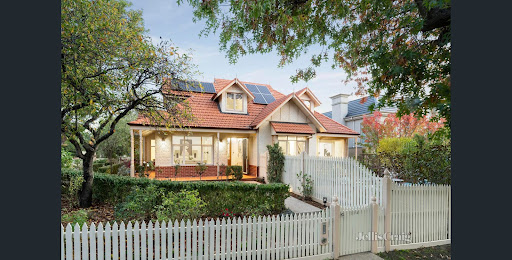 Alan Thomas6/30/2026Very professional job done in BrightonVery thorough and was on time !!!!read moreread lessRENATO CENEDESE6/12/2026


Why Solar Panels Need Cleaning
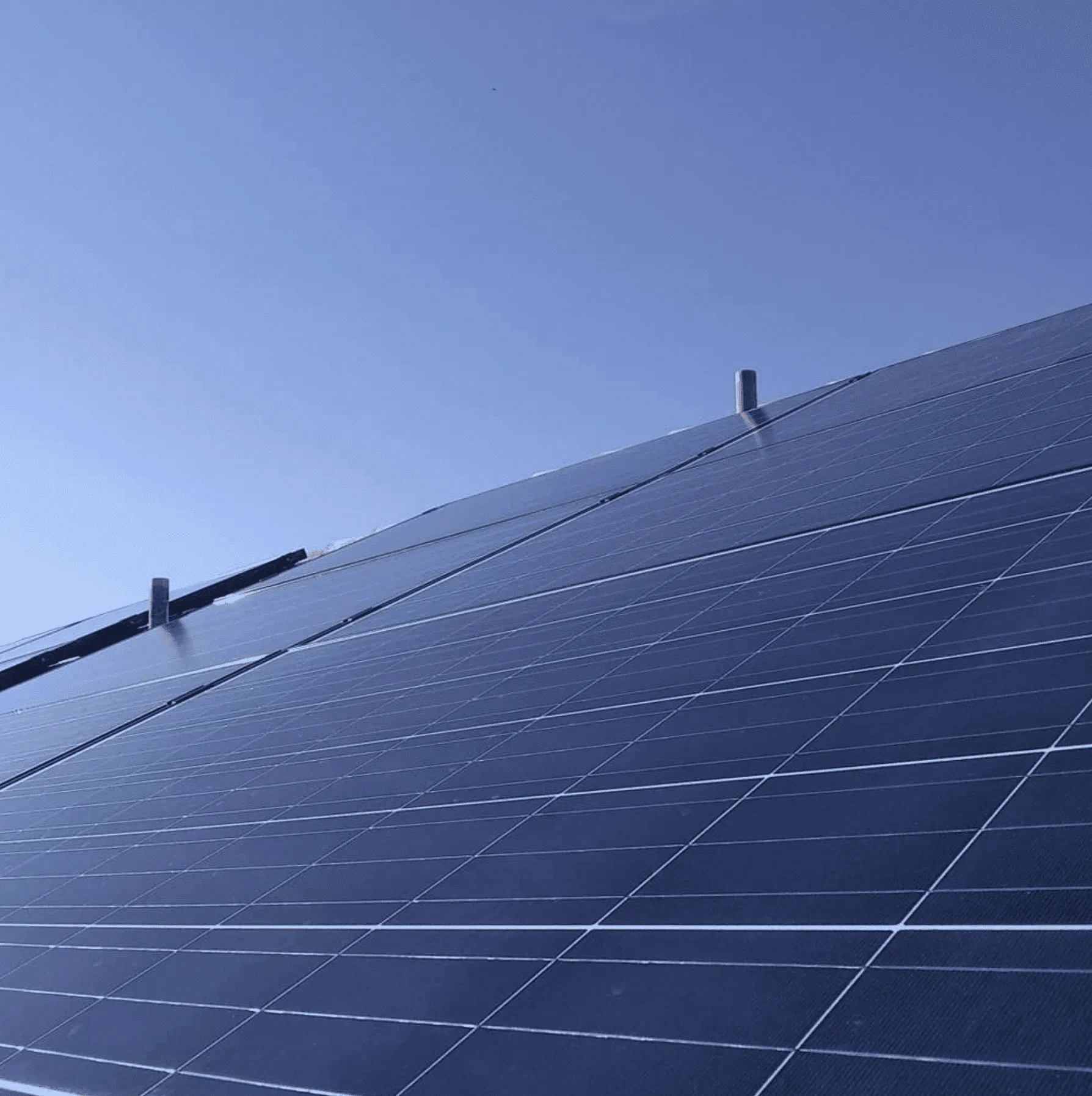
Photovoltaic modules rely on sunlight reaching the cells through their glass surface. Dust, bird contamination and other deposits can obstruct that surface, contributing to efficiency losses and reduced energy output.
Rain provides some natural rinsing. As a manufacturer-specific benchmark, Canadian Solar notes that modules tilted at least 15° may not require cleaning under suitable conditions, as rainfall can provide a self-cleaning effect. This is not universal: bird droppings, pollen, sap, coastal residue, dust and rainfall patterns can all change the result.
What Builds Up on the Panels
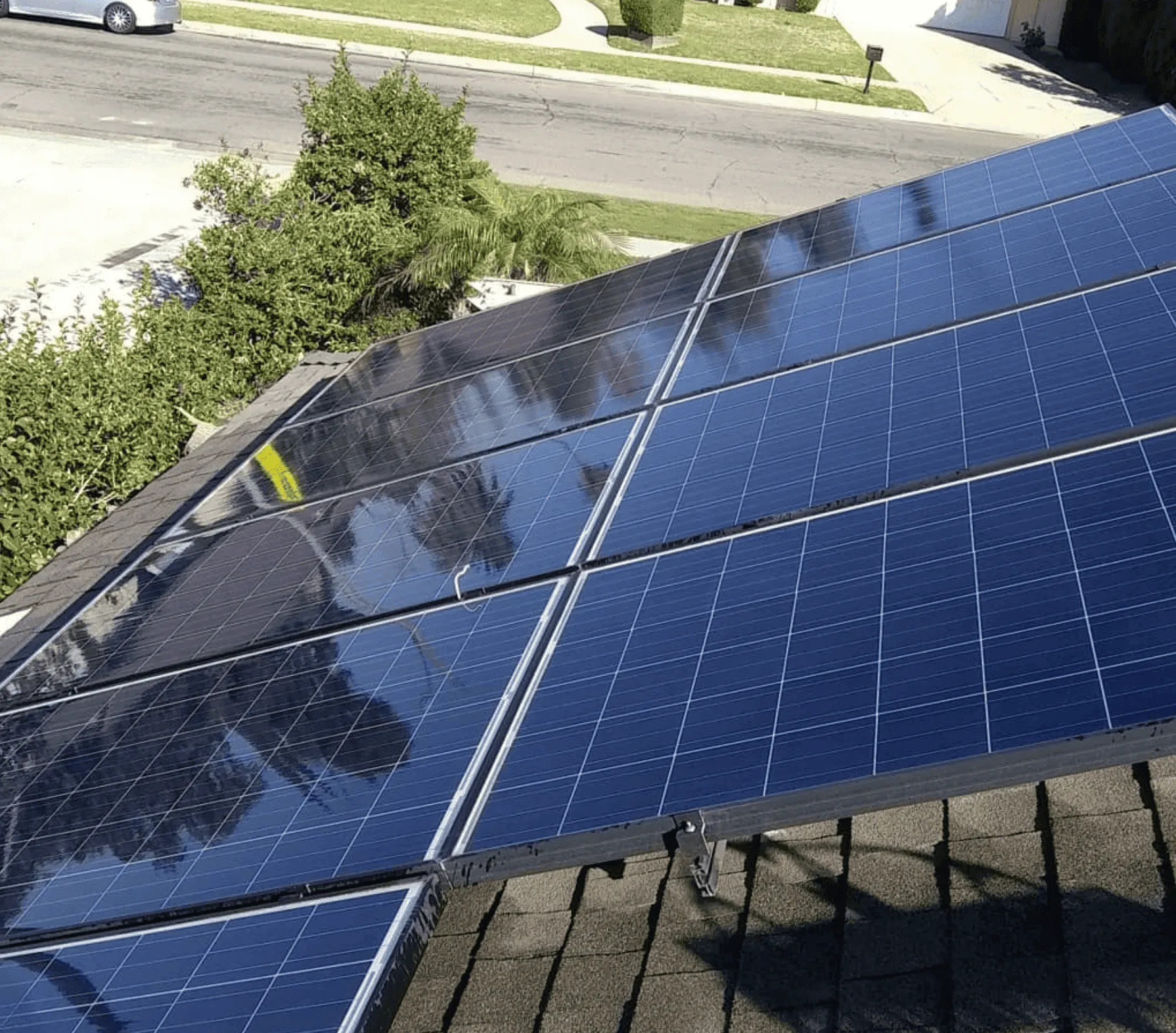
Airborne dust, pollen, traffic residue, bird droppings, leaves, sap and other organic debris can settle on exposed modules. Soot from nearby chimneys, industrial pollution and construction dust can leave residues that rainfall does not always remove evenly.
Bore water or sprinkler overspray may also leave hard-water or mineral deposits on the glass. Unlike loose dust, established mineral staining may not disappear with routine pure-water cleaning.
Why Specialist Care Matters
Solar PV panels combine glass, frames, seals, cables and electrical connections, so unsuitable cleaning solutions, abrasive tools, ordinary glass cleaner, excessive force, or uncontrolled water can create unnecessary risk.
Roof cleaning and solar panel cleaning bring additional fall hazards around panel edges, skylights and slippery surfaces. Solar Victoria recommends professional cleaning where panels are very dirty or difficult to reach and advises that cleaners should not stand on or place equipment on the panels.
Professional cleaning allows the method and safe access to be assessed together, rather than treating photovoltaic modules like ordinary glazing.
How We Approach the Job
We match the method to the solar system rather than defaulting to high-pressure washing.
| Method | Best suited to | Why it may be chosen |
|---|---|---|
| De-ionised water cleaning | General dirt and routine panel cleaning | Helps avoid mineral residue from ordinary tap water |
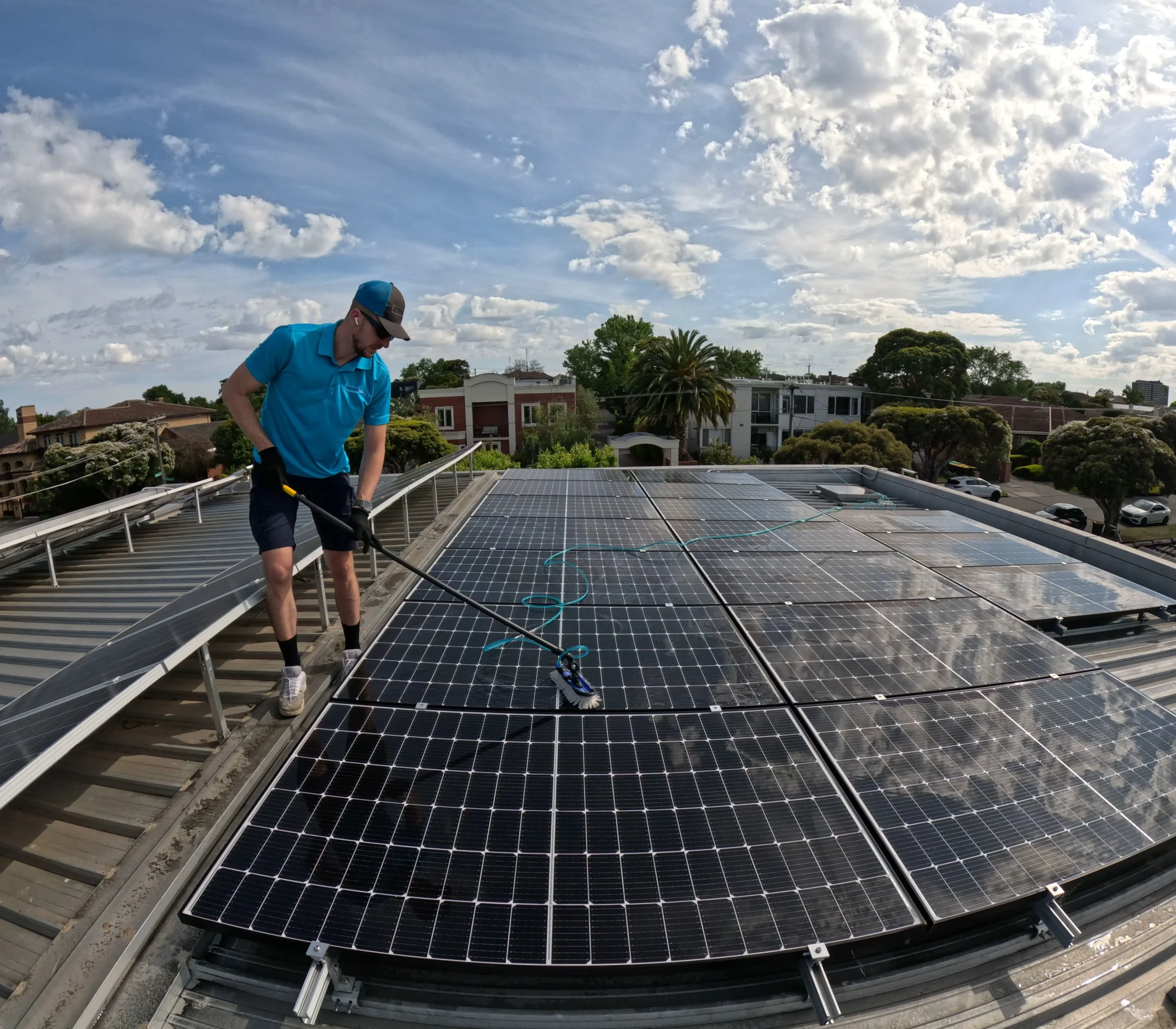
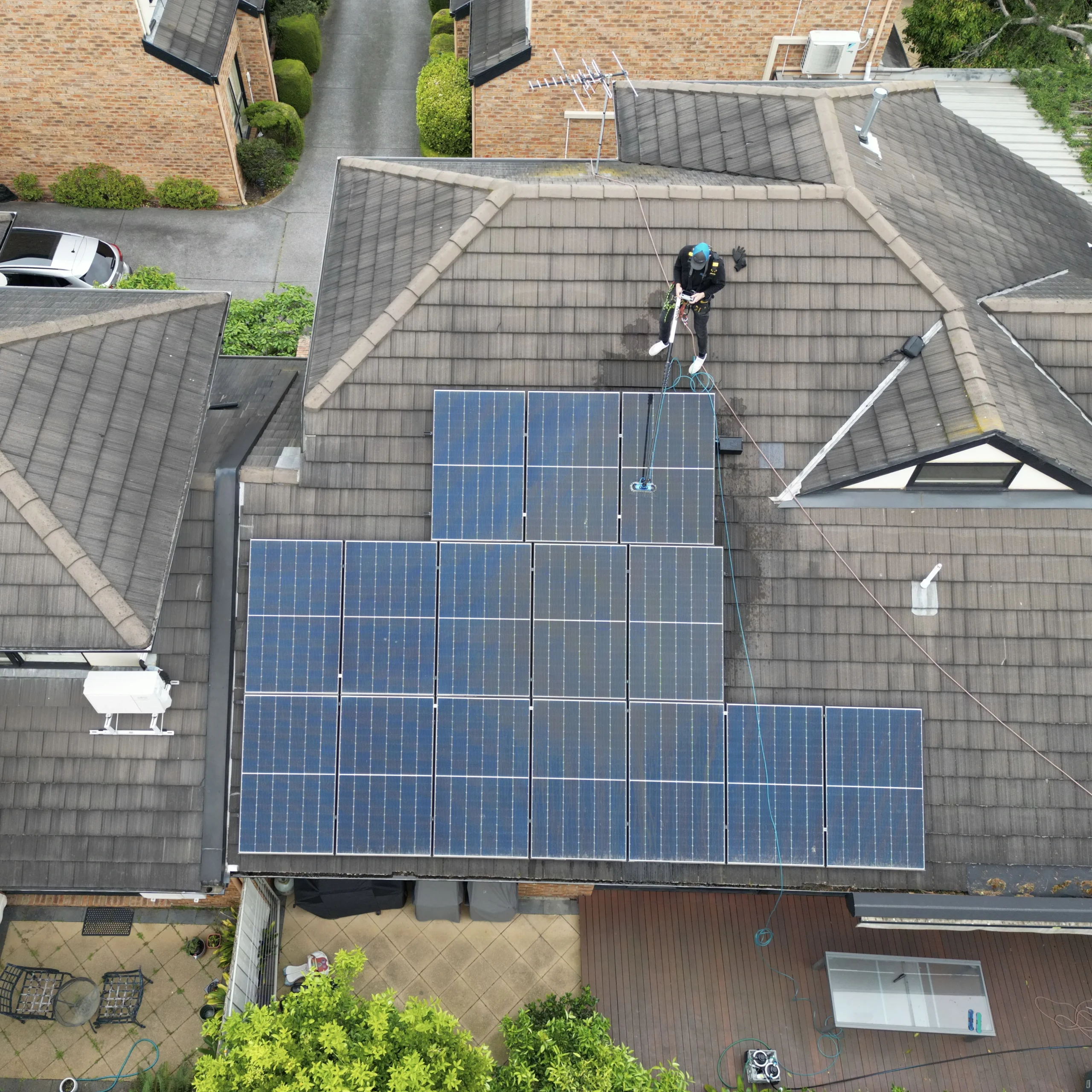
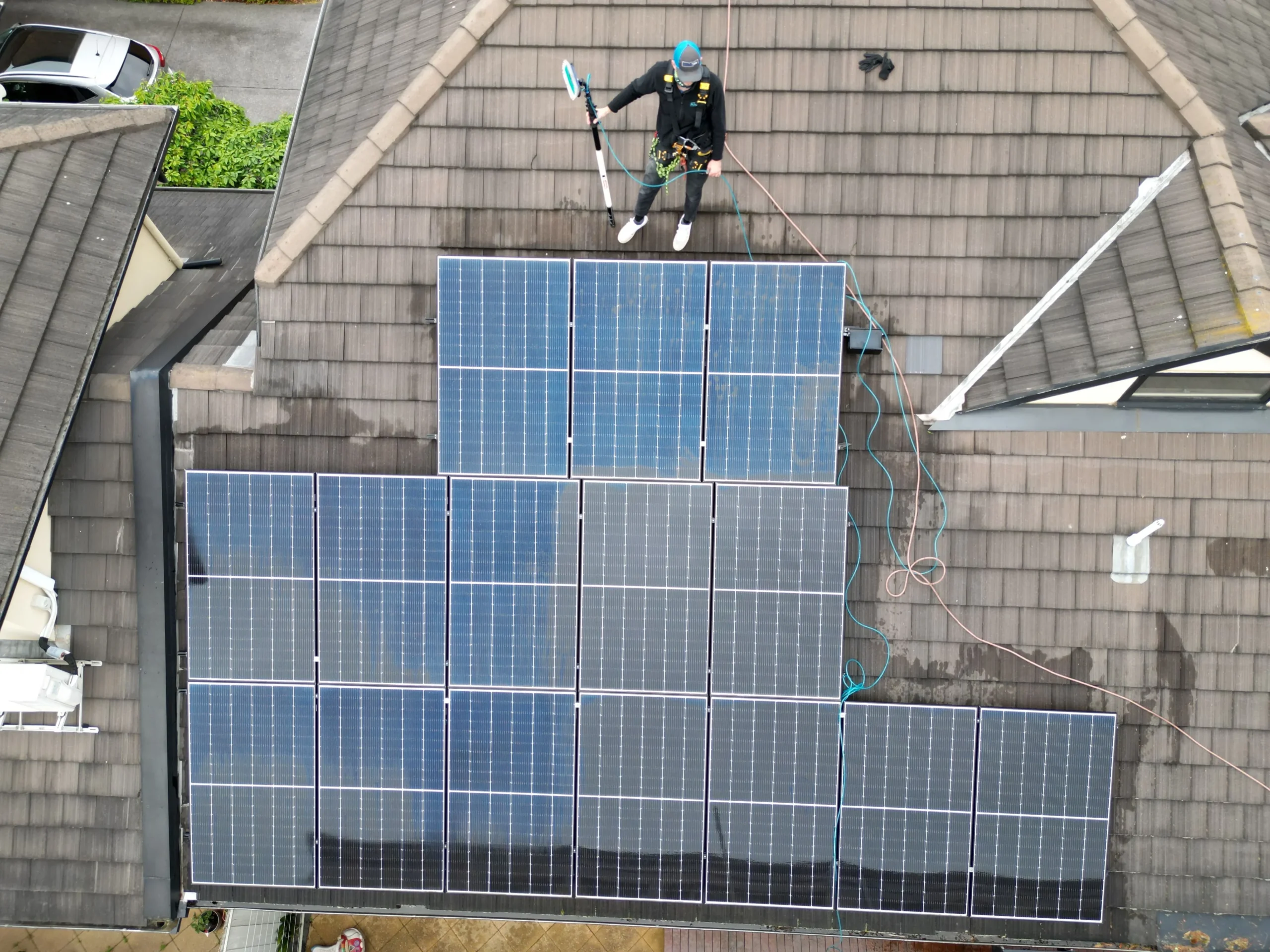
| Soft-brush pole cleaning | Panels reachable safely from a suitable position | Controlled agitation without abrasive scrubbing |
| Difficult-access cleaning | High, awkward or restricted arrays | Allows access to be planned around roof and site conditions |
Purified Water Method
Our pure water system uses de-ionised water for cleaning and rinsing. With dissolved minerals removed, de-ionised water reduces the risk of leaving new mineral residue on the glass.
Manufacturer guidance further illustrates why water quality matters. Major module manufacturers such as Canadian Solar and LONGi specify approximately neutral cleaning water with a pH of 6–8 for applicable modules.
Soft-Brush Pole Method
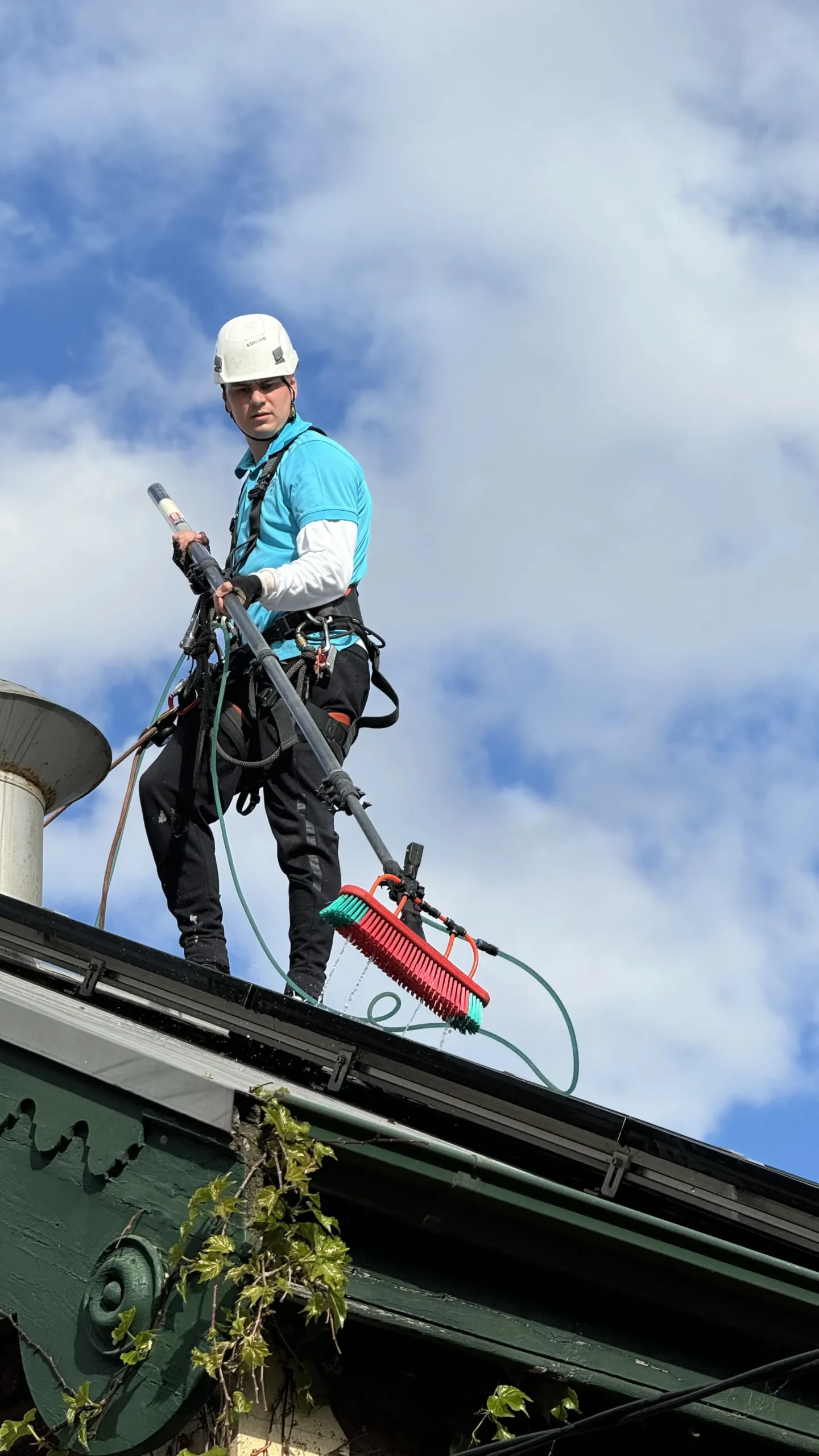
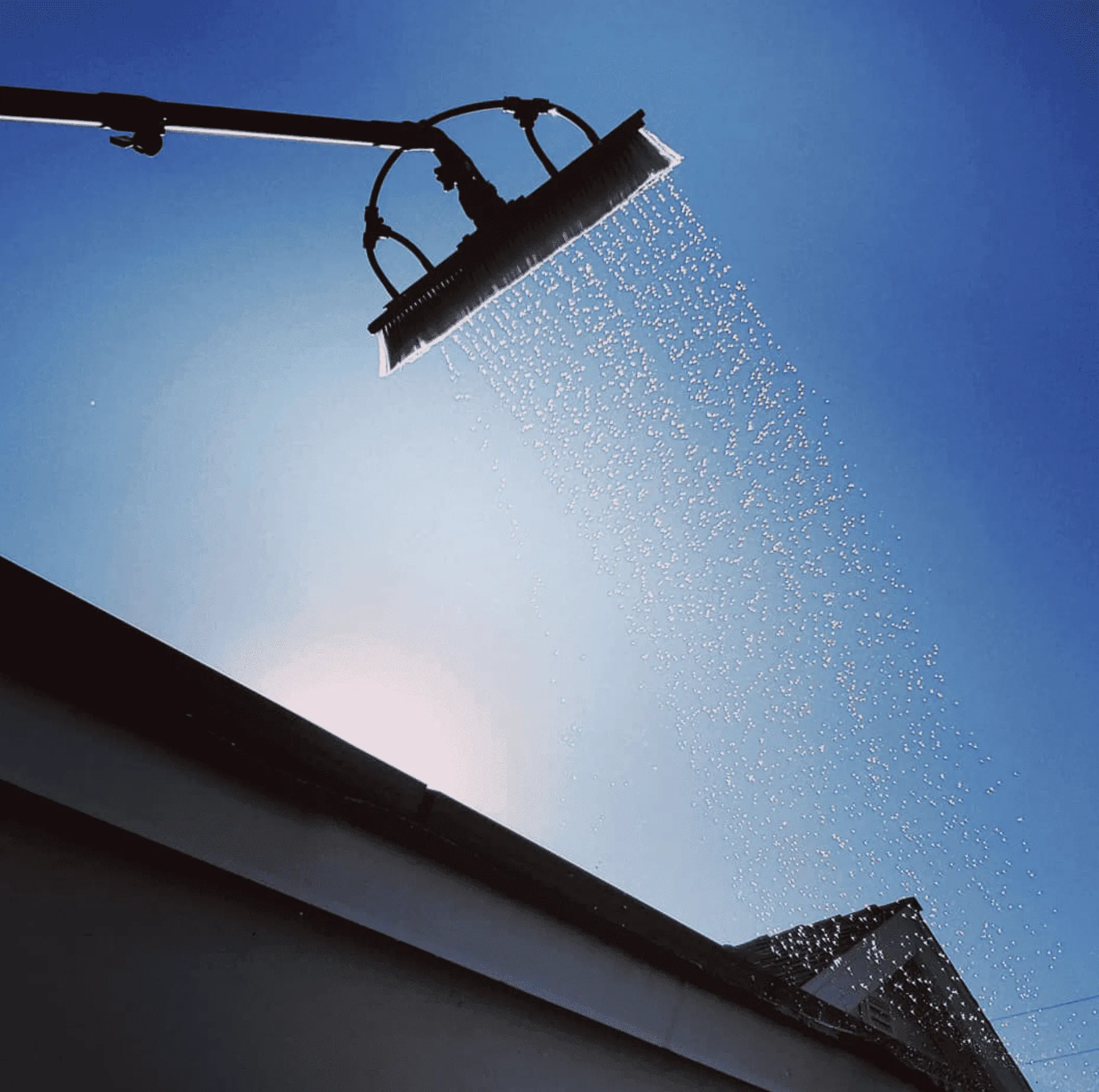
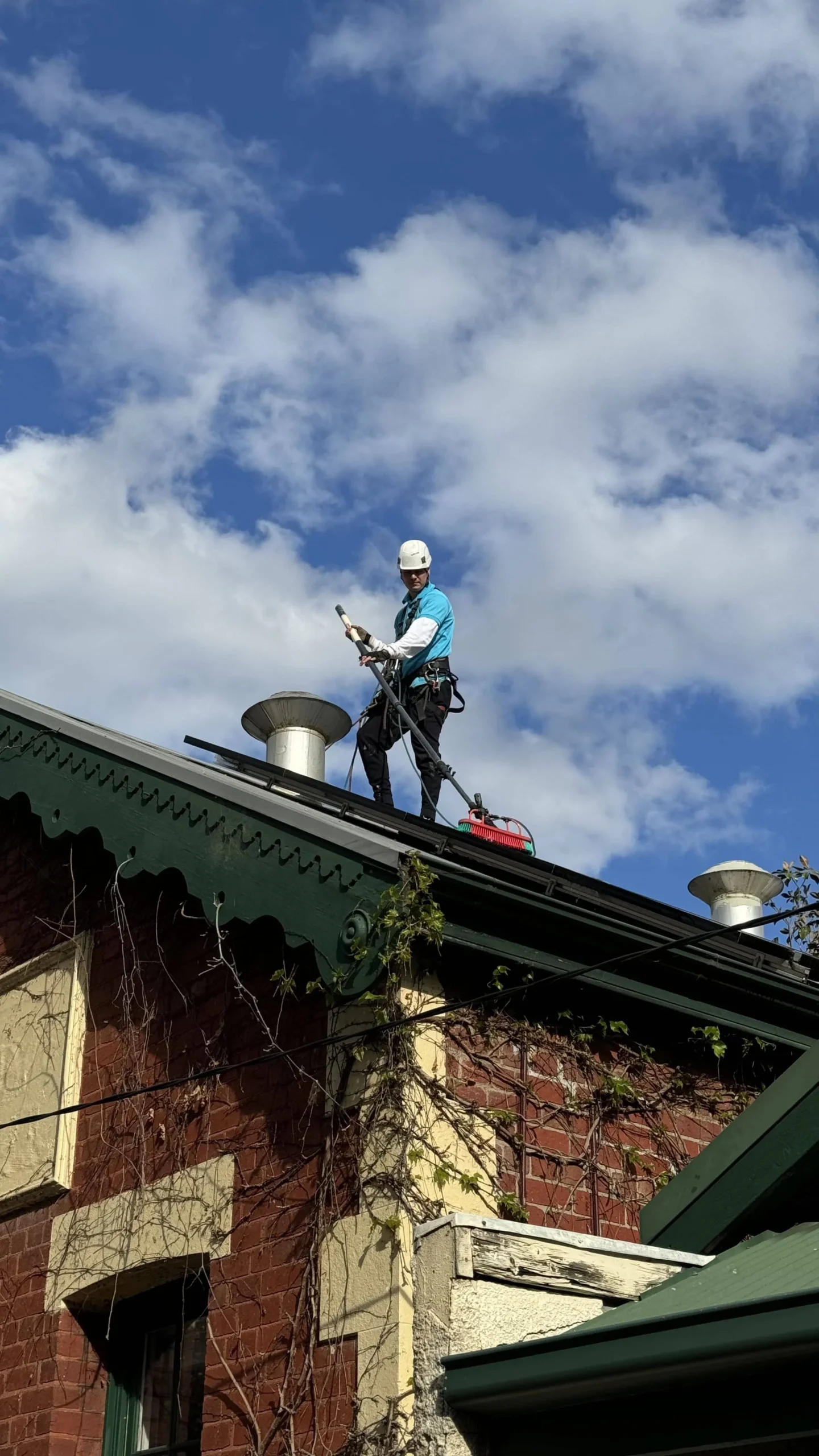
Where the layout permits, we use soft-brush extension poles with de-ionised water to loosen surface contamination without abrasive scrubbing. The additional working reach can also reduce unnecessary movement around a rooftop array.
Panels accessible from the ground or another suitable working position may be well suited to this method. Reach alone, however, does not determine suitability: roof geometry, obstacles, and the available safe working position still matter.
Reaching Elevated Arrays
Higher or awkward installations require an access assessment. Building height, roof pitch, panel position, roof edges, fragile areas and ground conditions all affect how the work can be approached, as does whether the panels can be reached without walking around the array.
The appropriate access method can differ between commercial buildings, ground-mounted panels and rooftop systems. Remote or difficult-to-access areas likewise need individual assessment rather than assuming the same approach will suit every property.
Why the Surface Requires Care
Solar modules should not be treated like concrete, paving, or other surfaces suitable for roof pressure cleaning. Solar Victoria advises homeowners to spray panels only lightly and specifically warns against using a pressure hose because it may damage them. Manufacturer requirements can also vary by module, which is why we assess the panel and relevant guidance rather than apply a universal pressure setting.
Temperature matters alongside pressure and water quality. As a manufacturer-specific example, LONGi specifies no more than a 10°C difference between cleaning water and module temperature for applicable modules. The guidance illustrates why hot panels should not simply be hit with substantially colder water: cleaning conditions need to account for the risk of thermal shock as well as dirt removal.
What We Check Before Starting
Before choosing the approach, we visually inspect accessible areas for obvious cracks, corrosion and other visible concerns. We also consider:
- Type and severity of contamination;
- Roof pitch, height and safe access;
- Panel orientation and spacing;
- Surrounding trees, chimneys and industrial exposure;
- Electrical components and cables that must remain protected;
- Manufacturer-specific cleaning restrictions where known.
This visual inspection does not replace an electrical inspection, performance test or system health check. A heavily soiled panel and a damaged panel may look similarly poor from the ground, but they require different responses.
Systems and Property Types
We clean residential solar PV panels and commercial arrays where the system and access conditions are suitable. A small home array can present difficult roof access, while a larger commercial installation may offer easier physical access but involve substantially more surface area.
Panel quantity, therefore, matters for quoting, but it is only one factor. Contamination, layout, height, roof pitch, and access requirements also explain why the costs of solar panel cleaning cannot be reliably determined from panel count alone.
When Cleaning May Be Needed
There is no defensible fixed cleaning interval for every Melbourne solar system. The appropriate frequency depends on panel angle, rainfall, nearby trees, bird activity, dust, traffic or industrial exposure, coastal residue and how quickly visible contamination returns.
The 15° manufacturer benchmark illustrates how installation angle can influence natural rain cleaning, but it should not be converted into a cleaning schedule. Two arrays with similar layouts can accumulate very different levels of contamination.
What the Process Can and Cannot Fix
Cleaning can remove suitable surface contamination and restore a clear exposed surface. Where soiling restricts sunlight, removing it may help recover the associated power loss and support normal solar efficiency and energy production.
Cracked modules, failed seals, corrosion, damaged cells, short circuits, wiring problems, inverter faults, and other electrical defects cannot be repaired through cleaning. Established mineral staining may also remain partly visible after routine cleaning.
Nor should cleaning be confused with electrical servicing. Energy Safe Victoria and Solar Victoria recommend having a home solar system professionally serviced at least once every 2 years, with electrical servicing carried out by a licensed electrician. Between services, monitoring inverter data can help identify unusual changes, although reduced output alone does not prove that dirty panels are the cause.
Managing Safe Access
In Victoria, construction work involving a risk of falling from more than 2 metres falls within high-risk construction work requirements, but lower heights can still present a serious fall risk. Roof pitch, slippery surfaces, skylights, roof condition and panel position therefore matter alongside height.
Where electrical faults or visible electrical damage are suspected, cleaning is not the appropriate diagnostic service. Electrical inspection and servicing should be handled by appropriately qualified personnel.
How Local Exposure Affects Build-Up
Exposure varies substantially across Melbourne properties. Coastal areas may experience greater salt deposition, while tree-lined sites collect pollen, leaves, sap and bird contamination. Nearby chimneys can contribute soot; construction activity and industrial areas can increase airborne dust and fine residues.
Shaded, sheltered or shallow-angled arrays may retain contamination differently from steep, exposed panels. Cleaning recommendations are therefore better based on the individual installation than on the suburb alone.
Reducing Build-Up Between Visits
Manage nearby vegetation where practical and watch for unusual concentrations of bird droppings, leaves, soot or mineral deposits. Where sprinklers operate near panels, preventing repeated overspray can help limit new hard-water deposits.
Your monitoring app or inverter reading can flag unexplained performance changes, but dirt should not be assumed to be the cause of every reduction in system efficiency. If you notice cracked glass, corrosion, burn marks or damaged electrical components, arrange an appropriate technical assessment rather than attempting to clean around the fault.
What Backs Up Our Work
Window Cleaning Melbourne Crew uses de-ionised water and soft-brush extension poles as part of our solar panel cleaning process.
For each solar panel service, we combine that cleaning capability with a visual assessment of contamination, panel condition and access. The aim is controlled cleaning tailored to the installation, rather than applying the same pressure, cleaning interval, or access method to every solar power system.
Request a Quote
For a solar panel cleaning quote in Melbourne, tell us the property type, the approximate number of panels, the building height, and any known access difficulties. Photos of the roof and array can also help clarify panel layout, contamination and likely access requirements.
Window Cleaning Melbourne Crew can then assess the likely cleaning and access requirements before the work proceeds.

Your satisfaction is our top priority. We tailor our services to meet your specific needs

We are committed to environmental responsibility. Our cleaning products are eco-friendly.

Pricing
We offer competitive pricing without compromising on the quality of our services.

Expertise
As a locally owned and operated company, we understand the unique needs of our community.
FAQ
Does rain clean solar panels properly?
Rain can remove some loose contamination, but it may not shift bird droppings, sap, soot or established mineral deposits. Panel angle, rainfall, and local exposure all affect the amount of natural rinsing.
Will cleaning increase my solar energy output?
Cleaning may improve energy output where contamination restricts sunlight, but the improvement depends on the amount and distribution of soiling. Electrical faults, damaged modules and inverter problems will not be corrected by cleaning.
Can solar panels be pressure washed?
Solar Victoria advises against using a pressure hose on solar panels because it may cause damage. The appropriate cleaning method should also account for the requirements of the installed modules.
What affects the cost of solar panel cleaning?
Panel quantity, contamination, building height, roof pitch, array layout and access difficulty all affect the work required. Two solar power systems with the same number of panels can therefore have different cleaning requirements and costs.
Is solar panel cleaning the same as solar system maintenance?
No. Cleaning addresses surface contamination, while electrical maintenance covers system components, connections and safety. Energy Safe Victoria and Solar Victoria recommend professional servicing of home solar systems at least once every 2 years.
SEO Title: Solar Panel Cleaning Melbourne
Meta Description: Professional solar panel cleaning in Melbourne for homes and businesses. Pure water cleaning for dust, bird droppings and grime.
Explore solar panel cleaning in surrounding suburbs: