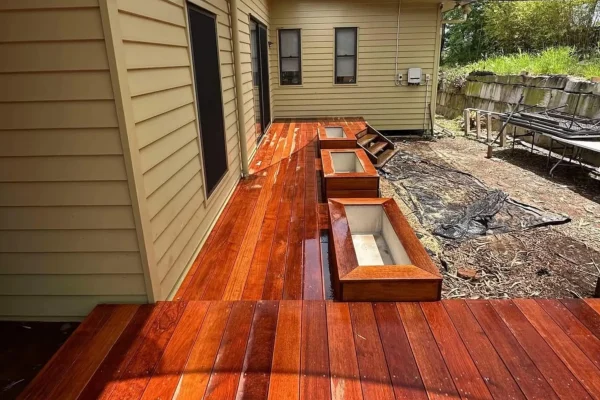
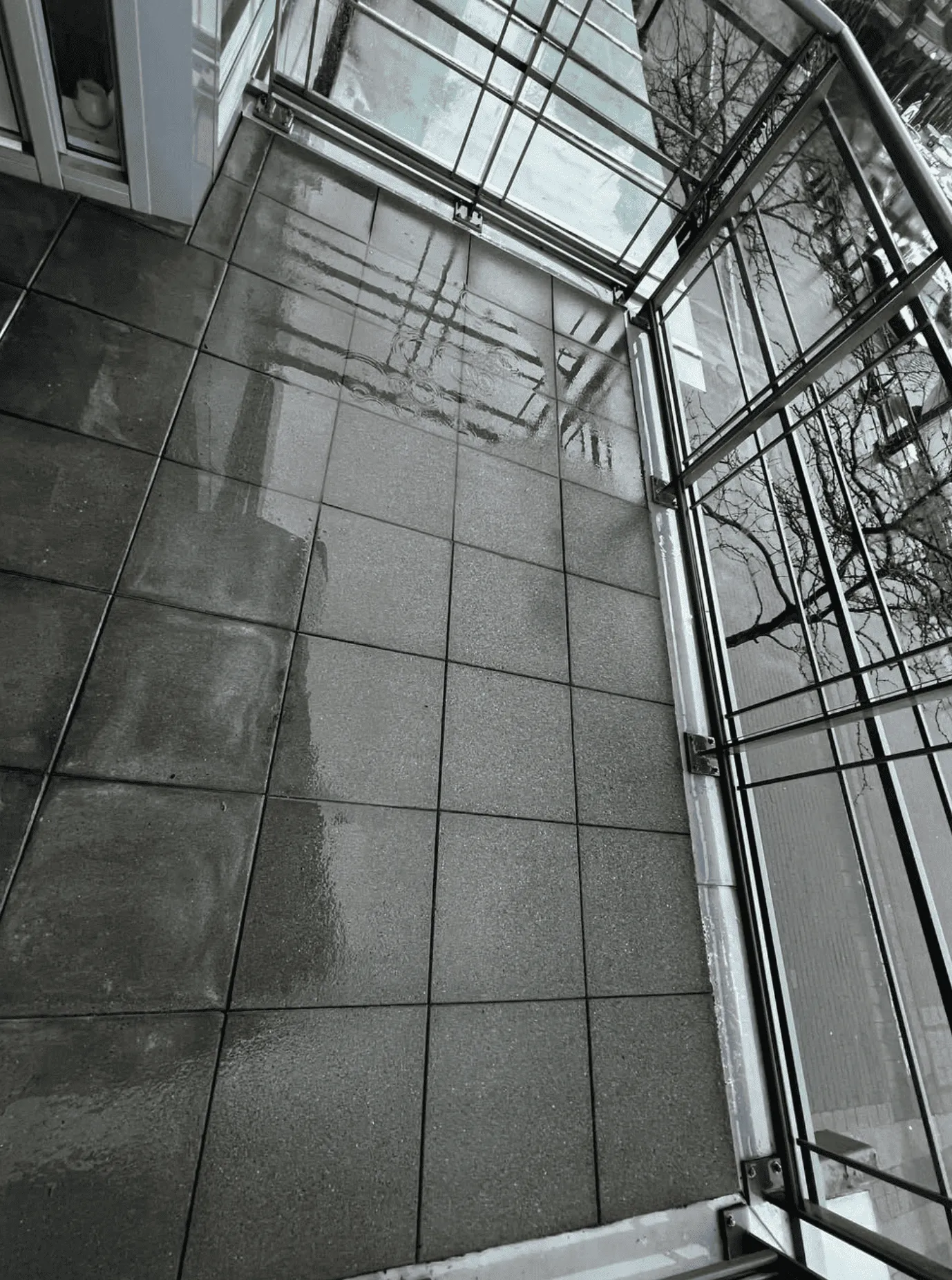
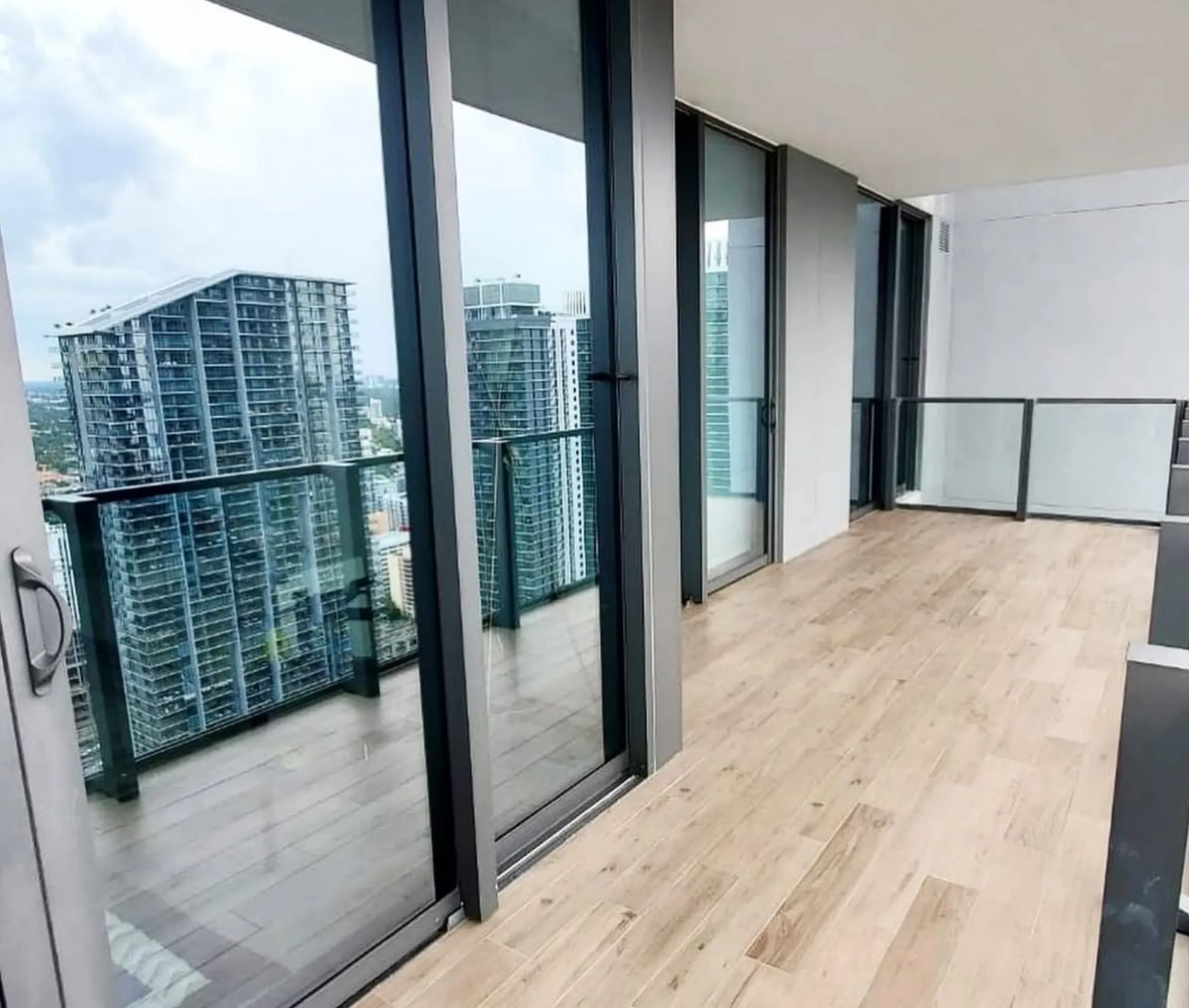
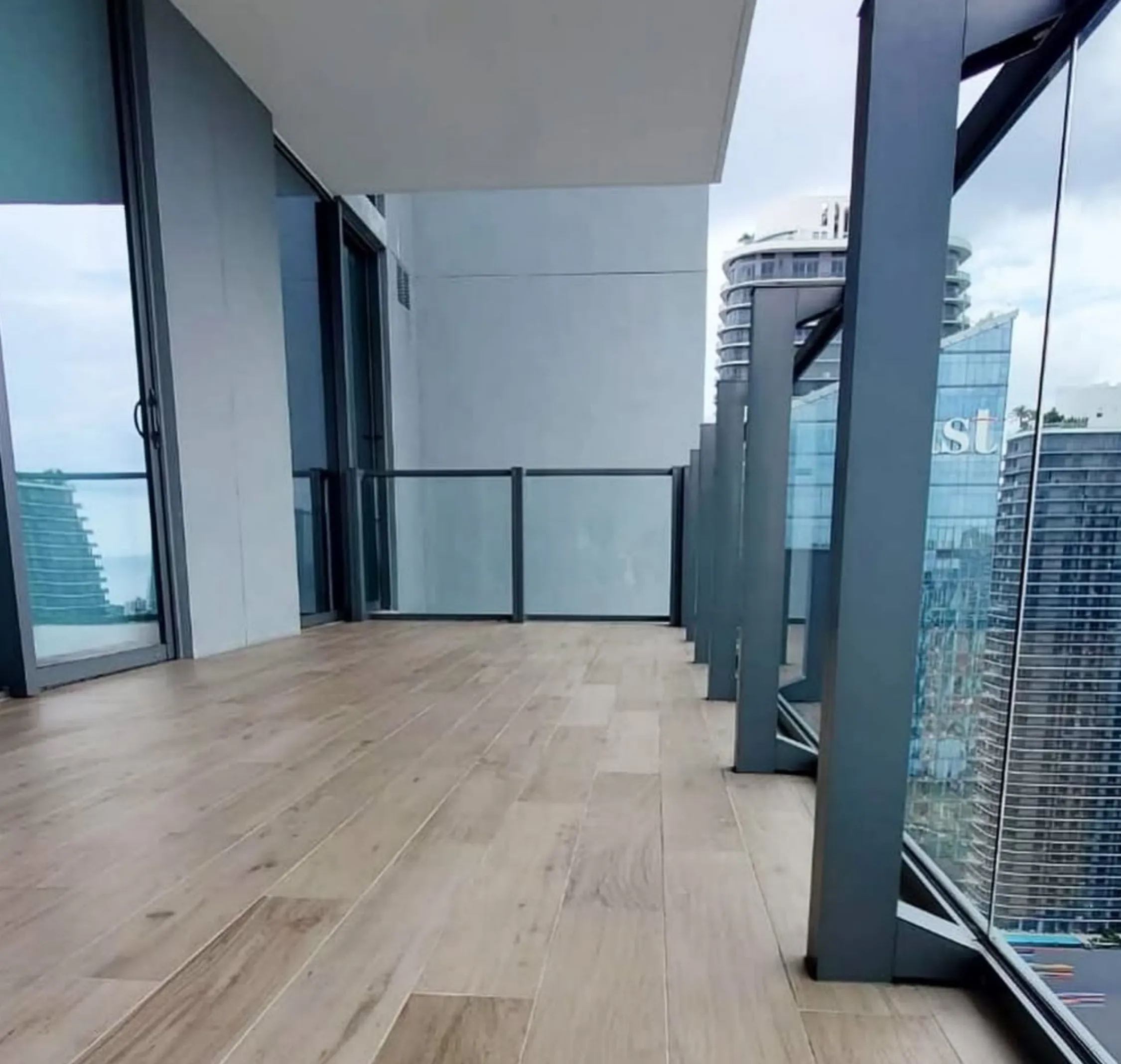
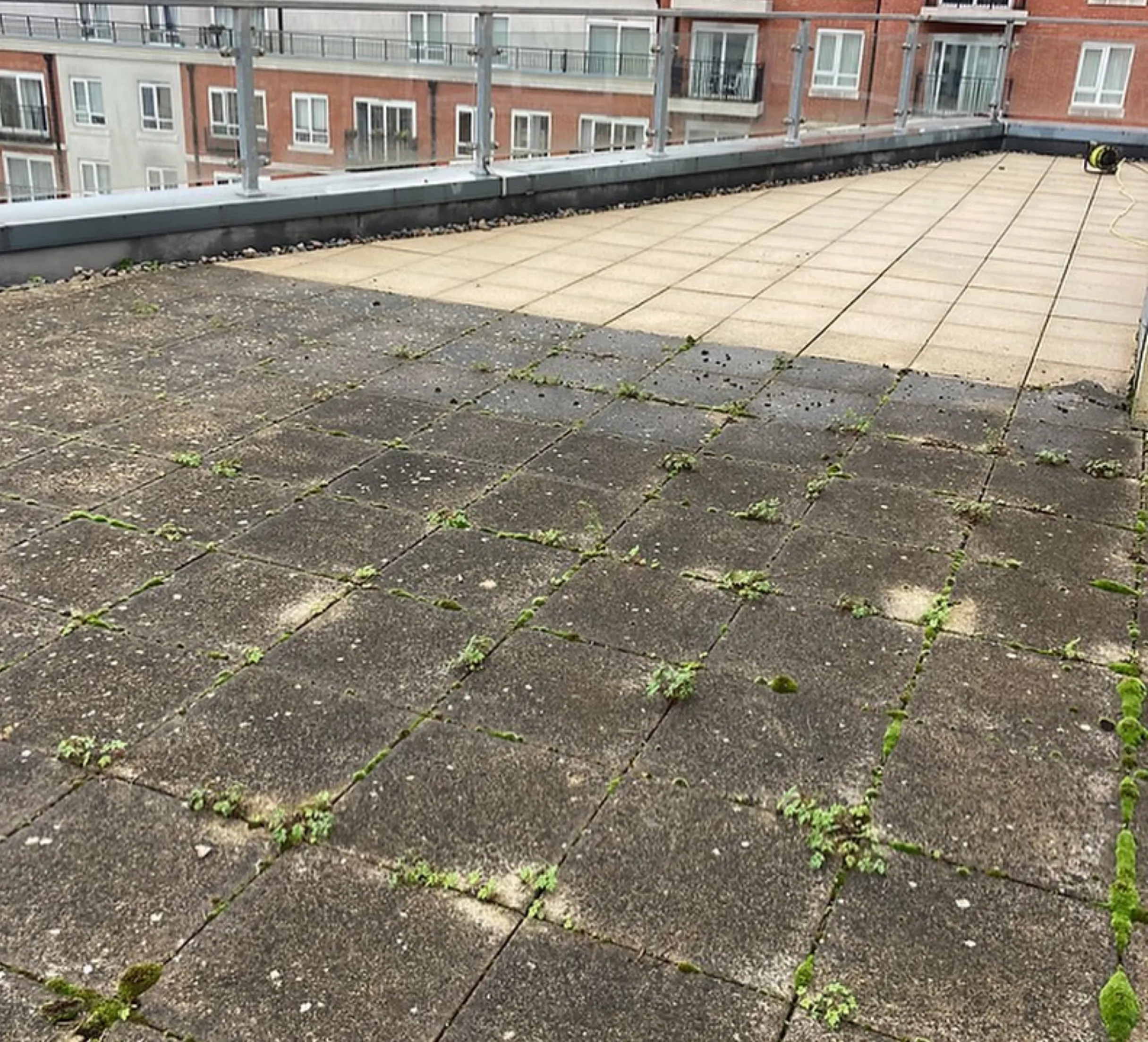
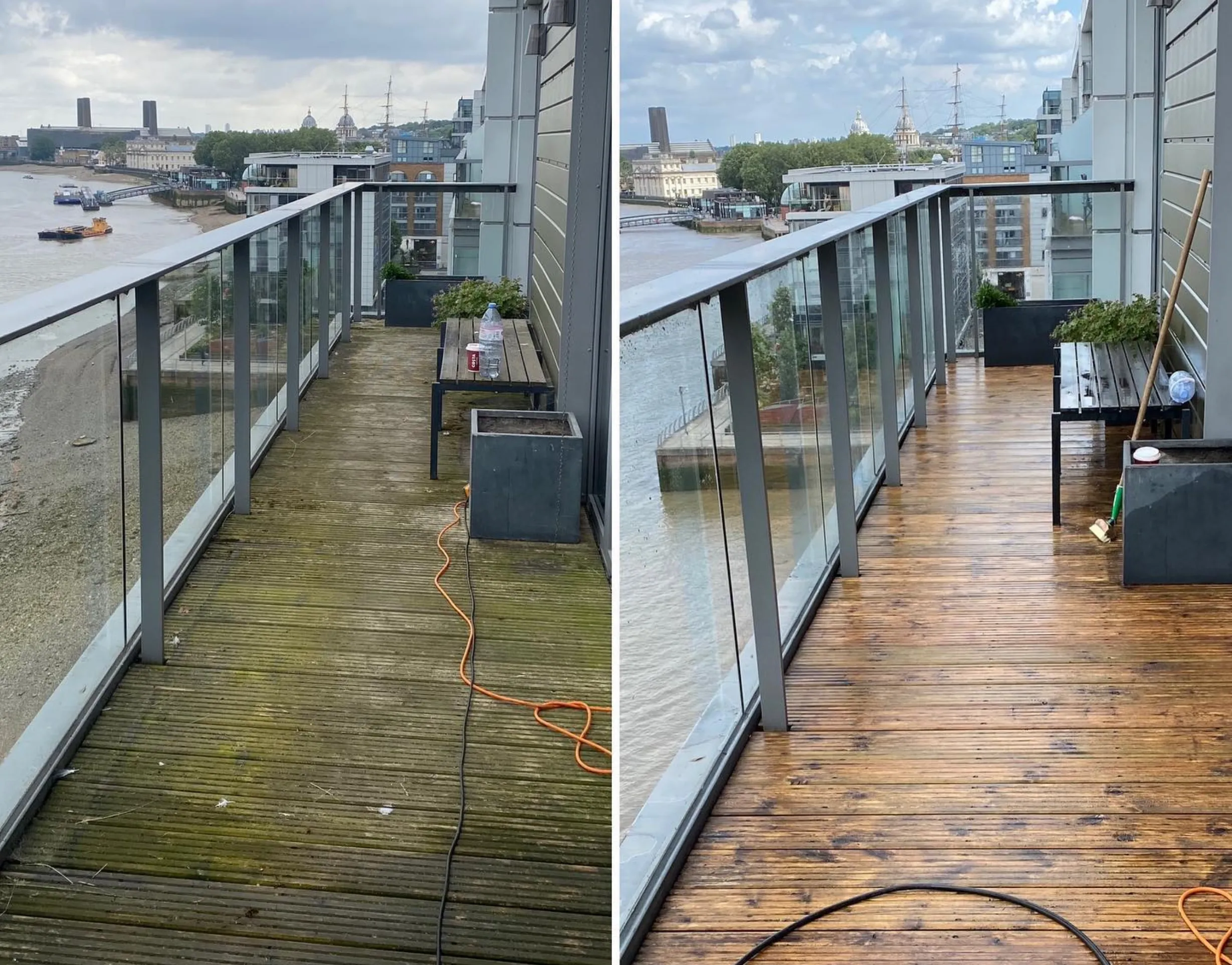
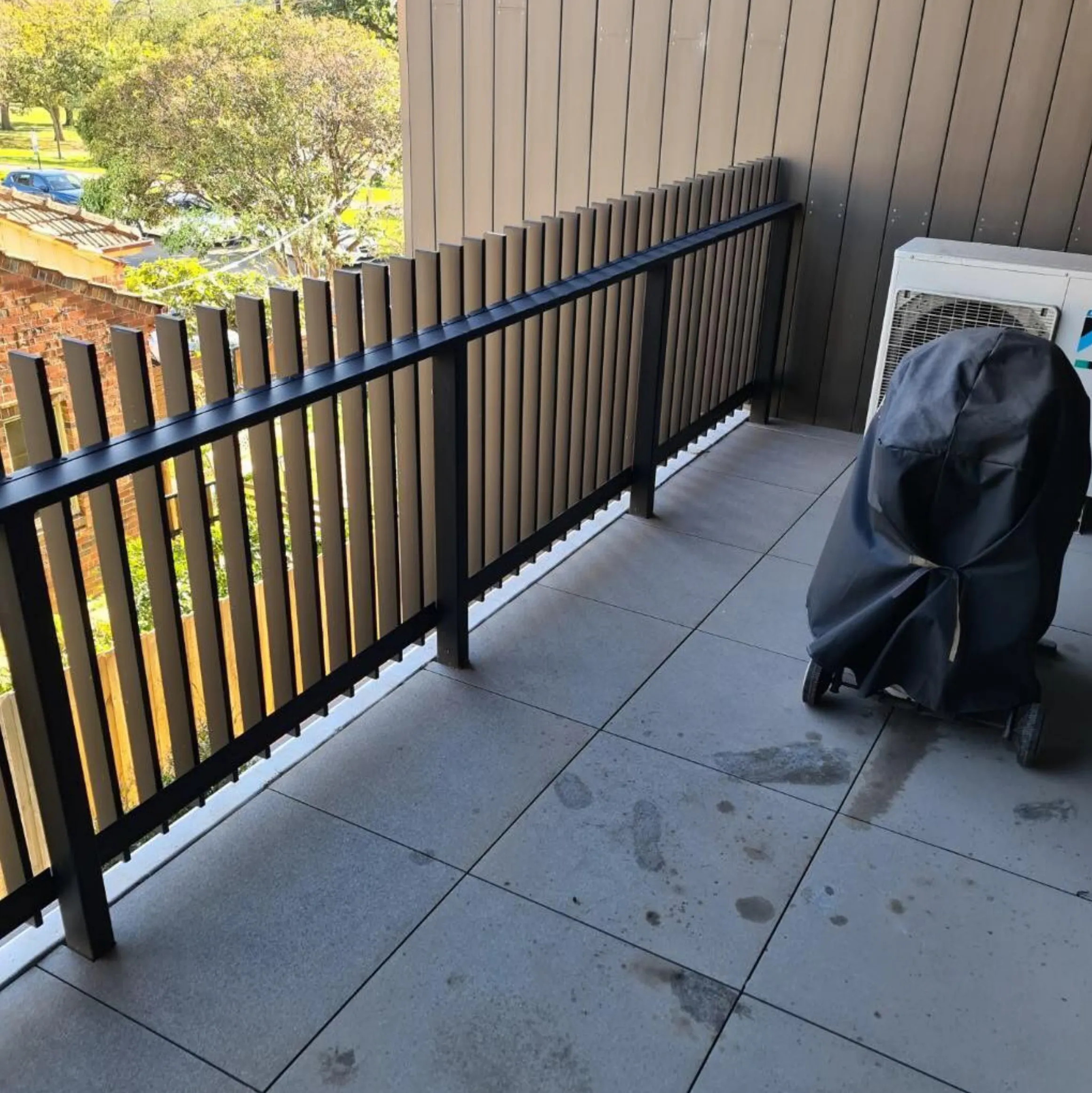
Our balcony cleaning service removes dirt, grime, organic growth, bird droppings, leaf residue, pollution film, grease and food spills from suitable residential, commercial and apartment balconies. At Window Cleaning Melbourne Crew, we assess the surface, condition, drainage points, water pooling, glass balustrades, and access before choosing between controlled pressure cleaning, soft washing, or hand cleaning.
Because a balcony is an exposed outdoor space, professional balcony cleaning needs to account for drainage, waterproofed junctions and surfaces below — not appearance alone.

- Very nice and professional cleaning team. We order fully cleaning including gutter , townhouse exterior , all windows outside &inside.WaterCrew provides great service and affordable price .read moreread lessping lee10/11/2026Thankyou. Fantastic work, professional and very happy with how clean our windows and surrounds were.read moreread lessStephanie Johnston10/02/2026Excellent & professional in all ways.read moreread lessWendy Haines9/24/2026
- Eren did a sensational job & his communication was fantastic - would definitely use again & recommend 👍read moreread lessTony Murdoch8/26/2026Eren was professional, efficient and completed the roof cleaning to a very high standard. The service was prompt, the workmanship was excellent, and the overall result was fantastic. Highly recommend Eren for anyone looking for reliable and quality roof cleaning services.read moreread lessJanan8/24/2026Excellent. Efficient, thorough, and swift!read moreread lessLu Lu7/15/2026
- Very happy with the service. They were clean, professional and left everything tidyPlus the job was done beautifullyMany thanks!read moreread lessAdelle7/04/2026Highly recommend Eren and his WaterCrew. Have used for gutter cleaning and will in future use for terracotta roof tile cleaning & window cleaning. They do a very thorough and professional job at competitive rates. Also, they are polite, friendly and well spoken.read moreread less
 Alan Thomas6/30/2026Very professional job done in BrightonVery thorough and was on time !!!!read moreread lessRENATO CENEDESE6/12/2026


Why Balcony Surfaces Need Attention
Wind, traffic pollution, nearby trees, potted plants, birds, BBQs and everyday use all contribute to balcony contamination. Shaded or slow-drying areas may require dirt and mould removal where algae, mould and other organic growth make surfaces slippery when wet. Corners, edges and areas around furniture or planters can also hold debris where rainfall provides little natural rinsing.
Cleaning can remove compatible surface contamination, but it will not correct blocked drainage, failed coatings, loose grout, persistent pooling or water ingress.
Surfaces and Materials
Different materials respond differently to pressure, cleaning products and agitation.
Concrete
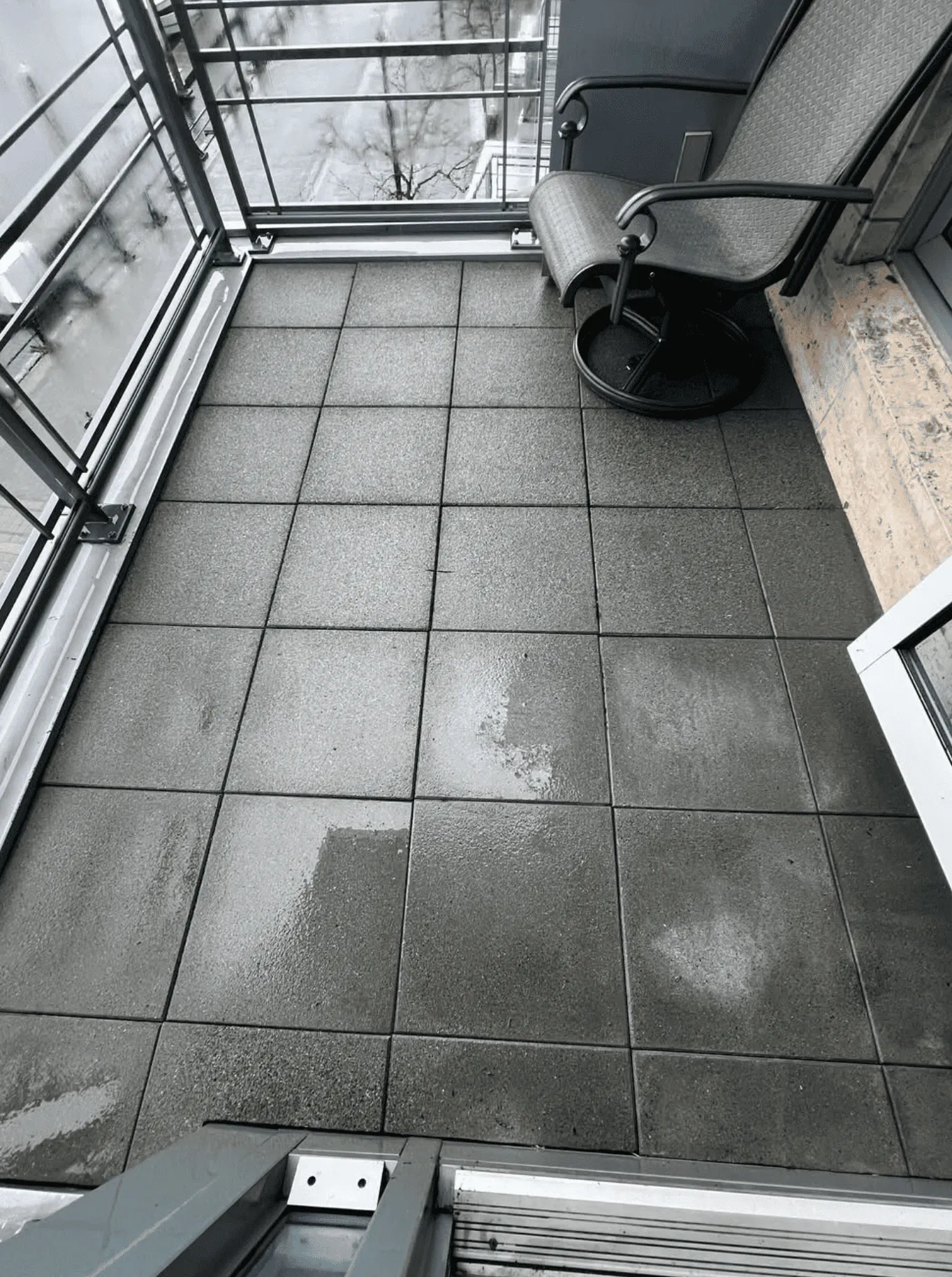
Sound concrete can often tolerate controlled mechanical surface cleaning, while weathered, painted, sealed or cracked concrete may need a gentler approach. We consider both the finish and the underlying slab before deciding whether to pressure wash the surface.
Tiles and Grout
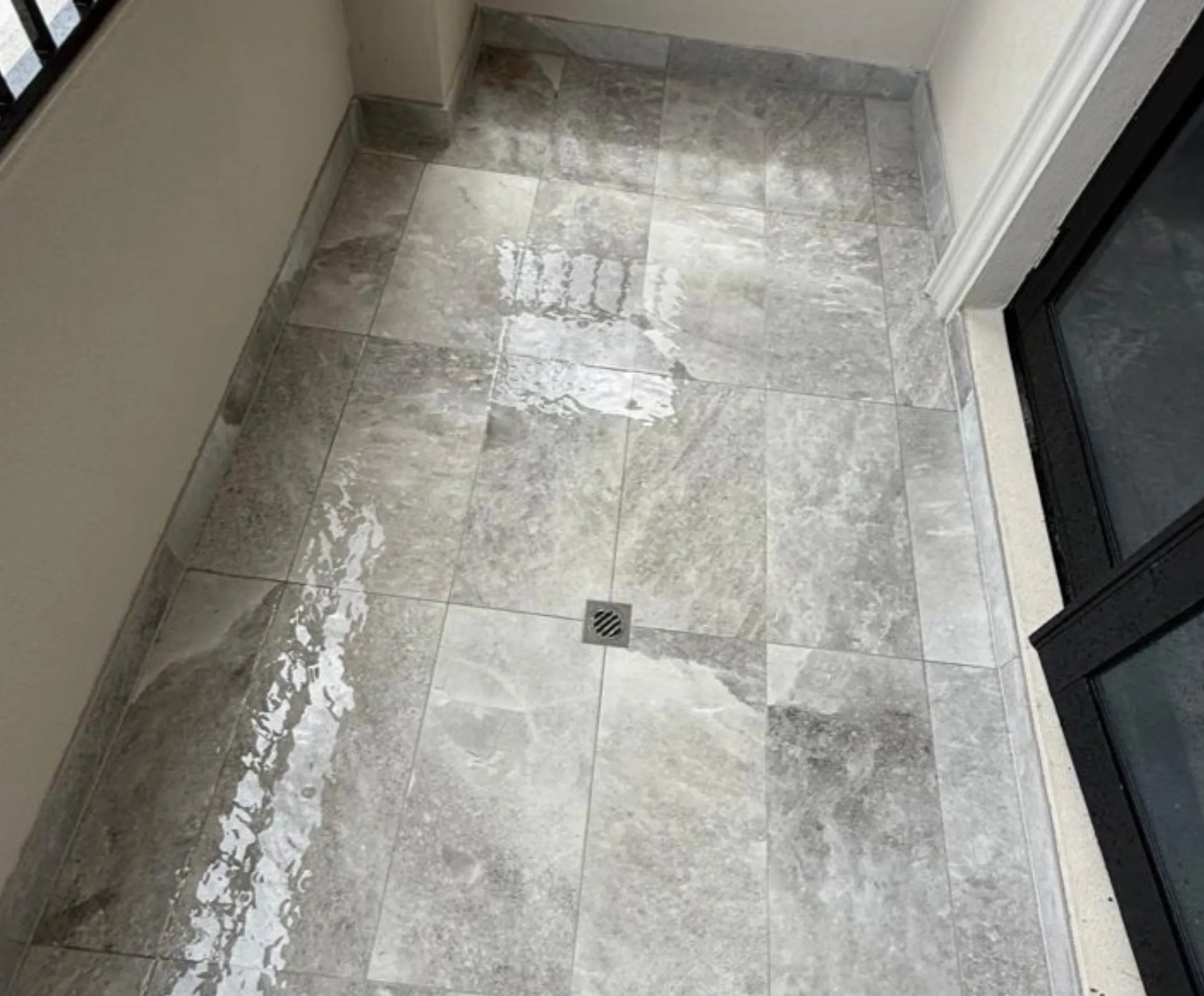
Tiles may be relatively resistant, but grout, sealant and waterproofed junctions are more vulnerable. High pressure is therefore not automatically appropriate simply because the tile itself is hard.
For stubborn dirt and grout, an electric brush can provide controlled agitation without relying on stronger pressure. Newly tiled or repaired balconies also need to cure before cleaning, with timing determined by the installed adhesive, grout, temperature, humidity and substrate.
Pavers and Natural Stone
Paver joints can be disturbed by aggressive cleaning, while natural stone varies in porosity and chemical sensitivity. We assess the material before applying pressure, using cleaning products, or applying mechanical agitation.
Glass Balustrades
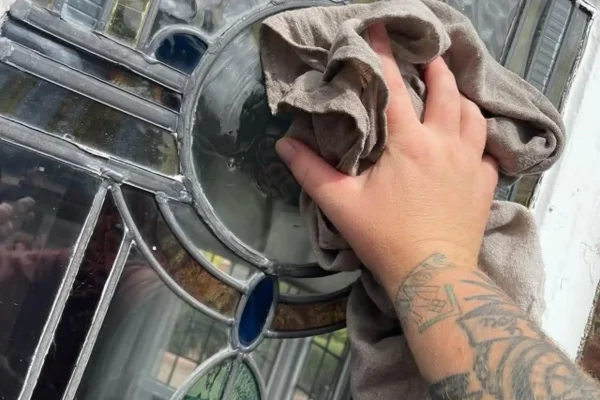
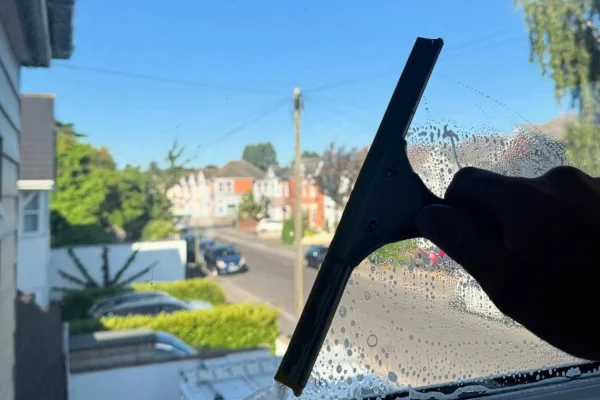
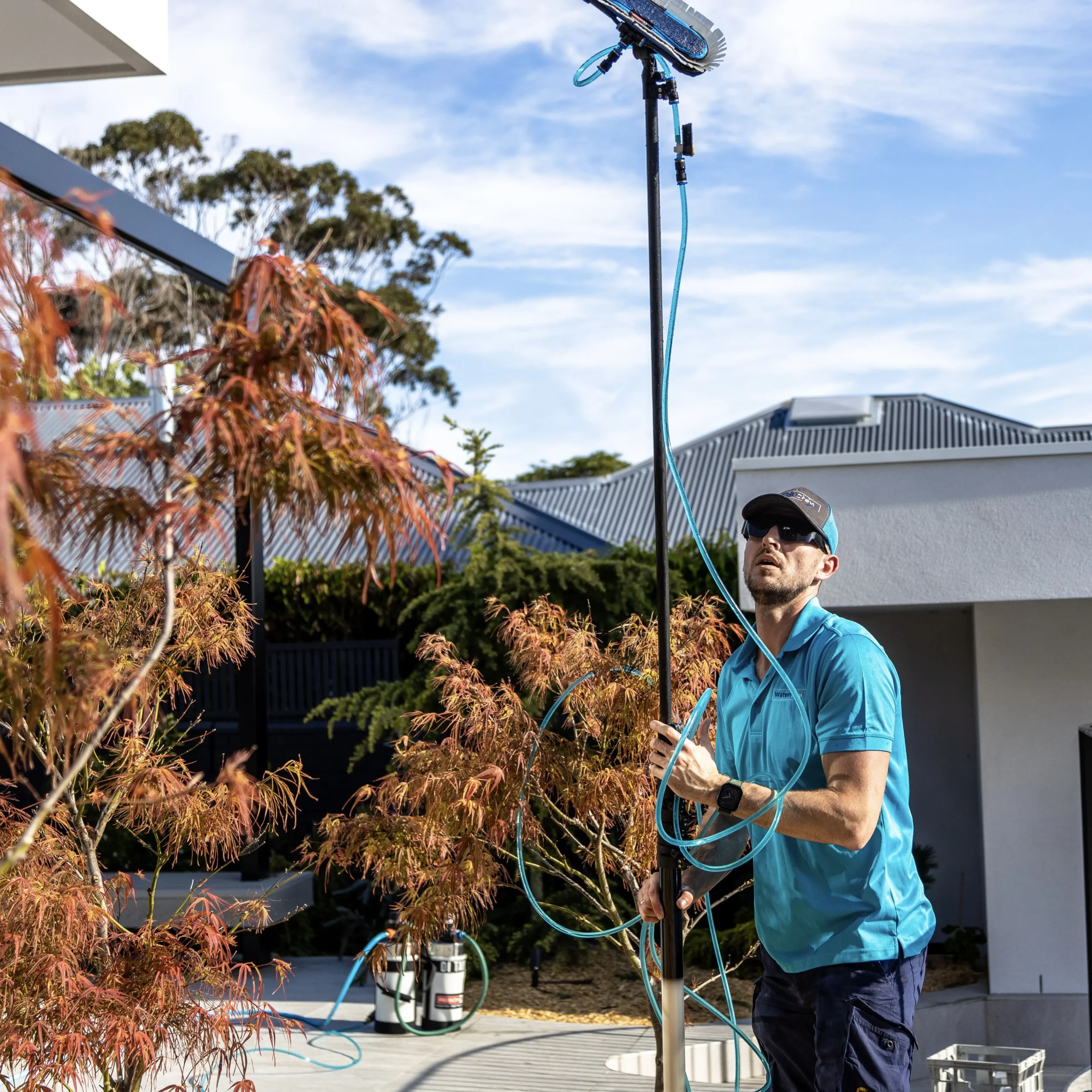
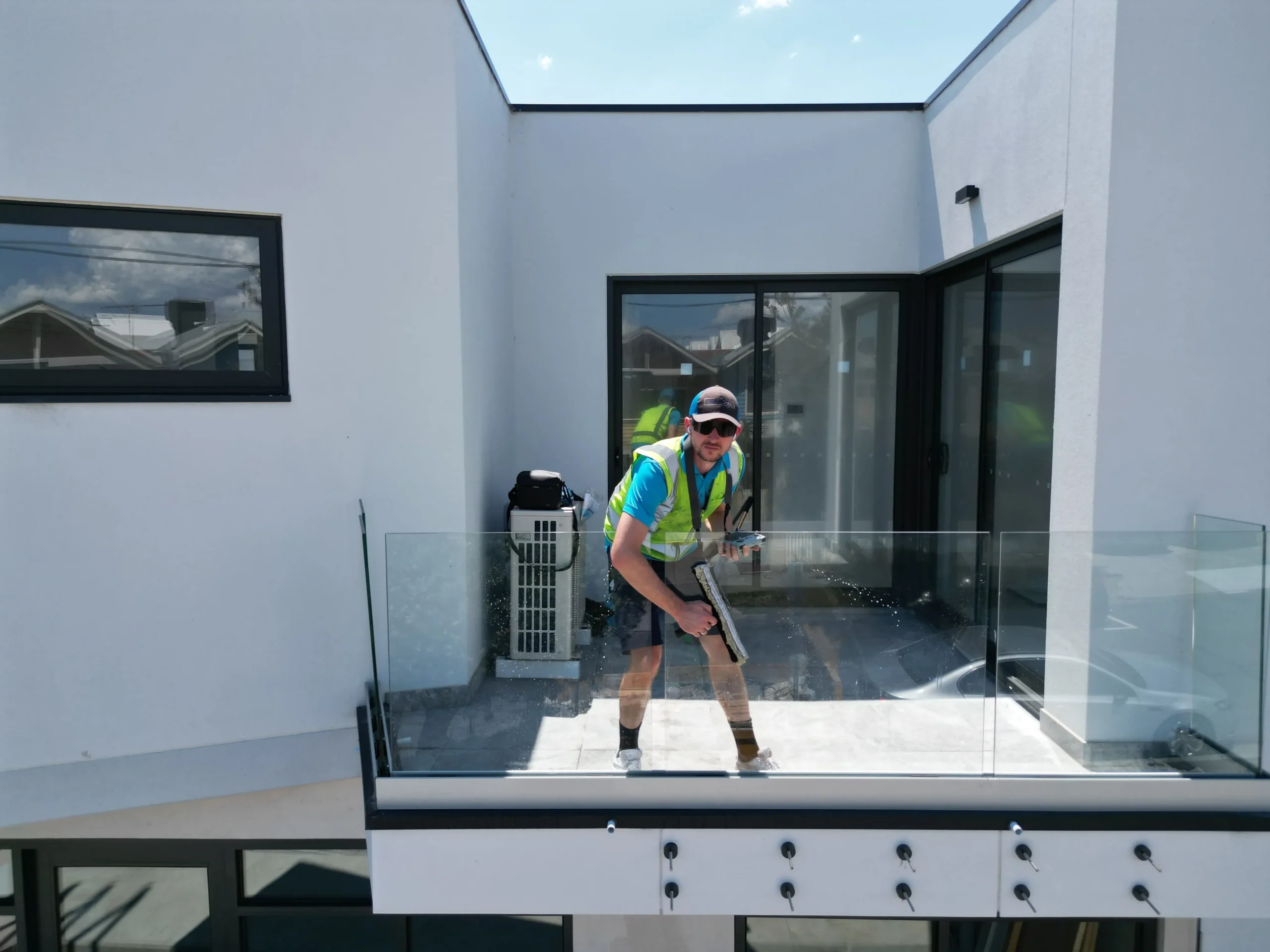
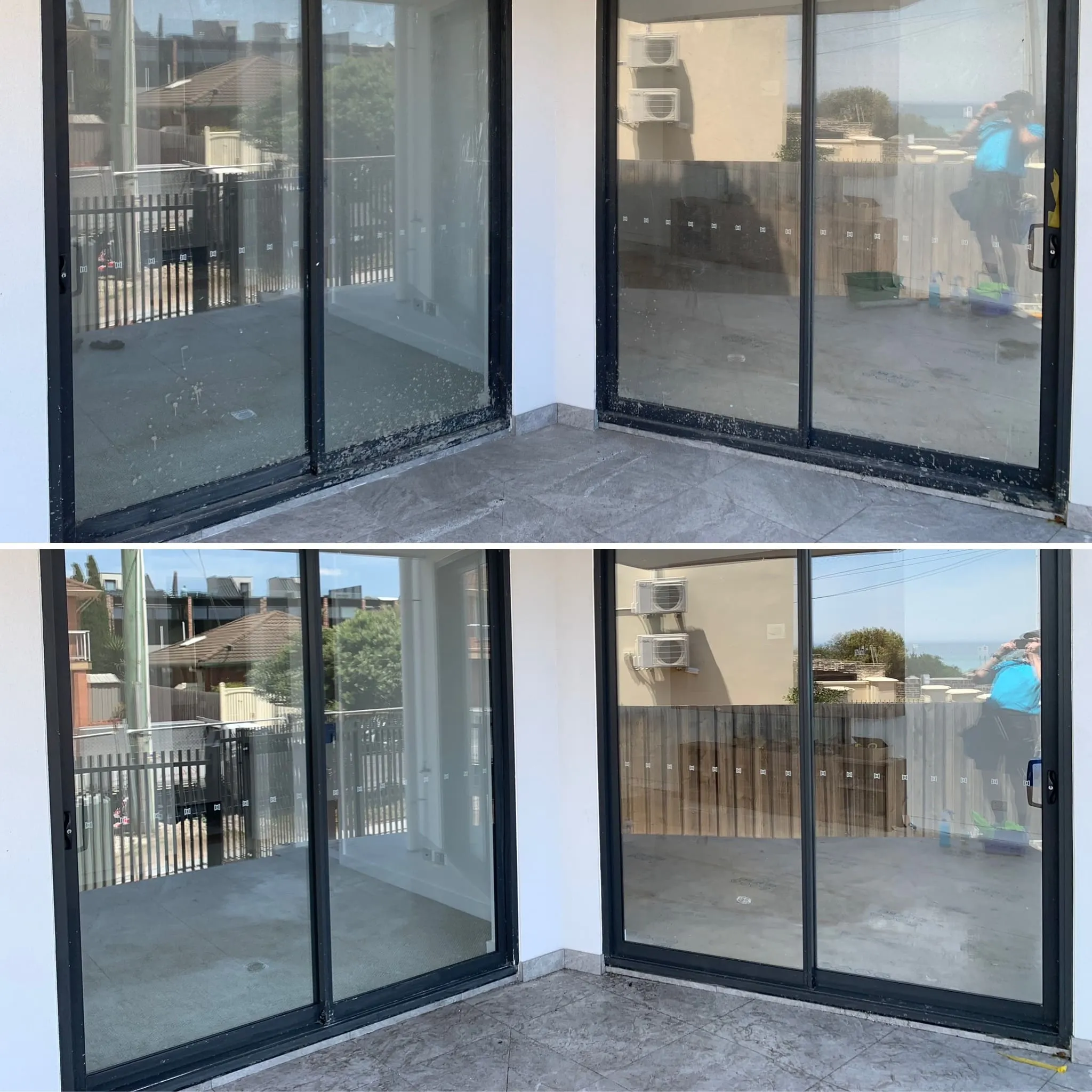
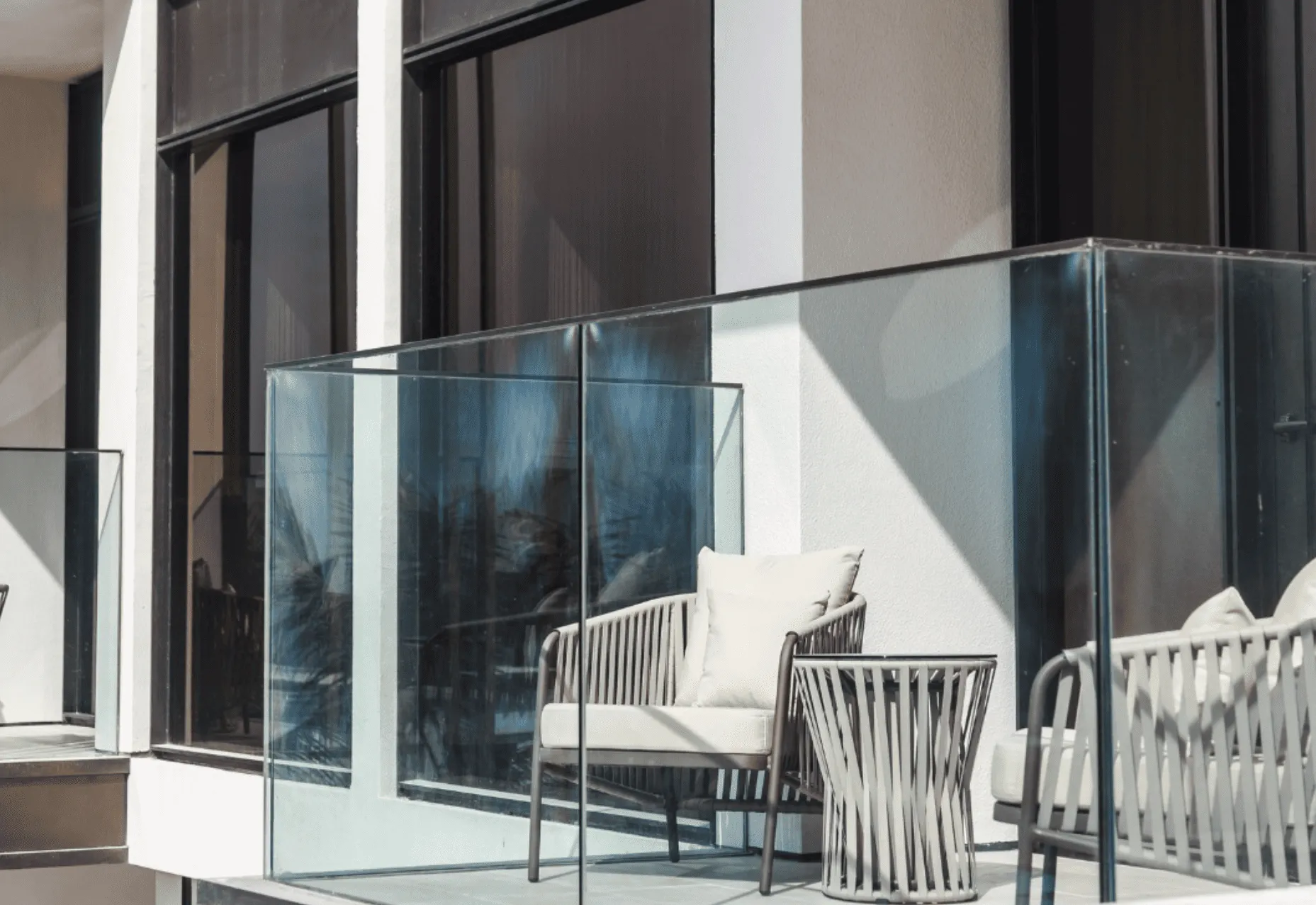
Glass balustrades, balcony windows, and nearby sliding doors collect fingerprints, dust, rain spotting and pollution residue. Frames, window sills, fixings and access to the exterior face also influence the method. Where suitable, glass can be cleaned with a water-fed pole system or another approach appropriate to the configuration.
Painted and Coated Surfaces
Paint and protective coatings can chalk, peel or deteriorate with age. Recently sealed, coated or waterproofed balconies may need additional curing time before cleaning. Cleaning can remove contamination from a sound coating, but it cannot restore one that has failed.
Choosing a Method for the Surface
Cleaning pressure is set for the surface rather than a universal PSI. Sound concrete can tolerate a different mechanical approach from grout, natural stone, painted coatings, waterproofed surfaces and ageing sealants.
| Method | Generally suited to | Main consideration |
|---|---|---|
| Controlled pressure cleaning | Sound, compatible hard surfaces | Excess pressure can affect joints, coatings or weakened surfaces |
| Soft washing | Organic growth and pressure-sensitive surfaces | Product compatibility and controlled run-off matter |
| Electric or hand cleaning | Grout, edges, delicate areas and localised marks | Provides greater control over mechanical agitation |
Controlled Water Pressure
Pressure cleaning can remove embedded grime and surface build-up from suitable concrete and other durable materials. Where conditions allow us to pressure wash floors, we control the cleaning action rather than treating maximum pressure as the goal.
Low-Pressure Treatment
Soft washing uses lower mechanical force with an appropriate cleaning solution. It can be preferable where contamination needs treatment, but the substrate, coating or joints should not receive aggressive pressure.
Manual and Targeted Treatment
Hand cleaning and electric brushing provide greater control around grout, balustrades, painted details, sensitive finishes and isolated stains. A balcony may need several methods rather than one technique across every surface.
What Happens During the Service
Where needed, we begin with a dry clean, removing loose dust, leaves and debris from the floor, corners, edges and drainage points before introducing water. We then assess staining, water pooling and the condition of joints, coatings, balustrades and surrounding surfaces. Outdoor furniture, potted plants and other loose items may need to be moved or protected.
Depending on the balcony, cleaning may combine controlled pressure, soft washing, an electric brush and targeted hand cleaning rather than using one method across the entire area. This lets us match the cleaning action to each surface while keeping water and loosened debris under control.
Drainage, Run-Off and Water Control
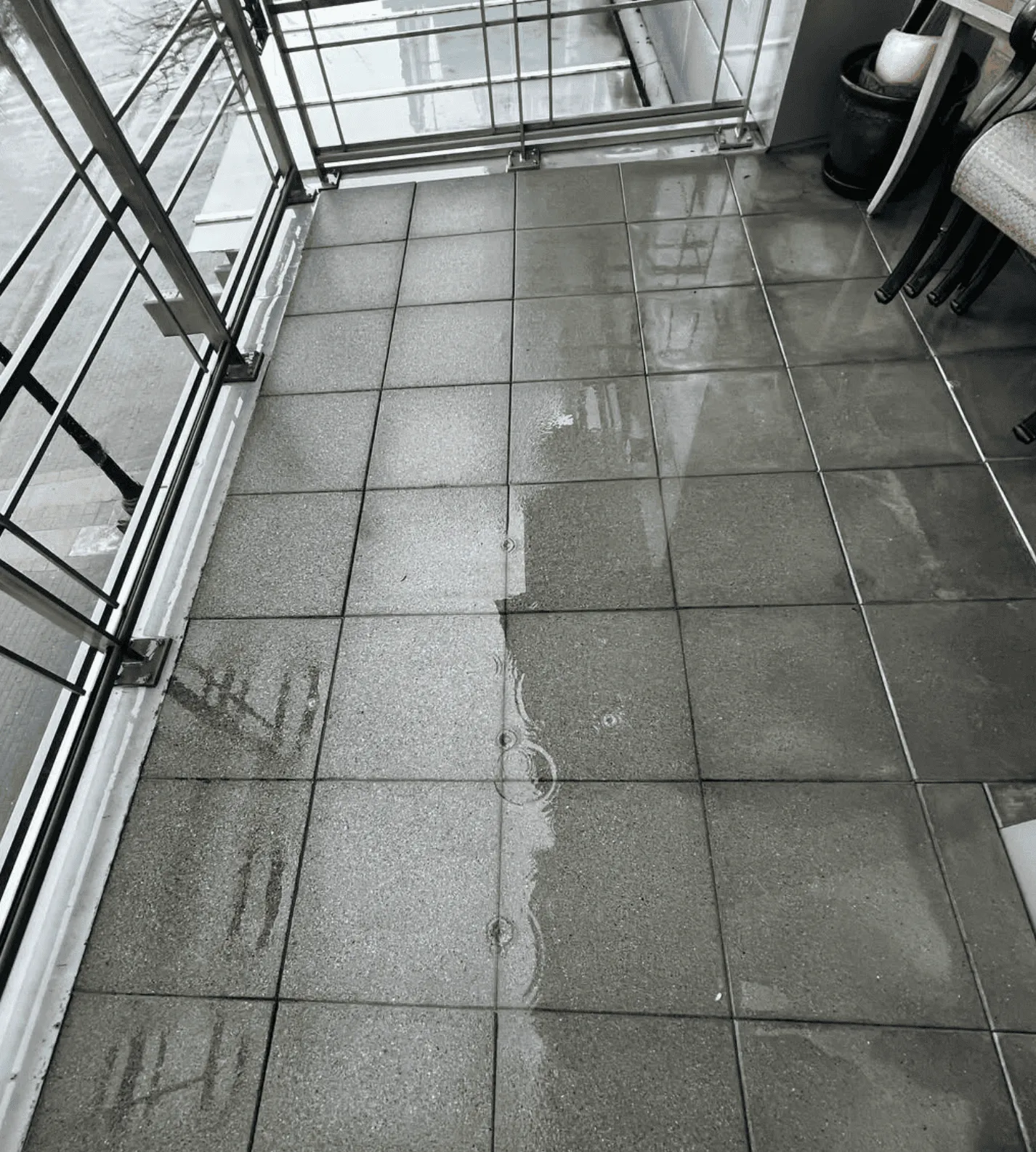
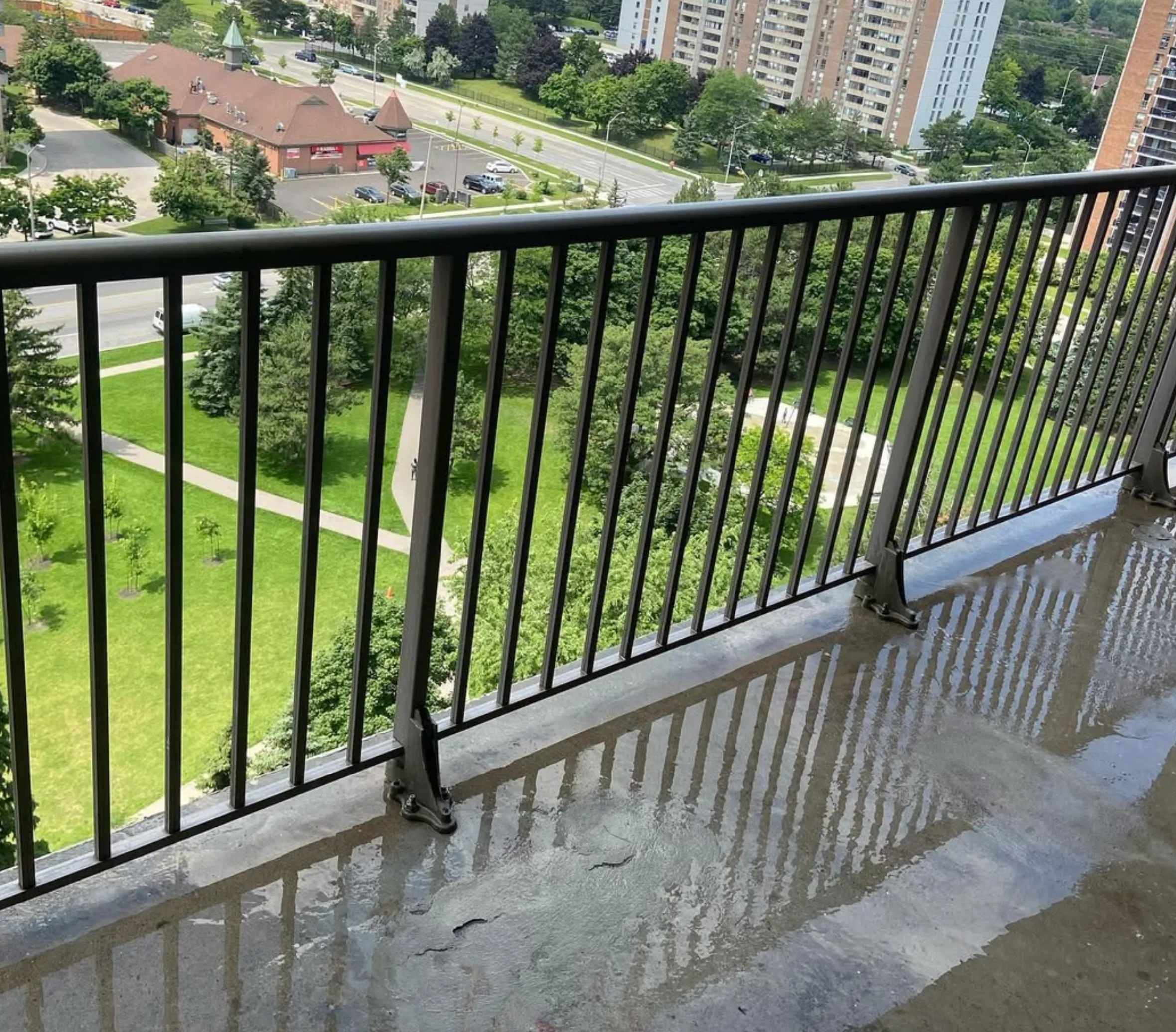
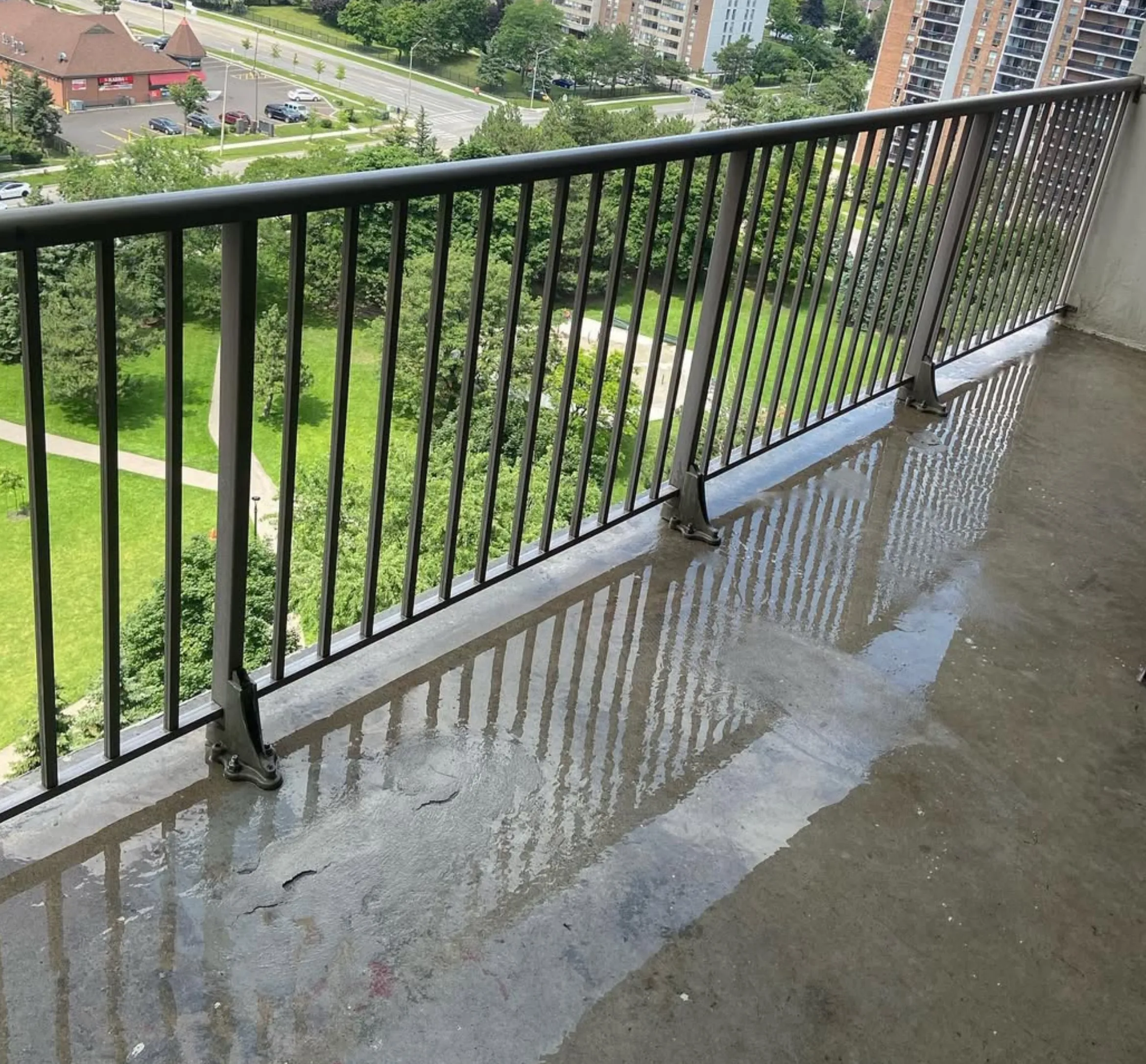
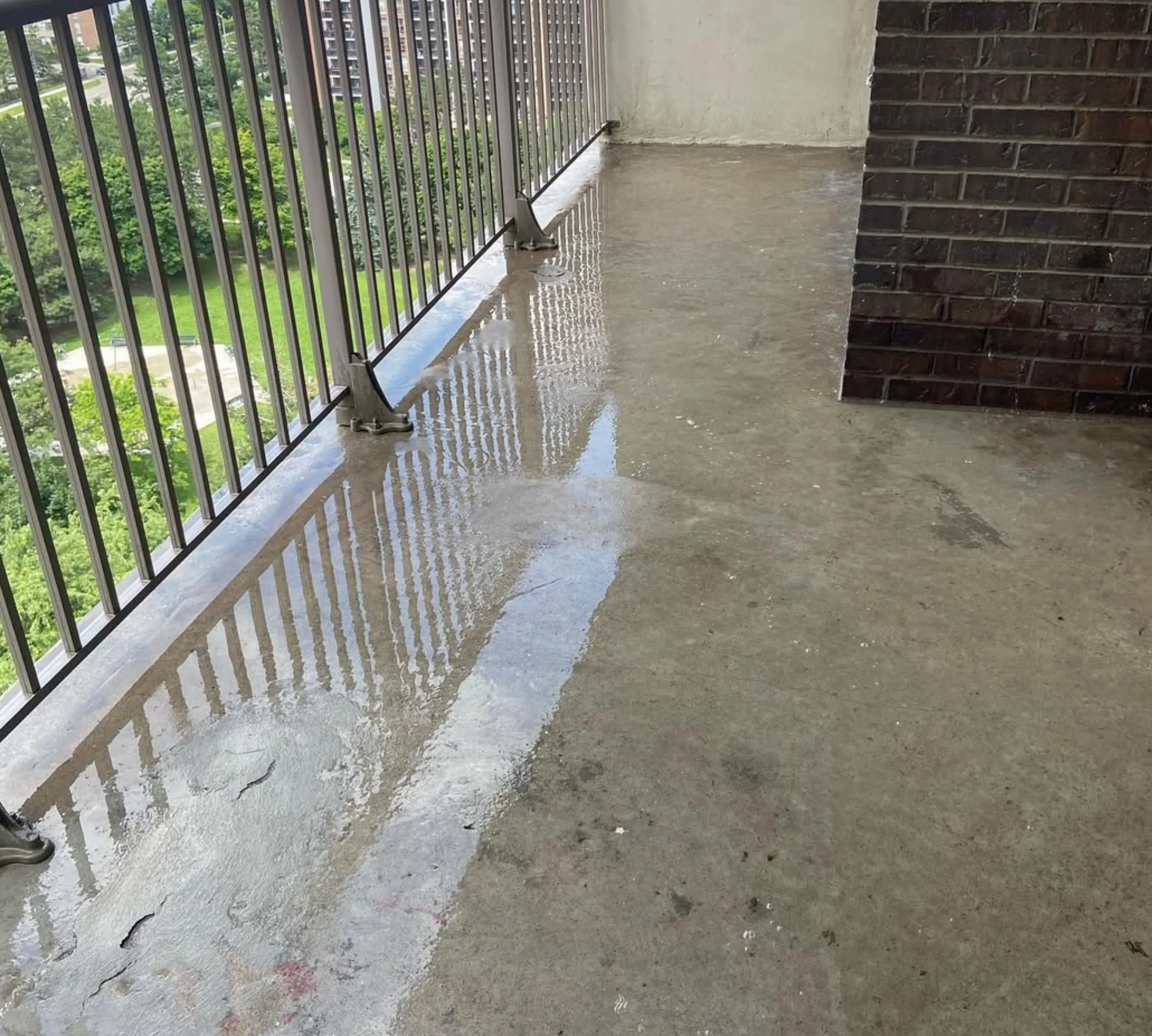
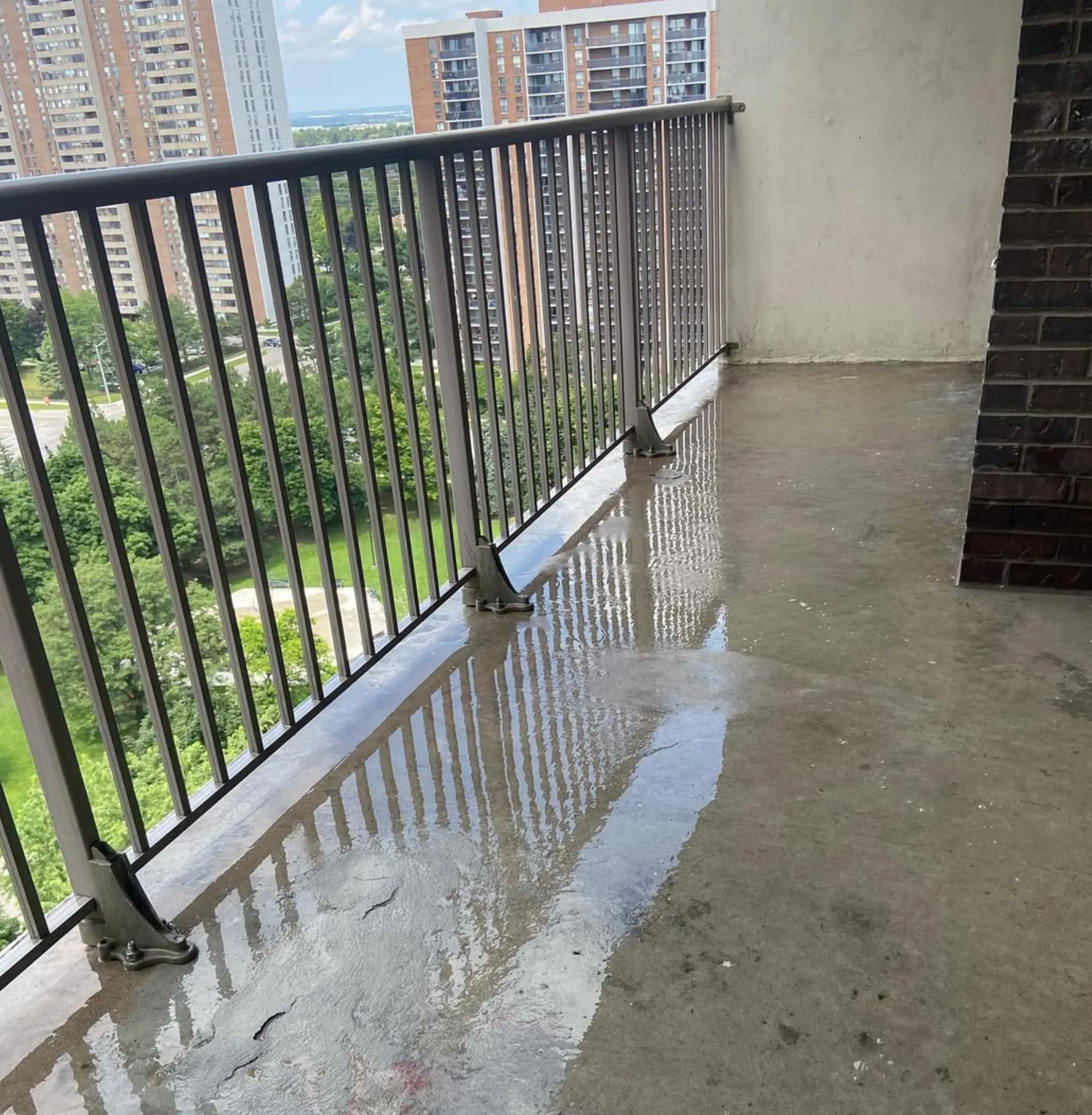
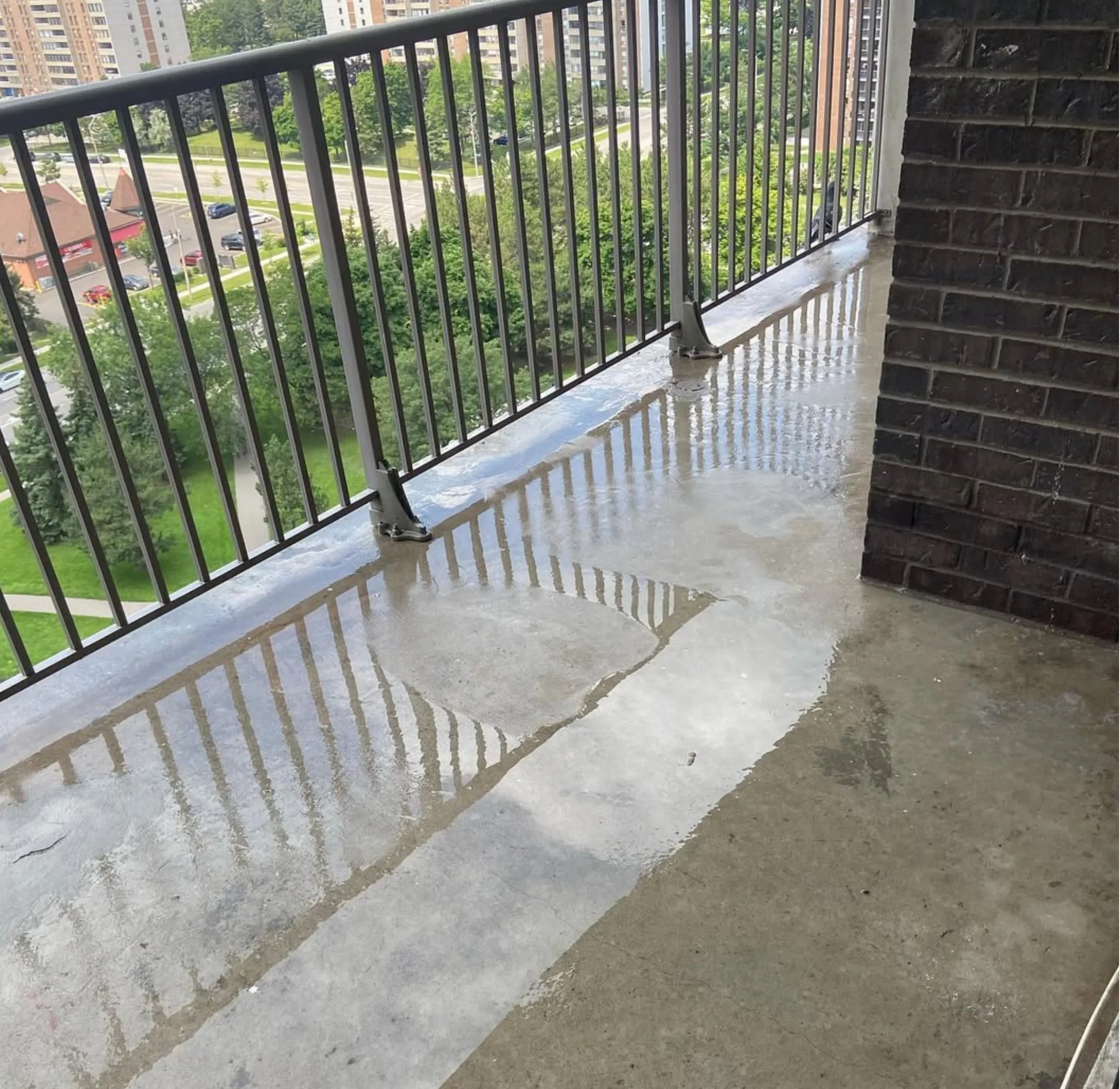
Drainage is especially important on balconies because cleaning water cannot simply be allowed to travel wherever gravity takes it. Before wet cleaning, we consider drainage points, overflows, balcony edges, existing water pooling and areas below.
Wastewater management forms part of that assessment. EPA Victoria requires risks from wastewater entering stormwater to be eliminated or reduced so far as reasonably practicable.
Where drainage is limited, or water needs to be contained, wet/dry vacuums can be used to recover excess water. Absorbent materials may also assist with localised control where appropriate. This is particularly useful on apartment balconies where uncontrolled run-off could reach lower balconies, façades or other areas.
Apartment and High-Rise Balcony Access
Cleaning apartment balconies can involve restricted access, narrow working areas, building rules and exposure at height. Body corporate requirements or site rules may also affect access, working hours, water use and movement through common areas.
Balcony height changes the access plan. In Victoria, work involving a risk of falling more than 2 metres attracts specific fall-prevention requirements, although lower-level work can still present significant fall hazards. We assess the actual working position, balcony edges and access rather than treating the balustrade itself as sufficient protection.
Equipment for Different Conditions
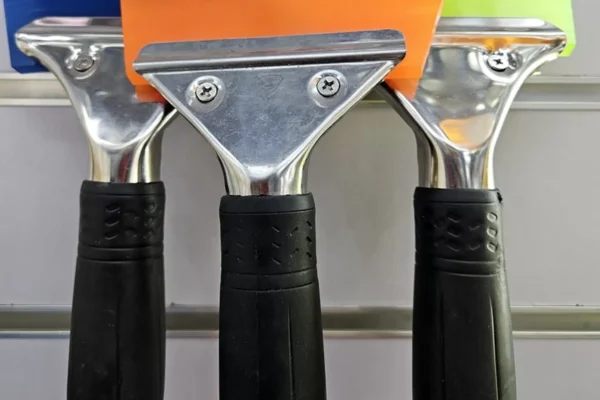
Depending on the surface and access, we can use pressure-cleaning equipment, soft-wash gear, electric brushes and wet/dry vacuums. A wet/dry vacuum is particularly useful where water needs to be collected rather than allowed to flow freely from an apartment balcony.
Different equipment can also be combined within the same job. A durable floor may suit controlled pressure cleaning, while grout needs electric brushing, glass requires a separate approach and restricted drainage calls for water recovery. Equipment is selected around the surface, contamination and drainage rather than maximum pressure.
Removable Contamination vs Surface Damage
Cleaning can remove many forms of surface dirt, organic growth, bird droppings, grease, food residue and environmental contamination. It cannot repair cracked tiles, deteriorated grout, failed waterproofing, corroded components, peeling coatings, structural defects or permanent substrate discolouration.
Water pooling can also indicate more than a dirty surface. If water repeatedly remains in the same area, or we find visible signs suggesting an underlying defect, cleaning is not a substitute for appropriate investigation or repair.
When to Book the Service
There is no authoritative Australian rule requiring every balcony to be cleaned every six or twelve months. Exposure, shade, nearby vegetation, bird activity, traffic pollution, coastal salt, surface porosity, drainage and the rate at which contamination returns all affect the appropriate interval.
Condition is therefore more useful than an arbitrary calendar. Visible algae or mould, slippery contamination, bird droppings, persistent leaf or tannin deposits, dirty drainage areas and accumulating salt deposits on exposed balconies are practical reasons to consider cleaning.
Exposure Across Melbourne
Exposed upper-level balconies can receive more wind-driven dust and rain, while recessed or south-facing areas may remain shaded and dry more slowly. Properties closer to Port Phillip Bay may also experience greater salt deposition on glass, metal and other exposed surfaces.
Orientation and surrounding buildings matter too. A balcony that receives regular rainfall can develop different contamination from one protected by an overhang or neighbouring structure.
Between Professional Services
Remove leaves and loose debris before they collect in corners or around drainage points, and keep outlets visible rather than covering them with outdoor furniture or potted plants. Clean up food, drink and BBQ spills before they penetrate porous materials.
Slow drainage, persistent water pooling, loose grout, peeling coatings, or recurring water marks may need investigation rather than increasingly aggressive cleaning.
How We Approach Each Job
At Window Cleaning Melbourne Crew, we match the cleaning method and water-control approach to the balcony rather than applying the same process to every surface. We distinguish removable contamination from deterioration that cleaning cannot correct.
Get a Quote
For a balcony cleaning quote, tell us the balcony size, surface type, building level, and access. Photos of the flooring, glass balustrades, staining and drainage points can help us assess the job. For apartment buildings or multiple balconies, the number of areas, access arrangements and shared site requirements can also affect the scope and quote.

Your satisfaction is our top priority. We tailor our services to meet your specific needs

We are committed to environmental responsibility. Our cleaning products are eco-friendly.

Pricing
We offer competitive pricing without compromising on the quality of our services.

Expertise
As a locally owned and operated company, we understand the unique needs of our community.
FAQ
Can you pressure clean an apartment balcony?
Yes, where the surface, drainage and surrounding areas make pressure cleaning appropriate. Delicate coatings, vulnerable joints, restricted drainage or uncontrolled run-off may make a lower-pressure, electric-brush or manual method preferable.
What happens if my balcony has no suitable drainage?
Water needs to be controlled rather than allowed to run over the balcony edge. Depending on the layout, a wet/dry vacuum can recover excess water, and the cleaning method can be adjusted to reduce run-off.
Can you clean newly tiled or waterproofed balconies?
Yes, but only once the installed materials have reached their required cure. Timing depends on the specific adhesive, grout, membrane or coating and can change with temperature, humidity and substrate conditions.
What affects the price of balcony cleaning?
The main factors include balcony size, surface material, contamination, staining, drainage, glass balustrades, obstacles and access difficulty. Multiple balconies, water-recovery requirements and building restrictions can also affect the scope.
Do I need to prepare my balcony before cleaning?
Removing small outdoor furniture, potted plants and personal items generally makes the area easier to access. Heavy or fixed items, restricted apartment access and known drainage, pooling or waterproofing concerns should be discussed when arranging the quote.
SEO Title: Balcony Cleaning Melbourne
Meta Description: Professional balcony cleaning in Melbourne for apartments and homes. Pressure cleaning, glass balustrades, tiles and concrete.